Perspectives on Venezuela and Cuba Through the Eyes of Exiles
**Exhibition in Arlington, Va.: Exploring Memory and Migration**
In Arlington, Va., an immersive exhibition challenges perceptions and invites contemplation through the works of artists Lisu Vega, Reynier Leyva Novo, and Amalia Caputo. The exhibition, “Tactics for Remembering,” at the Museum of Contemporary Art Arlington, runs through January 25, showcasing Caribbean perspectives in art.
Lisu Vega’s installation, “The Uncertain Future of Absence,” merges mixed-media sculptures with audio-visual elements, evoking memories from her Venezuelan heritage. The installation, crafted with recycled materials, reflects on themes of exile and ancestral connections. Vega, influenced by Indigenous Wayuu weaving, brings a haunting narrative of displacement and identity under a climate reminiscent of authoritarian influences.
Reynier Leyva Novo’s “Solid Void” explores the concept of absence through gypsum cement casts of everyday objects. These forms, once vessels, now embody the void of migration and the loss of their functional past. Novo’s work resonates with his personal experience of emptiness after moving from Cuba, capturing the tension between presence and absence.
Amalia Caputo’s video, “La casa (de Hestia),” portrays the arduous journey of migration through a symbolic dollhouse dragged across a beach. This visual metaphor highlights the roles of women in the migration process, intertwining themes of home, femininity, and exile.
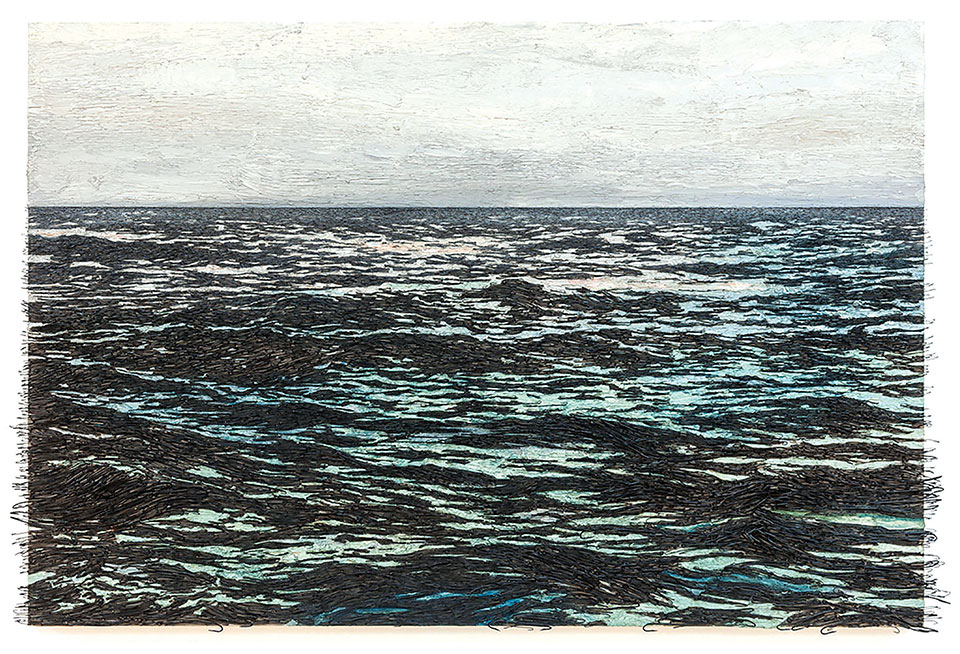
Curator Fabiola R. Delgado emphasizes the unifying and dividing nature of the Caribbean Sea, which ties the exhibition’s narratives together. Against a backdrop of political upheaval and immigration uncertainty, the exhibition offers a reflective space, contributing to the representation of Latine artists in the DMV area.
“Tactics for Remembering” navigates the sacrifices and memories inherent in migration, urging viewers to consider the transient nature of identity and history. As R. Delgado notes, it is both a reflection on loss and a call to preserve collective histories amidst uncertain futures.