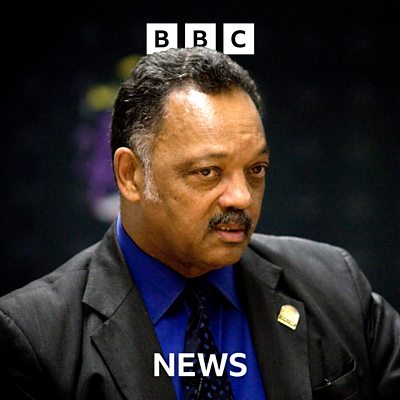
Civil Rights Leader Jesse Jackson Dies at 84
On February 17, 2026, Jesse Jackson, one of the most notable civil rights figures in the United States, passed away at the age of 84. Throughout his illustrious career in activism and politics, Jackson worked relentlessly for racial and economic equity, collaborated with Dr. Martin Luther King Jr., and ultimately initiated his own presidential bids in the 1980s.
Born on October 8, 1941, in Greenville, S.C., Jackson faced segregation early in life, compelled to navigate environments apart from his white counterparts. While attending North Carolina A&T, a historically Black university, he became more deeply engaged in the civil rights movement and was arrested alongside seven peers in 1960 following a silent protest at a whites-only library. In June 1963, he also organized a march with hundreds of other students and was subsequently arrested the following day. After graduating in 1964, he moved to Chicago and enrolled in the Chicago Theological Seminary, preparing to become a religious leader.
The following year, Jackson’s role in the civil rights movement surged, largely due to Dr. King. During the brutal treatment of Black demonstrators in Selma, Ala., in March 1965, Jackson mobilized around 20 other students and about a third of the seminary’s faculty to travel south, where they intended to participate in a voting rights march. He quickly captured Dr. King’s attention, who offered him a staff position with the Southern Christian Leadership Conference (SCLC). At just 24 years old, he became the youngest member of the SCLC and led the Chicago chapter of Operation Breadbasket, an initiative aimed at boycotting businesses that failed to provide basic respect or job opportunities to Black communities. By 1967, Jackson had gained national prominence within and beyond the organization.
In 1968, Jackson was present with Dr. King when he was assassinated at the Lorraine Motel in Memphis, Tenn. Jackson had already stirred divisions within SCLC due to his bold demeanor and tendency to create myths, but he drew even more attention when, the following day, he appeared on television with his clothing still stained with King’s blood. Nevertheless, he took the reins of the civil rights movement in the wake of Dr. King’s assassination.
As tensions continued to swirl within SCLC, Jackson separated from the coalition in 1971 to establish Operation PUSH (People United to Serve Humanity). This organization aimed at dismantling class disparity, racism, and various other forms of discrimination through urban education and affirmative action initiatives, among other efforts. He also initiated the National Rainbow Coalition, a diverse alliance of Black, white, Latino, Asian, Indigenous, and LGBTQ individuals advocating for civil rights, which later unified with PUSH.
In many respects, PUSH laid the groundwork for Jackson’s pursuit of the Democratic presidential nomination. He entered the race in October 1983, becoming the first presidential candidate to actively champion gay rights, while also appealing to a wider range of voters beyond white, moderate, and middle-class Americans.
“A Democratic party that represents a multicultural America and includes figures like Kamala Harris as the (former) Vice President and Obama as the former President began in many ways with those Jackson campaigns,” David Masciotra, author of *I Am Somebody: Why Jesse Jackson Matters*, [stated to CNN](https://us.cnn.com/2026/02/17/us/reverend-jesse-jackson-death).
Though he ultimately did not secure the nomination, Jackson garnered over 18% of the primary vote, along with a number of primaries and caucuses. He built on that foundation four years later, winning 11 primaries and caucuses. He faced defeat once again, but his endeavors nevertheless paved the way for inclusive politics and, as many scholars observe, Barack Obama’s eventual success in 2008.
In 2017, Jackson revealed that he had been diagnosed with Parkinson’s disease. Last November, he was hospitalized due to progressive supranuclear palsy (PSP), a rare but serious neurodegenerative disorder. On February 17, 2026, he died “peacefully,” according to his family, although their statement did not specify a cause.
“[Jackson’s] steadfast commitment to justice, equality, and human rights helped shape a worldwide movement for freedom and dignity,” his family noted. “A relentless change agent, he amplified the voices of the unheard—from his Presidential bids in the 1980s to mobilizing millions to register to vote—leaving a lasting imprint on history.”