Photos of New York’s Historic Anti-Trump Marches
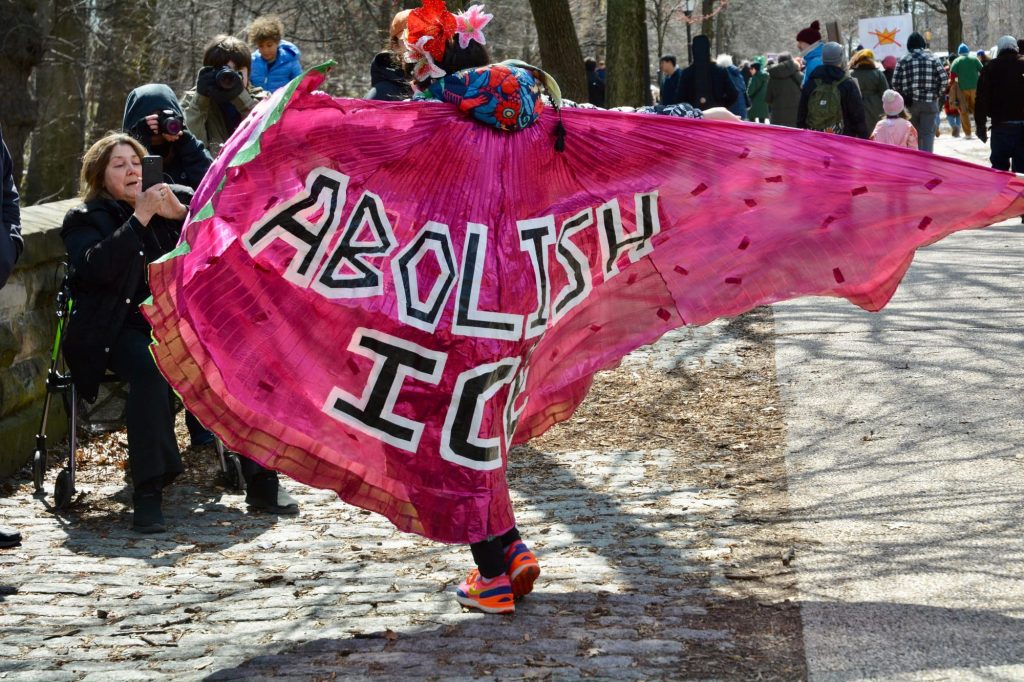
Midafternoon along Prospect Park West this past Saturday, March 28, all eyes were fixed on a striking magenta cape crafted by artist and sex educator Una Osato. The cape, boldly stating “ABOLISH ICE,” became a focal point of the No Kings march in Brooklyn. Osato, along with her colleague, participated in the event to emphasize the power of art in social movements. She remarked on the beauty of collective action, stating that when united, individuals are more courageous, and she hoped to contribute a touch of sparkle.
Osato’s creation and the event underscored the importance of art in activism, serving as a connecting force and a source of motivation. It was a day marked by significant participation, with Indivisible, a grassroots organization, reporting over eight million demonstrators across 3,300 protests nationwide, making this iteration of No Kings Day the largest mass protest in U.S. history.
Unlike previous years, this year’s protests spanned various neighborhoods rather than a central location, highlighting local impacts of issues like authoritarianism. Activists used the opportunity to craft personal, handmade signs, reflecting diverse perspectives and aesthetic styles. On the Upper West Side, a workshop facilitated by the ReSisters group supported participants in creating their protest artworks.
Protestors displayed creativity not just in their signs but attire as well, with wearable art making statements. The visual culture of the event captured the attention of iconic street artist Shepard Fairey, who provided his own protest art to emphasize the need for human dignity.
The movement’s history is rich with compelling visuals, and this year’s decentralized approach enriched the artistic diversity. Despite a lack of a singular visual theme, the neighborhood-specific protests offered complexity and beauty. As the demonstration progressed, various forms of expression captured the vibrant essence of activism and community solidarity.