Mexican Artist Accuses Another Party of Plagiarizing Femicide Project
**Theft of Authorship: A Case Study of Elina Chauvet’s “Zapatos Rojos”**
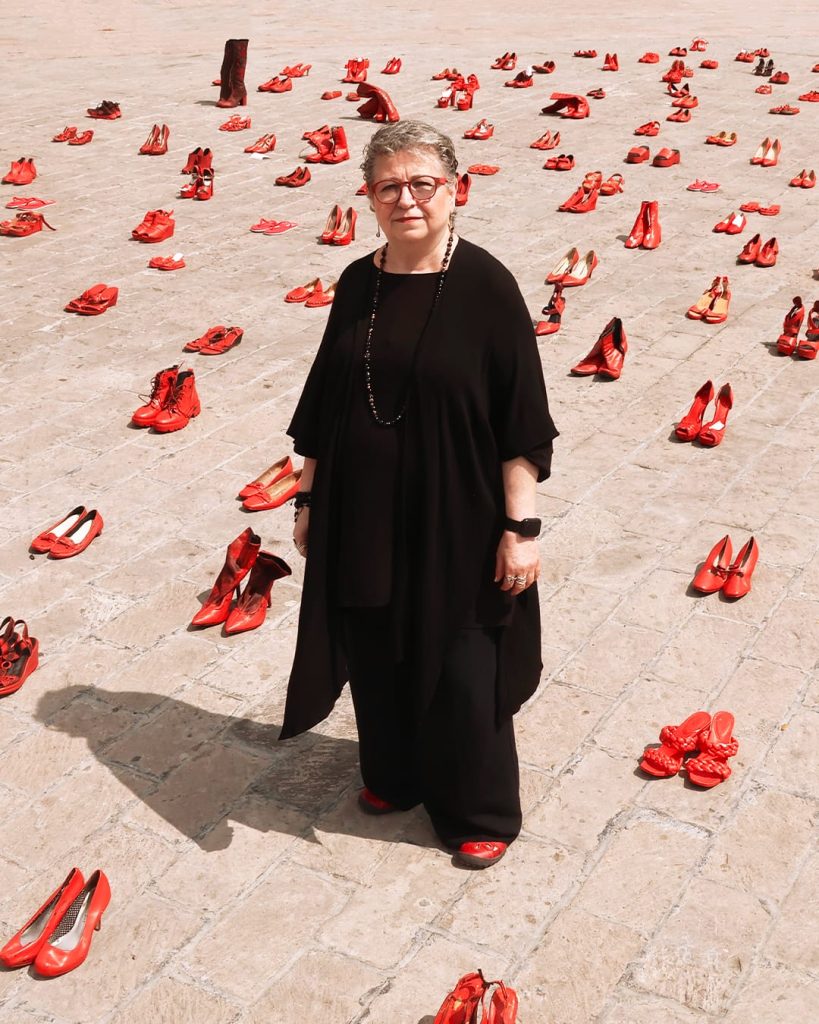
Elina Chauvet’s art installation “Zapatos Rojos” serves as a poignant reminder of the pervasive issue of femicide and gender-based violence. Initiated in Ciudad Juárez, Mexico, in 2009, this public artwork consists of numerous red-colored shoes arranged in site-specific formations, each symbolizing the absence of a female victim of such violence. Resonating globally, the installation has been recreated from North America to Europe, embodying a collective activism against the crisis.
Recently, Romanian news anchor Alessandra Stoicescu staged a similar installation in Bucharest without attributing the original concept to Chauvet. The public intervention, titled “Dragostea poartă pantofii roșii,” aimed to address domestic violence and femicide within Romania, paralleling the legislative recognition of femicide by the Romanian parliament. Despite the alignment in cause, neither the event’s marketing materials nor Stoicescu’s platform acknowledged Chauvet’s influence, sparking a controversy over artistic credit and intellectual property rights.
Chauvet, having discovered the uncredited use of her work, reiterated her copyright claims and stressed the relevance of obtaining proper authorization for reproductions of “Zapatos Rojos.” She articulated the personal connection and rigorous community involvement inherent in her installations, asserting that her artwork—a reflection of personal loss and activism—cannot simply be replicated without acknowledgment.
The situation underscores the broader discourse on respecting intellectual ownership in art while recognizing its global impact. As movements spurred by art continue to gain momentum, ensuring proper credits to original creators is essential to preserving the integrity and authenticity of their narratives. In response, Stoicescu amended some of her social media acknowledgments but has yet to address Chauvet directly, highlighting ongoing challenges in collaboration and appropriation within the art world.
Ultimately, the episode emphasizes the enduring nature of art beyond movements, urging a nuanced understanding and attribution of its creators’ significant contributions, intertwined with their personal histories and advocacy efforts.