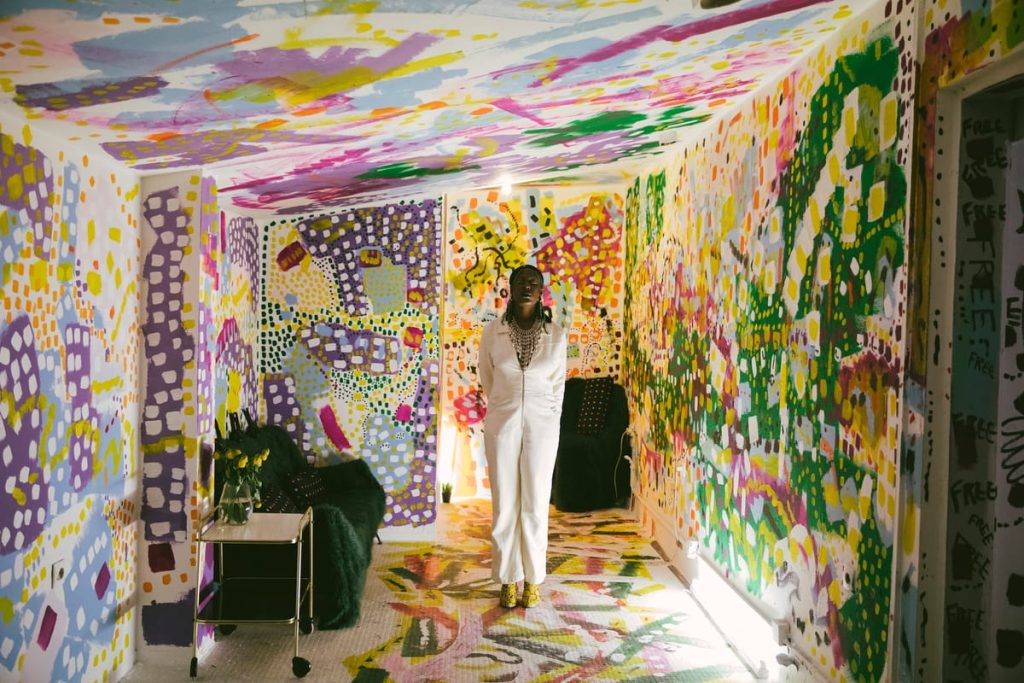
The Presence of Malevolence in Berlin
Title: The Illusion of Freedom and Diversity in Berlin’s Art Scene
Berlin is a city that seduces with its gritty allure, presenting itself as a hub of freedom and creativity. However, for artists like me, this façade quickly fades to reveal an underlying reality of performative liberation and institutional hypocrisy. Despite its reputation as a progressive capital, Berlin often masks the same systemic inequalities found elsewhere, clothed in the guise of artistic expression.
Upon my arrival in Berlin during the COVID-19 pandemic, I hoped for an environment that nurtured genuine creativity. Instead, I encountered a theatrical setting where most artists perform liberation while relying on institutions that offer only superficial diversity. This performance is underscored by Berlin’s notorious club culture, where escapism takes precedence over authentic reflection, and pleasure is often mistaken for true freedom.
The dangerous irony lies in how hollow Berlin’s celebrated “freedom” actually feels. Beneath the seemingly vibrant art scene, there is an absence of accountability and an aversion to addressing the deeper systemic injustices. Historically, Berlin has been a center of power and colonial exploitation, illustrated by events like the Berlin Conference of 1884-85, which divided Africa among colonial powers. This history continues to cast a shadow over the city’s current dynamics.
Berlin’s reputation as a queer and artistic utopia stands in stark contrast to its lack of genuine inclusivity. The city is inhabited by a mix of expats, gentrifiers, and migrants who are often blamed for its problems, but the real issue lies deeper in the societal structures that prioritize power and privilege. The city’s art and cultural scene, often hailed as revolutionary, are increasingly commodified and censored, leaving little space for true dissent.
Notable literary voices, like Jamaica Kincaid, remind us of the artist’s duty to speak truth to power, even in the face of criticism. Yet, Berlin’s institutions continue to stifle voices that challenge the status quo, preserving a sanitized version of diversity that serves more as decoration than substance.
In this environment, genuine artistry requires navigating a landscape fraught with contradictions. The devil, as I metaphorically describe it, thrives in this atmosphere of unaccountability and superficial rebellion. True rebellion in Berlin requires self-organization and an unwavering commitment to truth, even when it is inconvenient or “impolite.”
As artists striving for revolution in a world resistant to change, we must continue to seek spaces where our truths can be shared without fear. Berlin, for all its contradictions, is a place where the potential for genuine change exists if we challenge the systems that benefit from the illusion of freedom. Now more than ever, it is imperative for us to hold up the mirror and confront the realities that lie behind the performance.