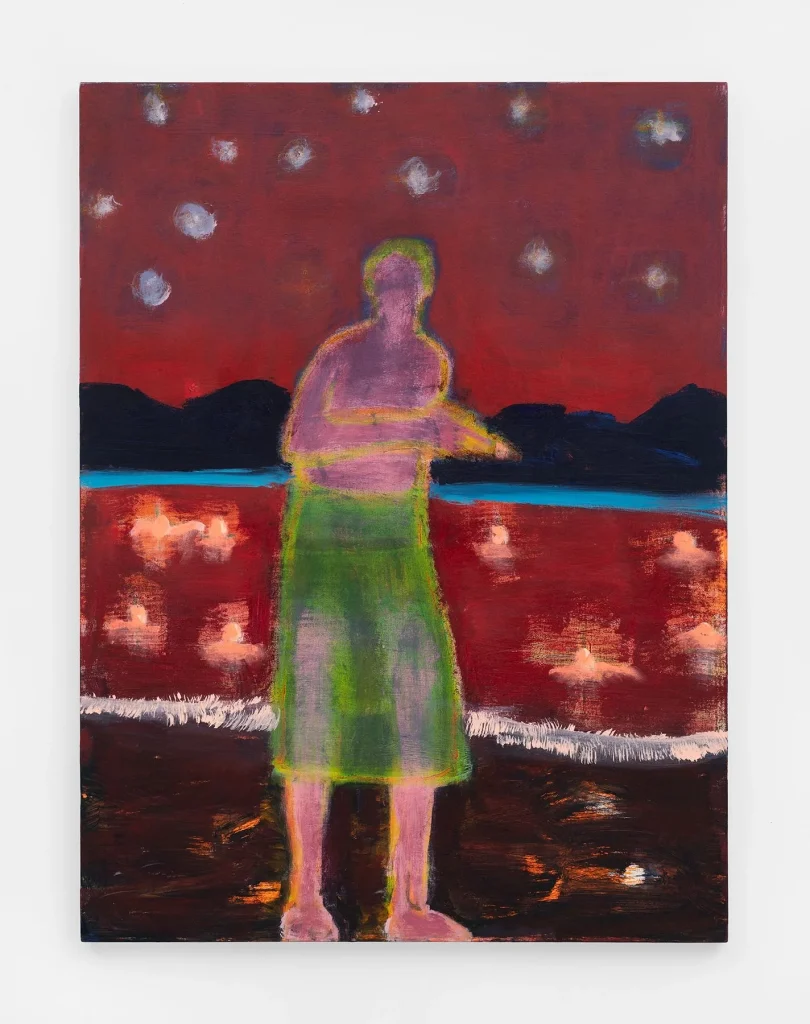
Moonlit Visions by Katherine Bradford: An Exploration of Light and Atmosphere
**Art and Dialogue: Exploring Contemporary Art and Curatorial Practices**
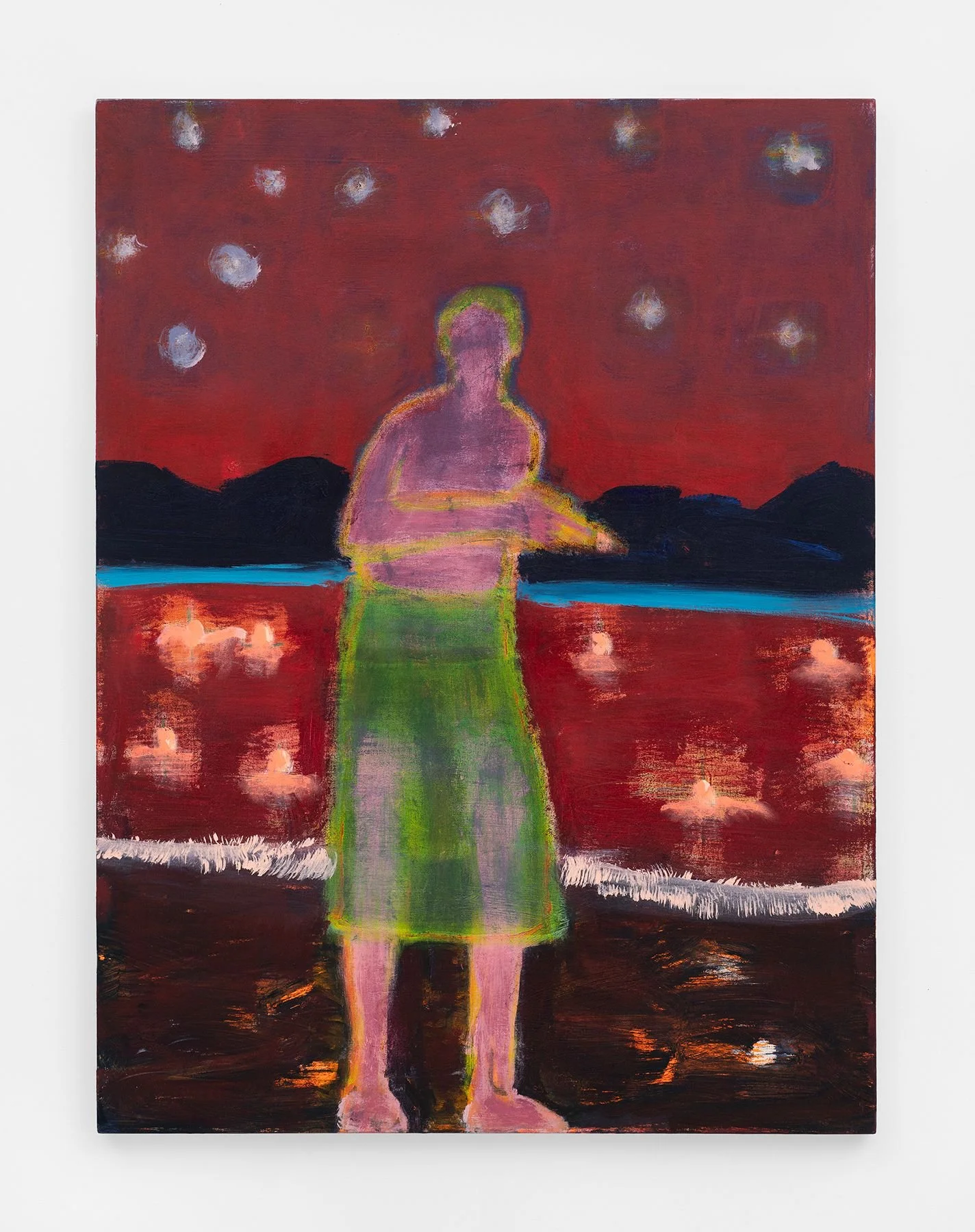
In the ever-evolving world of contemporary art, figures like Katherine Bradford and Theaster Gates challenge and redefine traditional boundaries with their unique and thought-provoking works. Bradford’s “Communal Table,” a creation that captures both personal loss and transcendence, leaves viewers in awe with its starry-eyed exploration of human figures. Meanwhile, Theaster Gates’ exhibitions at Gray Gallery and the Smart Museum of Art push audiences to reconsider the very essence of art by preserving and displaying objects often overlooked or discarded.
**Katherine Bradford: A Touch of Intimacy**
Katherine Bradford, an artist known for her celestial-themed works, mesmerizes audiences with her ability to invoke emotion through simplicity. In one of her latest pieces, a woman drifts through space, possibly accompanied by her ghost, offering a moment of tranquility and acceptance amid the stars. These narratives, often hidden beneath Bradford’s layers of paint, resonate deeply with those familiar with loss and longing, marking her work as an essential component of Tribeca’s artistic heartbeat.
**Theaster Gates: Objects as Art and Memory**
Theaster Gates invites an examination of the art of preservation and the potential stories behind everyday objects. His exhibitions present African artifacts and identifiable objects in new lights, challenging viewers to see the beauty in the mundane. Nevertheless, the structured presentation often flattens these items into mere catalog entries, prompting audiences to imagine their stories and consider their significance in both art and personal history.
**John Yau on Curatorial Silence**
In parallel, voices like Erika Hirugami and John Yau question the roles and responsibilities of contemporary curators. Hirugami critiques the political reticence among American curators, calling for more active engagement in societal discussions. In Yau’s reflections on Gates’ work, an implicit call emerges for more nuanced and layered curatorial narratives that embrace complexity over mere presentation.
**Innovative Art Platforms and Programs**
The art scene is rich with innovations that transcend traditional displays and gallery walls. The ongoing “Platform Dalí,” initiated by the Gala-Salvador Dalí Foundation, embodies a confluence of art and science, sustaining the surrealist’s legacy of marrying creativity with scientific exploration. Such platforms open dialogues between varied fields, allowing art to expand beyond its conventional viewers to engage with scientists, thinkers, and the curious public.
**Pyaari Azaadi: Art as Revolution**
Visionary artists like Pyaari Azaadi exemplify the potential of art to catalyze societal change. Through her politically charged exhibitions, Azaadi opens dialogue on the intersections of community, art, and activism, encouraging others to see art as both a personal and collective voice against injustice. Her work, lauded by many including journalist Yashica Dutt, remains a guiding beacon for artists navigating the treacherous territories of identity and agency.
**Unearthed Narratives and Remembered Legacies**
Art does not exist in isolation but as a continuation of narratives—both remembered and forgotten. A recent release of photographs from Jeffrey Epstein’s estate, showing dissonant objects like masks among opulent settings, illustrates the complex intertwining of wealth, power, and darkness. Similarly, Peter Waite’s architectural paintings capture absence, presence, and the stories held within walls that no longer hear footsteps.
As the art world reflects upon itself, moving entries such as “Stop Putting Art on Miami Beach” by Valentina Di Liscia challenge site-specific exhibitions, emphasizing the importance of context, audience, and the intimate act of viewing. This critical stance reminds us that art remains, above all, a dialogue—not only displayed but experienced, debated, and cherished in the hearts and minds of those it touches.
In these explorations of the contemporary art realm, one is urged to consider how art and curatorial choices impact personal and collective memory. Whether through Bradford’s intimate starscapes, Gates’ enigmatic relics, or Azaadi’s revolutionary stage, art continues to invite us to reflect, engage, and imagine worlds yet unseen.