Wally Hedrick’s Anti-War Protest Through Sexual Imagery
**Art Review: Wally Hedrick’s Retrospective ‘Sex Politics Religion’**
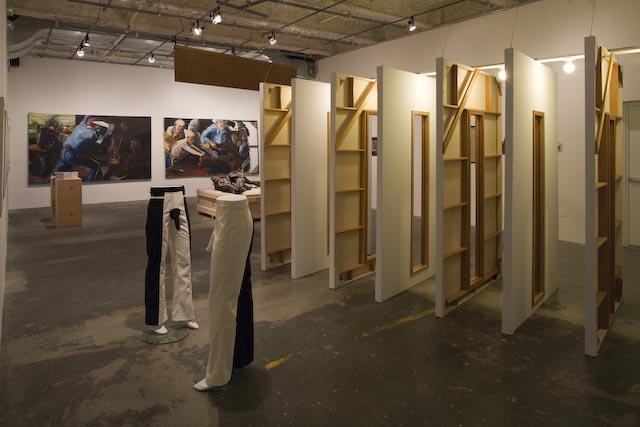
Wally Hedrick, a pivotal figure in the San Francisco counterculture of the mid-20th century, receives his first retrospective in 40 years. Titled “Sex Politics Religion,” the exhibition showcases three themes that fueled Hedrick’s creative outpouring: taboo subjects that merged art with protest. This two-location show spans Parker Gallery and The Box in Los Angeles, each offering a different lens into Hedrick’s work.
Hedrick was a Beat Generation artist known for defying the norms of his time, rejecting the popular Abstract Expressionism in favor of personal, satirical commentary. “A Harry Fallick Production” (1959) exemplifies his humor, critiquing the pervasive influence of television even as he nods to avant-garde predecessors like Duchamp.
However, Hedrick’s work was far from frivolous when addressing political issues. As a Korean War veteran, he harbored strong antiwar sentiments, notably painting over his artworks in black in protest of the Vietnam War—a gesture he sustained through subsequent conflicts. His immersive “War Room” invites viewers into a somber space to reckon with their emotions about war, evolving over the years in response to global events.
Exploring the intersection of art, love, and spirituality, Hedrick saw sex as a transformative experience. Works like “Danäe” and “1 Tube Super-Hetro Dame Receiver” explore themes of sexuality with both reverence and humor, revisiting Beat fascination with esoteric concepts such as Wilhelm Reich’s orgone energy.
Hedrick’s exploration of themes went beyond a single style, employing a range of media to examine his ideas with contextual richness. His later works like “Peace Awakening/WWW.COM (Wiggy With Wings)” (2000) continue to channel the enduring message of love over hate, embodying the antiwar sentiment with a personal touch—a tribute to his last partner, Wiggy.
The exhibition “Sex Politics Religion” remains a testament to Hedrick’s legacy, enriching the dialogue on art’s role in societal critique. It is on view at Parker Gallery and The Box in Los Angeles, illustrating Hedrick’s belief in the transcendent power of love, both in life and beyond.