Magdalena Abakanowicz’s Sculptural Exploration of Collective Human Forms
**Art Review**
**Magdalena Abakanowicz: The Quiet Power of Organic Sculptures**
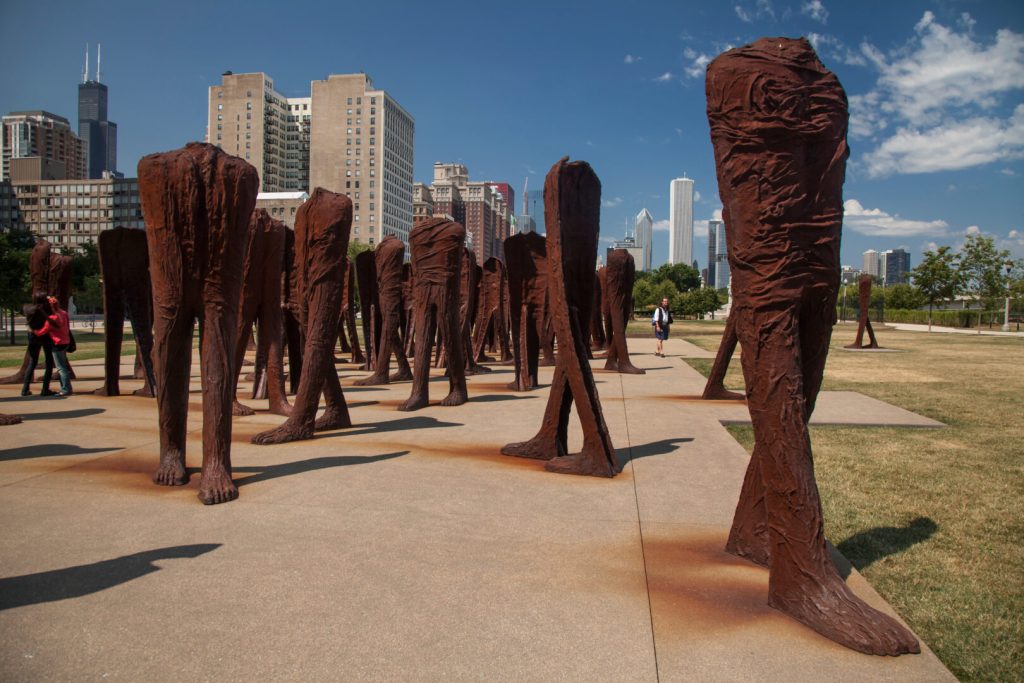
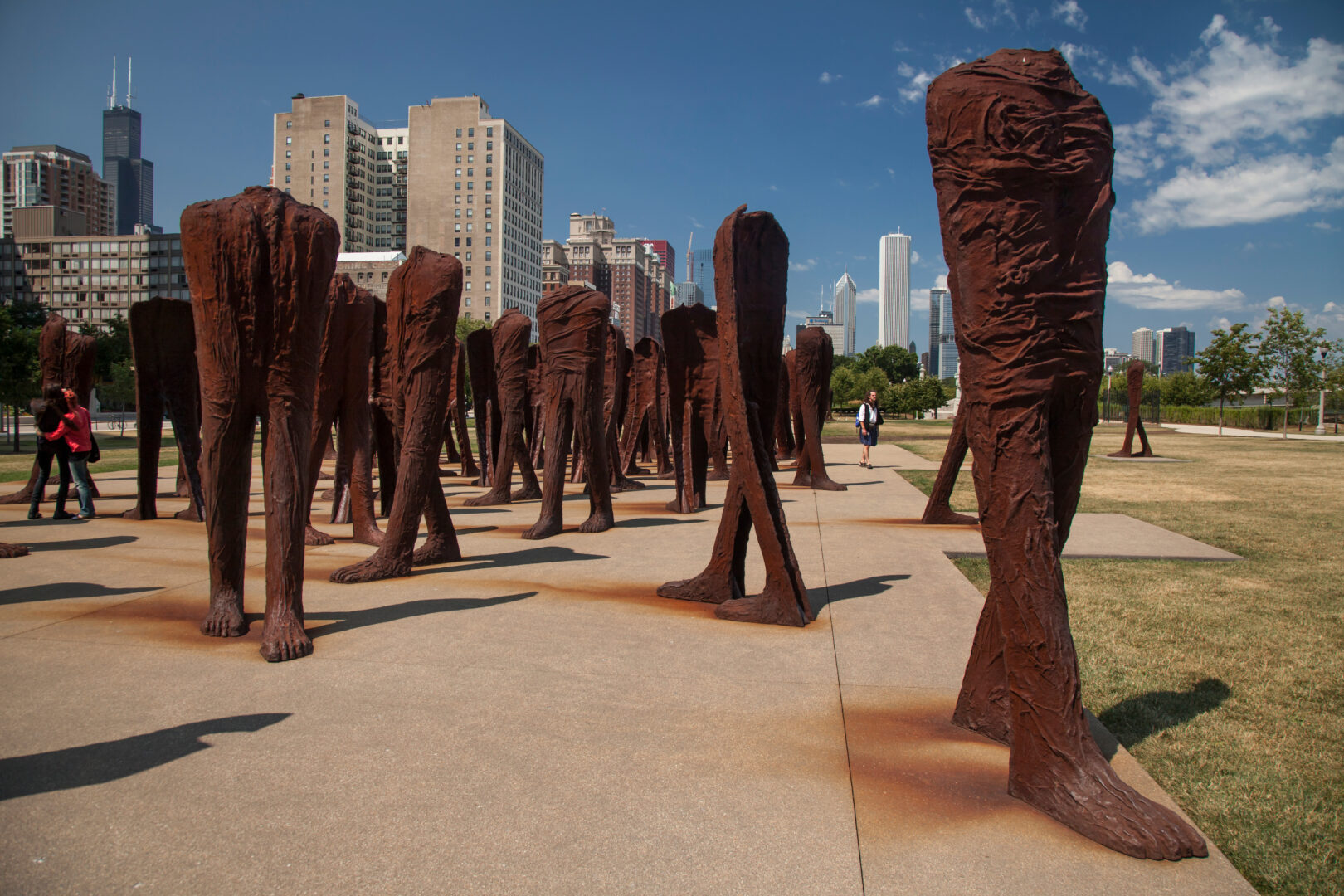
Her organic sculptures convey a quiet power, the faceless anonymity of multitudes transformed into a collective oneness. Magdalena Abakanowicz, a revolutionary Polish artist, explores the organicity encoded in the human body, a concept that permeates her work with direct yet mysterious knowledge.
Abakanowicz’s survey, “Magdalena Abakanowicz: The Thread of Existence” at Musée Bourdelle, Paris, showcases around 80 works including large textiles, sculptures, and drawings from the 1960s to the early 2000s. Despite censorship in Communist Poland for being too formalist, her reputation soared with accolades like the Grand Prix at the 1965 São Paulo Biennial.
She was part of the Eastern European arts vanguard, alongside figures like Tadeusz Kantor and Jerzy Grotowski, opposing socialist ideologies that sought to subjugate the collective body to industrialism. Instead, they emphasized the body’s spiritual vitality.
Abakanowicz’s sculptures, dubbed “abakans,” resemble decorative gobelins from Polish homes yet stand apart with their vast, earthen, and erotic presence. “Abakan Orange” (1971) exemplifies this with its fiery color and vulvar-like oval sisal base. Its neighbor, “Abakan Red” (1969), contrasts softness and hardness with its sword-like form amidst gentle textures.
While her sculptures explore elemental forms, they always reflect the human form’s essence. “Black Garment” (1975), a rotating sisal-and-jute piece, evolves the viewer’s perception from flatness to voluminous drapery.
In the exhibition’s final section, sculptures explore collective humanity, as seen in “Standing Mutants” (1992–94) and “Crowd V” (1995–97). Under communism, collectivity became control; however, works like “Dancing Figures” (2001) embody ritual, and “Backs” (1976–80) evoke vulnerability yet profound collective strength through faceless forms.
“Magdalena Abakanowicz: The Thread of Existence” continues at Musée Bourdelle, Paris, until April 12. Curated by Ophélie Ferlier Bouat and colleagues, this exhibition invites viewers to explore humanity’s organic essence and collective power.