The Complex Challenges and Insights of the Whitney Biennial
The 2026 Whitney Biennial, curated by Drew Sawyer and Marcela Guerrero, takes a distinctive approach in gauging the current American art scene. Unlike previous iterations that adhered to strong thematic directives, this edition aims to capture the broader temperature of the art world, leading to its characterization as “weird.” This label reflects the pervasive sense of dislocation in contemporary society, grappling with issues such as AI, environmental crises, and geopolitical tensions.
Despite this, the featured artworks, while diverse, don’t uniformly embody this weirdness. Instead, they offer beauty, insight, and emotion. Comprising 56 artists and collectives, the biennial deliberately includes artists from regions impacted by U.S. intervention, such as Afghanistan, Chile, and Vietnam. This choice highlights the ongoing relevance of historical and political engagement in art.
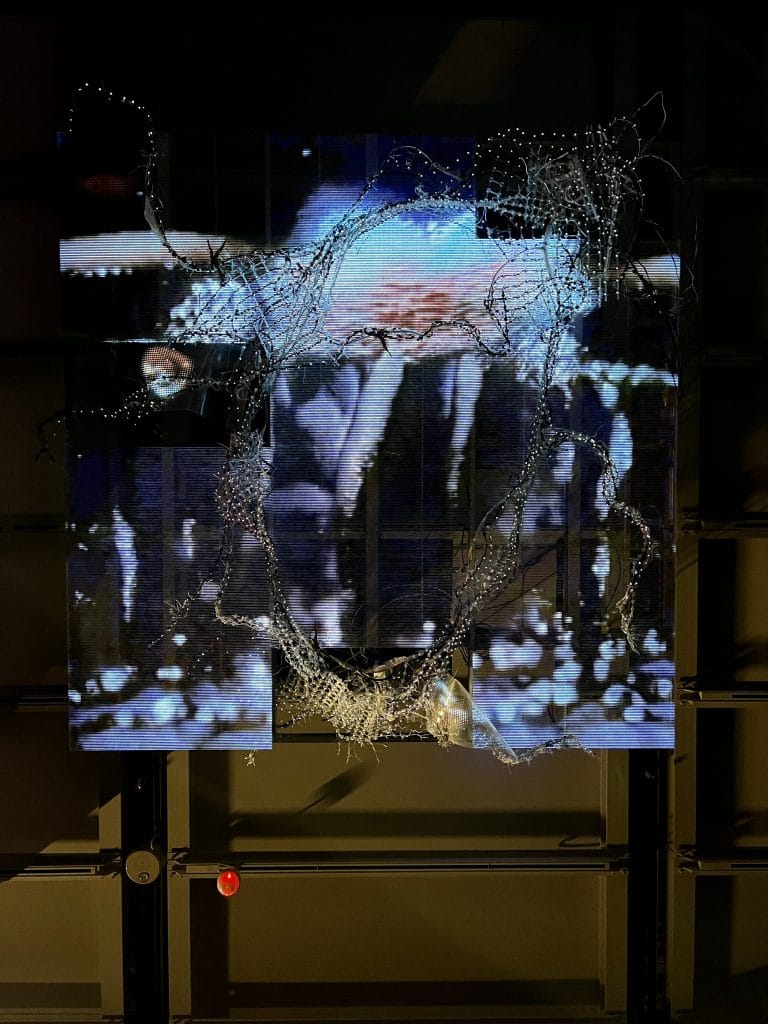
Key themes such as infrastructure and relationality are explored without overshadowing the artworks. On infrastructure, works like Michelle Lopez’s “Pandemonium” powerfully visualize societal chaos through a swirling assemblage of debris. Akira Ikezoe’s whimsical paintings and Emilio Martínez Poppe’s evocative photos challenge viewers to reconsider how infrastructure shapes perception and reality.
The dual emphasis on mourning and kinship pervades. From Kelly Akashi’s personal monument to grief to Augusto Machado’s altars commemorating queer community members, the biennial illuminates loss and remembrance. Concepts of relationality extend to pieces by Andrea Fraser, whose work alongside her mother Carmen de Monteflores underscores familial and artistic roles, and Young Joon Kwak’s glittering sculptures that embody collective unity.
Amid expressions of wonder and grief, genuine “weirdness” resonates in select works, like the provocative “Satan in America” series by Isabelle Frances McGuire and the sly playfulness of Pat Oleszko’s “Blowhard.” Such pieces challenge conventional boundaries, reflecting art as a form of infrastructure ripe for deconstruction.
The 2026 biennial maintains an implicit yet ever-present political charge, championing art as a vessel for critical discourse. While lacking overt solutions to current crises, it successfully mirrors the chaotic complexity of contemporary life, encouraging engagement through precisely curated narratives. Open from March 8 to August 23 at the Whitney Museum, this biennial exemplifies art’s role in navigating uncertainty with beauty and resilience.