Met Museum Provides Access to 3D Scans of More Than 100 Artifacts in Its Collection
The Metropolitan Museum of Art in New York, as an extension of its Open Access program, has released more than 100 high-resolution 3D scans of art historical artifacts, encapsulating the essence and intricacies of items that might otherwise remain overlooked. This initiative facilitates a lively examination of the museum’s extensive inventory of roughly 1.5 million artworks spanning diverse media, including sculptures, paintings, textiles, jewelry, and calligraphy. The 3D models, celebrated for their exact color fidelity and high quality, enable visitors to investigate artworks in remarkable detail free from the limitations of protective display cases.
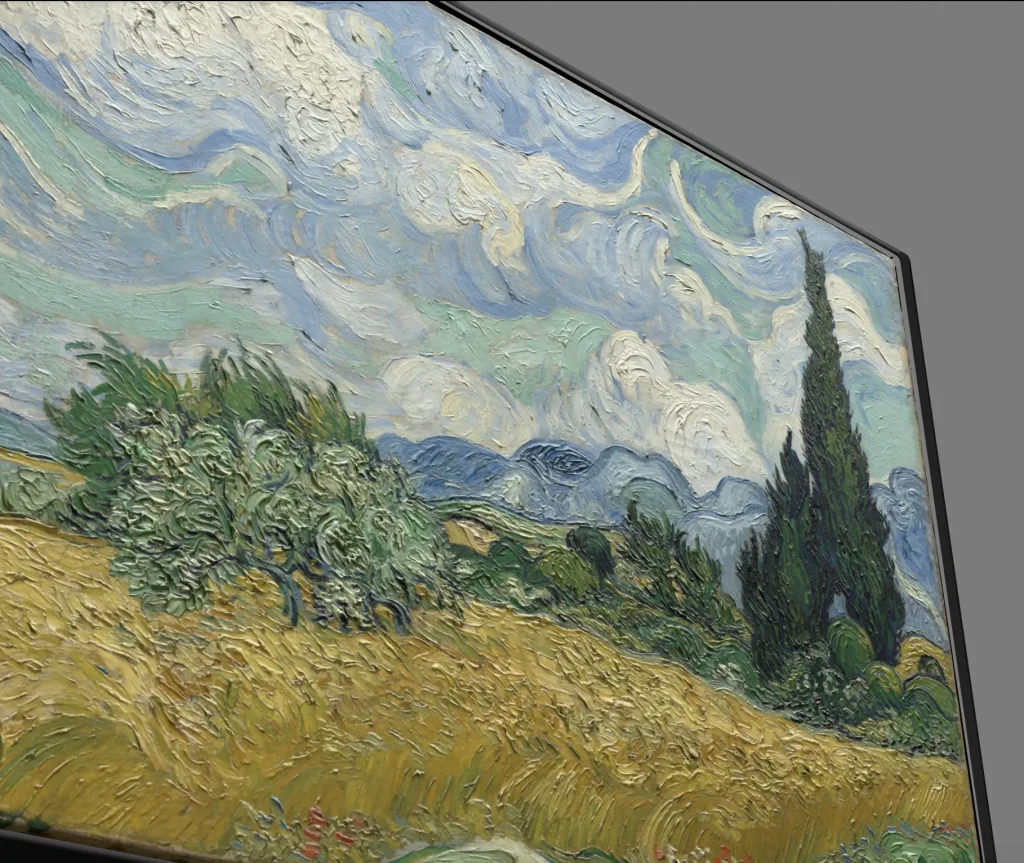
Among the thoughtfully selected models on offer is a scan of Vincent van Gogh’s renowned 1889 artwork, “Wheat Field with Cypresses,” highlighting the artist’s energetic brushwork and vibrant color scheme. Other significant works encompass a detailed Claude Monet painting from 1891, proto-Cuneiform tablets, and sliding-door panels from Japan’s Edo era. Moreover, viewers can explore the intricacies of a lavish French parade armor from 1555, King Henry II’s armor, and grand sculptures like Antonio Canova’s “Perseus with the Head of Medusa” and Jean-Baptiste Carpeaux’s “Ugolino and His Sons.”
The Met’s Imaging Department, in partnership with NHK (Japanese Broadcasting Corporation), employed state-of-the-art portable laser scanning technology and camera-based photogrammetry to create these scans. As the museum delves deeper into educational programming and content creation with NHK, the current resources of the project are mainly accessible for free download and public use under the Met’s Open Access initiative and CC0 license.
These models are accompanied by informative texts that elucidate their context and history, along with a rich selection of 2D imagery. The Met seeks to continue broadening this collection, improving accessibility for art lovers globally. To view these remarkable 3D scans, visit the Met’s online database.