Exploring 150 Years of the Legal Aid Society: A Historical Visual Analysis
In 1876, the first legal aid organization in the United States was established in Manhattan’s Nassau Street with a staff of three, focusing on defending low-income individuals. Initially named the German Legal Aid Society, it represented 212 immigrants in its first year, recovering the equivalent of $3.6 million in wages for German immigrants over a decade. It later became the Legal Aid Society, broadening its scope to serve all New Yorkers.
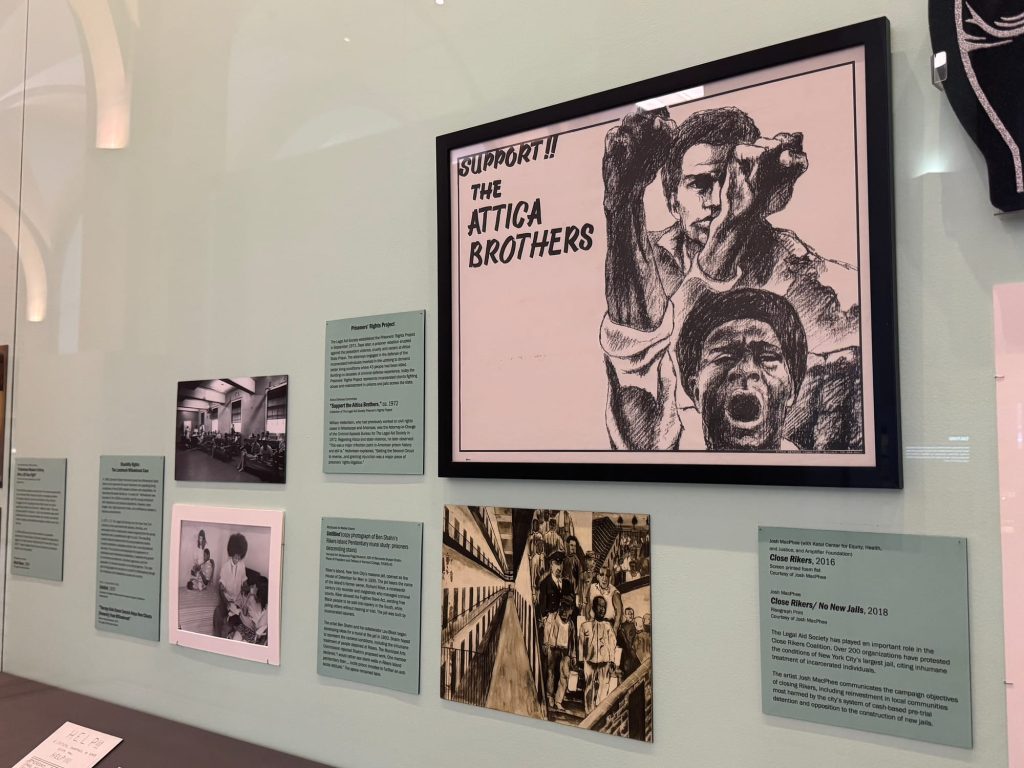
Now the largest public defense provider in the U.S., the Legal Aid Society combines government and private funding. In celebration of its 150th anniversary, the New York Historical Society opened an exhibit titled “Delivering Justice: 150 Years of The Legal Aid Society,” featuring historical relics and artworks by clients and activists. CEO Twyla Carter emphasized the intersection of law and lived experience showcased in the exhibit.
The exhibit highlights the society’s major legal victories, such as defending the Attica prison uprising participants and fighting against brutality at Rikers Island jail. Brooklyn-based artist Josh MacPhee contributed artworks advocating for Rikers’ closure, aligning with the society’s mission. The exhibit aims to engage new audiences and recounts landmark litigation like the 1981 mandate for shelter services, extending rights to homeless women and children.
The Legal Aid Society continues to champion new initiatives like the New York Immigrant Family Unity Project, providing representation for those facing deportation. The ongoing fight for dignity and equality remains relevant, as evidenced in the exhibit available through July 5, 2026.