Indian Modernists Envisioned Solidarity Before the “Global South” Concept
**Unveiling Decolonial Pathways: The Interwoven Legacies of Indian Art and Anticolonial Thought**
The discourse surrounding decolonization often navigates through an intricate web of art, literature, and intellectual solidarity. This is vividly encapsulated in historian Atreyee Gupta’s insightful exploration of Indian art and its intersections with anticolonial figures in her upcoming book, *Non-Aligned: Art, Decolonization and the Third World Project in India* (Yale University Press, 2025). Gupta dissects how luminaries like Indian artist Abanindranath Tagore, Mexican poet Octavio Paz, and Martinican philosopher Frantz Fanon, spanning five decades and three continents, contributed to the ideological commitment to dismantle Western imperial frameworks through artistic and literary means.
Central to Gupta’s examination is the term “Third World,” originally coined to describe nations that were neither aligned with the capitalist West nor the communist East during the Cold War. This term has evolved into “Global South,” despite its criticisms as a broad and imprecise label for economically developing nations. Gupta navigates these terms and their implications, arguing that a “knowledge-producing Third World” precedes the geopolitical conception, representing an intellectual consciousness rooted in anticolonial resistance and cultural autonomy.
Indispensable to this narrative is the Non-Aligned Movement, particularly the Bandung Conference of 1955. This significant gathering of post-colonial nations marked a stepping stone for cultural and political independence from Western influence. Through this lens, Gupta reveals the rich tapestry of Indian interwar and postwar art, positioning it within the broader currents of global modernisms.
In highlighting artists like Tagore, sculptor Dhanraj Bhagat, and painter F.N. Souza, Gupta delves into their alignment with movements such as Latin America’s Indigenismo. She unveils a transnational solidarity that existed well before the formal identification with the Third World, symbolized in Tagore’s *Khuddur Jatra*, a collage series depicting a blend of South Asian and global symbolism.
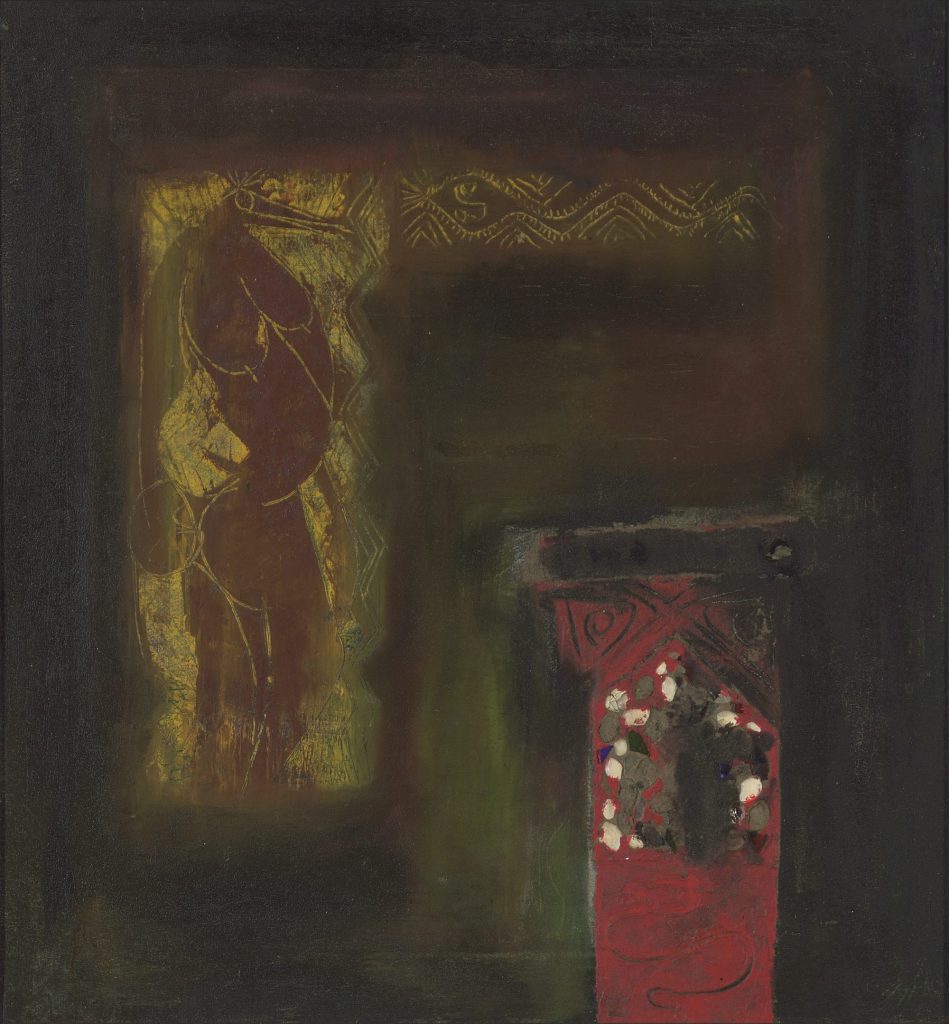
A poignant exploration is that of the relationship between Indian artist Jagdish Swaminathan and poet Octavio Paz. Their friendship reflects a cross-continental decolonial art practice, with Swaminathan’s paintings, like “The Sign and the Altar”, integrating diverse aesthetic influences, and Paz’s poetry intertwining cultural mythologies.
While Gupta faces the challenge of limited direct evidence of artists’ engagement with movements like the Non-Aligned Movement, she turns these gaps into productive inquiries, offering nuanced interpretations. She examines Souza’s exploration of the color black in his paintings, linking it to themes of subjugation and colonialism independent of Western influences, offering a potent critique on the perceived neutrality of color in post-war modern art.
Despite occasional complexities in prose, Gupta’s work stands as a transformative contribution to understanding decolonial dynamics in art. By unveiling the subtle cadences of aesthetic emotion and intellectual resistance, *Non-Aligned* offers a profound testament to the enduring legacies of decolonization within the global artistic landscape.
*Non-Aligned: Art, Decolonization and the Third World Project in India* by Atreyee Gupta invites readers to reimagine the pathways of decolonization through art and thought, presenting a nuanced narrative of Indian art within the broader dialogues of the Global South.