Exhibition Highlights 2,000 Years of National Art Treasures from Korea
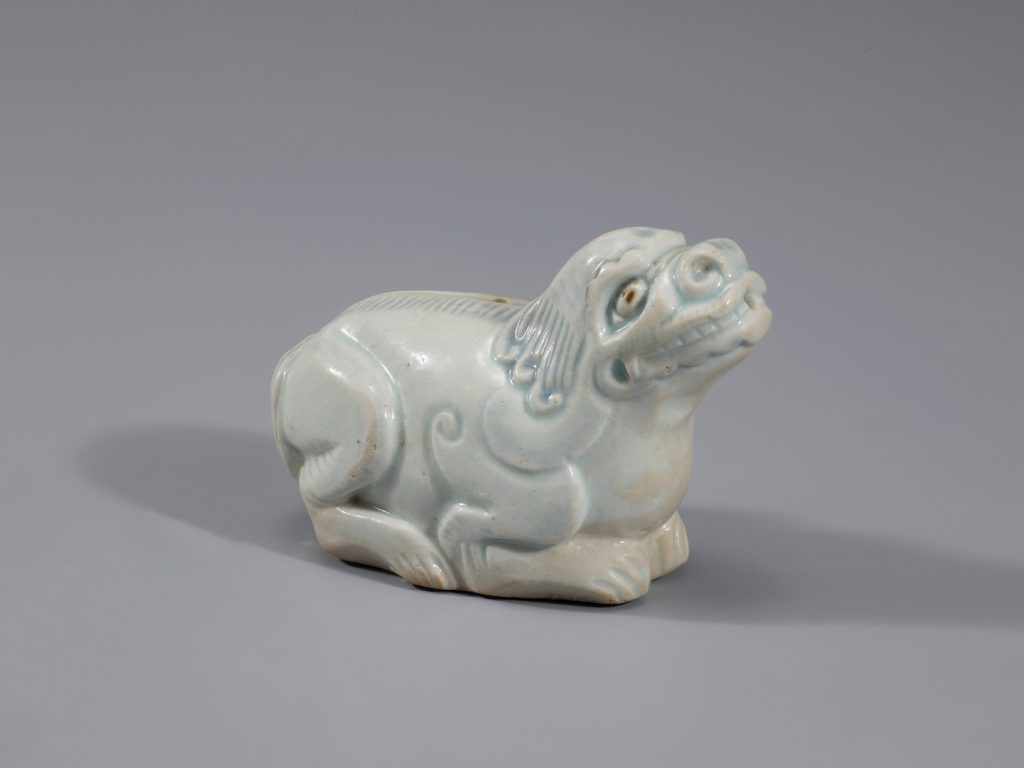
The Haetae or Haechi is a legendary being frequently illustrated in Korean artistry. Marked by its lion-esque form, the Haetae is regarded as a protective entity with the ability to safeguard temples and repel calamities. Within Korean tradition, Haetae symbolizes righteousness and security, prompting numerous historical landmarks and royal residences to incorporate stone carvings of this creature.
A significant example from the Joseon era is the Haetae-shaped water dropper—an essential tool in calligraphy and painting utilized to regulate the water flow during ink preparation. This distinctive artifact from the 19th century, fashioned in porcelain, elegantly combines utility with artistry, highlighting the complex heritage of Korean craftsmanship.
A prominent item in the Korean National Treasures showcase, hosted at the Art Institute of Chicago, the Haetae-shaped water dropper enchants with its intricate design and cultural importance. The exhibition, occurring for the first time in 40 years, provides a reflective exploration of Korean visual art, presenting sculptural, painted, and functional pieces spanning 2,000 years, featuring precious objects contributed by the family of the late Samsung chairman, Lee Kun-Hee.
This Haetae-shaped water dropper represents merely a fraction of numerous items that illustrate the richness of Korean innovation, embodying both cultural legacy and artistic creativity. Such objects persist as vital components of Korea’s identity, reflecting the nation’s aesthetic values and historical stories preserved through creative expression. The exhibition runs until 2026, offering a glimpse into the vibrant narrative of Korean art and its development throughout the ages.