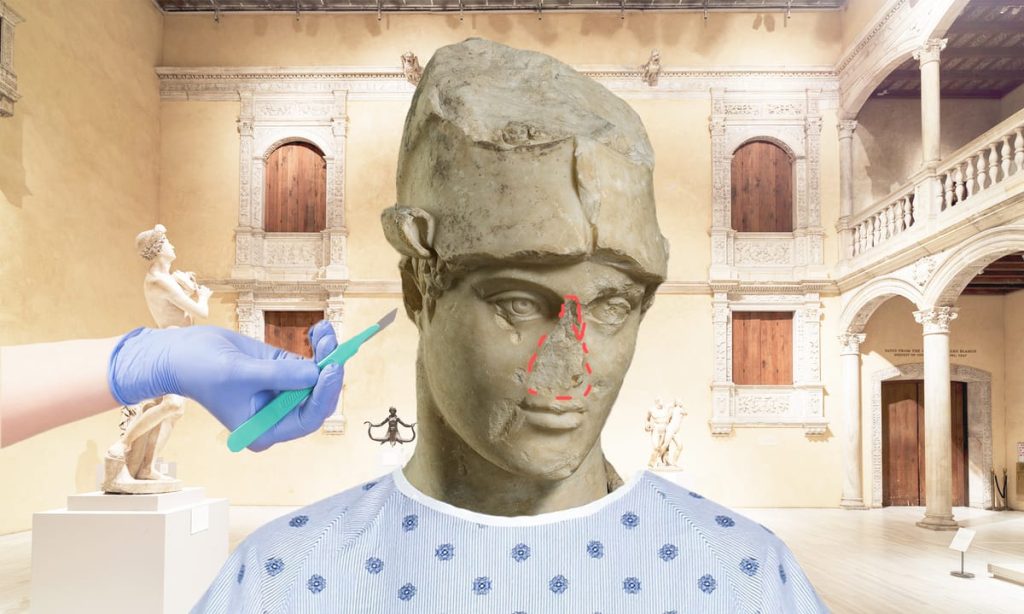
The Metropolitan Museum of Art to Restore Ancient Statues with Replica Noses
The Met’s Unorthodox Initiative: Nose Jobs for Greek and Roman Sculptures
The Metropolitan Museum of Art has stirred intrigue with its latest venture—the Smellowship program, designed to reshape the way we view ancient art. This satirical initiative allows patrons to sponsor custom rhinoplasties for the museum’s Greek and Roman sculptures, modeling them after the donors’ own noses.
Launching at $800 per sculpture, the program enables lucky sponsors to see their noses replicated on the classic works, spanning from the 9th century BCE to the 5th century CE. Iconic figures like Aphrodite, Dionysus, and Athena have already found sponsors eager to transform these famously noseless masterpieces into personalized tributes.
In collaboration with Nasonex Studios, renowned for their contemporary “Instagram face” procedures, the project seeks to blend tradition with modern aesthetic ideals. Founder and lead surgeon Brad Smellini caused a stir on social media by suggesting a range of trendy nose types, dubbing them “bunny-slope noses” and “chiseled Chads.”
The announcement has sparked a lively debate online. Critics argue that many original sculptures likely featured more historically accurate aquiline features, questioning the cultural implications of altering these heritage pieces. Proponents advocate for the sculptures’ right to “look and feel their best,” pushing back against the critique of mainstream beauty standards.
The museum has addressed these discussions, asserting that the initiative humorously critiques cultural obsessions with appearance, aiming to pay homage to both the artistry of Greco-Roman sculptors and contemporary beauty ideals. While some sculptures express concern over these transformations, Smellini celebrates the opportunity to blend ancient art with modern-day whims.
For those who cherish ancient art, the Smellowship program offers a humorous lens through which to examine the evolving dialogue around beauty and tradition within museum spaces.