Leah Ke Yi Zheng’s Personalized Interpretation of the I Ching
**The Synthesis of Eastern and Western Art in Leah Ke Yi Zheng’s Work**
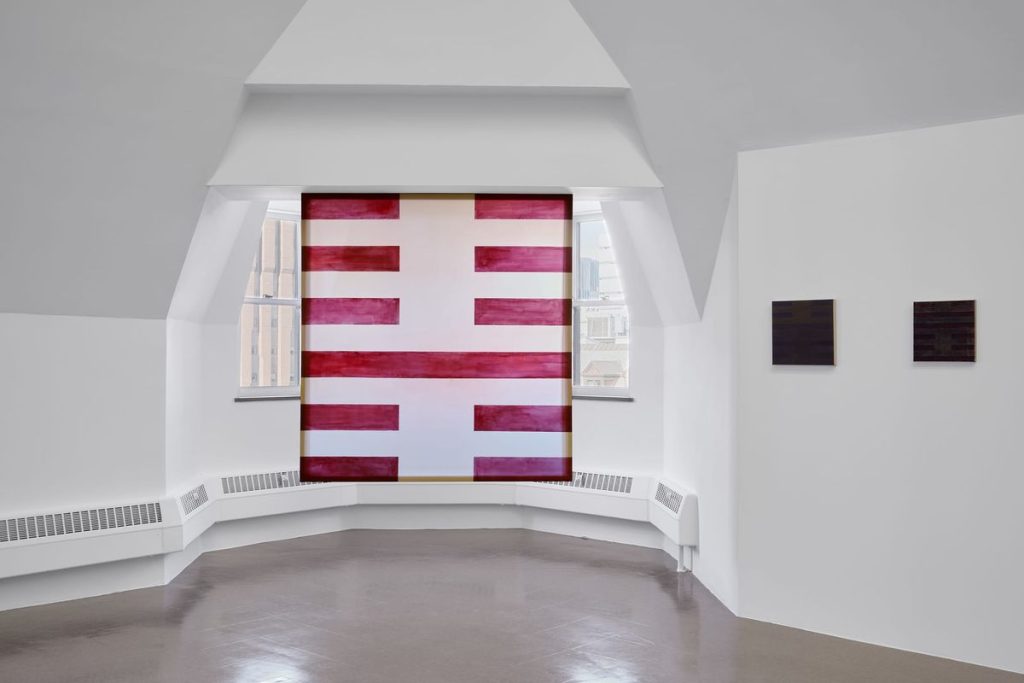
In recent years, the art world has witnessed a profound and intriguing fusion of cultural traditions, best exemplified by the work of Chinese-born artist Leah Ke Yi Zheng. Her latest exhibition at the Renaissance Society in Chicago, curated by Myriam Ben Salah and Karsten Lund, showcases her innovative approach to synthesizing the divergent cultural histories of Western oil painting and Eastern ink painting. This ambitious blending of techniques is evident in her installation, “Change, I Ching (64 Paintings),” a series that not only demonstrates her technical prowess but also her conceptual depth.
Zheng’s work primarily focuses on transcendence beyond the historical boundaries of Chinese traditional paintings, while concurrently challenging Western art convention. Using materials and techniques dating back to the Five Dynasties and Ten Kingdoms period in China (907 AD–960 AD), Zheng utilizes silk as her canvas—a material that she describes as delicate yet robust, akin to human skin. This choice is both symbolic and technical, representing a bridge between the tactile nature of Western canvas and the ethereal qualities of Eastern scroll painting.
The “I Ching,” an ancient Chinese text, is central to Zheng’s exhibition. Its 64 hexagrams serve as both a structural foundation and a conceptual touchpoint for her work, standing as geometric markers that transcend their original oracular meanings. By painting these hexagrams in oil or acrylic on a variety of silk backgrounds, Zheng not only pays homage to the historical weight of these symbols but also reinvents them through the lens of geometric abstraction, a prominent movement in Western art.
The exhibition space itself reflects Zheng’s innovative spirit. She reimagines the gallery layout, altering wall configurations and window placements to create a dynamic interaction with light—a nod to the practices of artists like Robert Ryman, who incorporated natural light into their installations. This manipulation of space and light allows Zheng to imbed her paintings with a temporal quality, making each piece a participant in an ongoing dialogue between the viewer, the artwork, and the exhibition environment.
Zheng’s two largest paintings, which hang opposite the gallery entrance, embody this synthesis of elements. The optical play between figure and ground in these works, created through the interplay of color and transparency, invites the viewer into an immersive experience that undermines the rigid structures of traditional hexagrams. This fluidity of perception is central to Zheng’s practice, offering a unique interpretation of the “I Ching” that is both personal and universally resonant.
Each of Zheng’s 64 paintings stands as an individual work while contributing to the cohesive whole of the series. This concept of unity through variety is reflected in the diversity of sizes, palettes, and mediums used across the series. By deliberately varying these elements, Zheng invites viewers to engage with each painting on its own terms, while also experiencing the cumulative effect of the series.
Leah Ke Yi Zheng’s exhibition is a testament to the potential of art to transcend cultural boundaries and historical limitations. Her ability to integrate disparate artistic traditions into a cohesive and transformative body of work confirms her position at the forefront of a new wave of artists redefining the parameters of contemporary art. This remarkable series, “Change, I Ching (64 Paintings),” not only enriches the discourse between Eastern and Western art but also cements Zheng’s place as a visionary artist for our time.
**Leah Ke Yi Zheng: I Ching (Book of Changes)** continues at the Renaissance Society in Chicago through April 12, and its impact will undoubtedly resonate far beyond its physical boundaries.