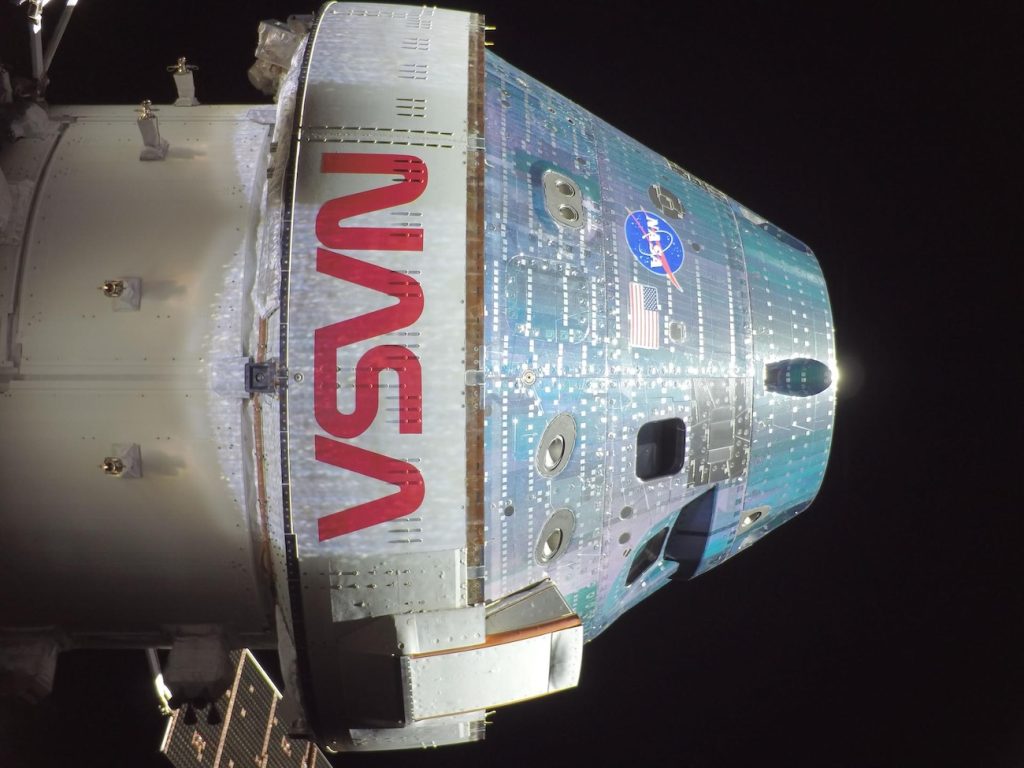
Artemis II: NASA’s Historic Achievement with Successful Earth Splashdown
NASA has achieved another remarkable milestone. It had been over five decades since the space agency dispatched a crew to the moon, but that all changed with the triumphant Artemis II mission. Launched on April 1, 2026, it marked the first human expedition that ventured beyond low Earth orbit since Apollo 17 in 1972. During a span of 10 days, the four-member crew traveled 694,481 miles before safely landing in the Pacific Ocean, near San Diego, on April 10, 2026.
The Artemis II mission featured a record-setting achievement. On April 6, the crew—Reid Wiseman, Victor Glover, Christina Koch, and Jeremy Hansen—achieved a remarkable distance of 248,655 miles from Earth, setting the record for the farthest any human has ever traveled. (This record was previously held by Apollo 13 astronauts in 1970.)
The lunar flyby took the crew to the moon’s far side, where the astronauts captured over 7,000 images of the lunar terrain, offering deeper insights into Earth’s satellite, including views of Earthset, Earthrise, ancient lava flows, impact craters, and surface details. They also photographed a solar eclipse from orbit, witnessing the moon fully covering the sun for nearly 54 minutes, revealing amazing details of the corona, the outer layer of the sun’s atmosphere.
Studying the moon’s physical features was just one aspect of the Artemis II mission. Orion, the spacecraft that transported them to the moon, underwent its first comprehensive in-flight assessment, and the crew carried out scientific studies like the AVATAR research, which examines how human tissue reacts to microgravity and deep-space radiation. This information will assist in planning longer space missions.
The public investment in the Artemis II mission was widely shared on social media, showcasing both breathtaking views from space and highlighting the bonds formed among the crew members. Their interactions revealed a profound mutual respect and care for one another. This was particularly evident during an emotional moment in the mission when they sought permission to name a crater after Wiseman’s late wife, Carroll, who passed away in 2020 from cancer.
“We lost a loved one. Her name was Carroll, the wife of Reid, the mother of Katie and Ellie,” Hansen communicated to ground control, his voice slightly trembling. “It’s a bright spot on the moon and we would like to call it Carroll.”
The return to Earth necessitated the crew and the capsule to withstand temperatures reaching 5,000 degrees Fahrenheit and speeds exceeding 30 times the speed of sound. There was a six-minute window during reentry when communications with NASA went dark, which was planned and fully anticipated. After being rescued from the Pacific Ocean by the U.S. Navy, the crew proceeded to Johnson Space Center in Houston, marking the end of an extraordinary journey.
Artemis III is scheduled to launch in 2027. This mission will remain in Earth’s orbit and test spacecraft intended to land humans on the moon in 2028.