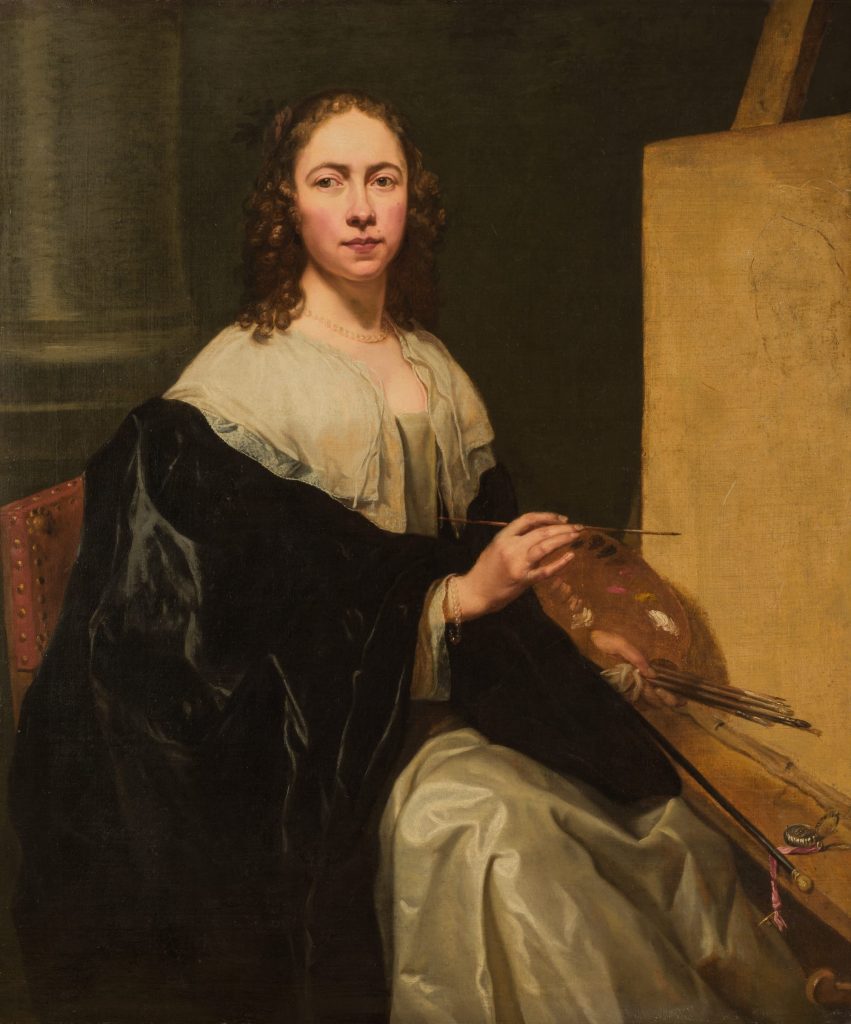
Michaelina Wautier Recognized for Her Contributions to Art
**Rediscovering Michaelina Wautier: A Baroque Talent Unearthed**
*LONDON* — An unexpected revelation is captivating art enthusiasts at the Royal Academy’s newly unveiled monographic exhibition of Michaelina Wautier (1604–1689), an artist whose prodigious skills rival those of her esteemed contemporaries, Van Dyck and Rubens. Despite her success during her lifetime, Wautier’s œuvre lingered in obscurity, primarily due to misattributions and gender biases that overshadowed her remarkable achievements for centuries.
As an artist operating in mid-17th-century Brussels, Wautier exhibited extraordinary versatility, seamlessly transitioning from still life and portraiture to the grand, male-dominated domain of history painting. Her diverse body of work defied the era’s gender norms, which confined women predominantly to decorative art forms deemed lower in the artistic hierarchy. This defiance, combined with the pervasive societal biases of the time, contributed to Wautier’s marginalization in art history. Similarly, Artemisia Gentileschi faced comparable challenges in Italy, where her works were often attributed to her father, Orazio Gentileschi. Wautier, who possibly shared her studio space with her brother Charles, had numerous works wrongly credited to him.
Women in Wautier’s era were generally denied access to formal art education and live nude models, making her accomplishments even more extraordinary. Despite signing some of her works with the phrase “invenit et fecit” (“invented and made”), art critics negated her authorship, doubting a woman’s capacity to create such lifelike depictions without formal training — exemplified by her masterpiece, “The Triumph of Bacchus” (1650–56). This piece, once ascribed to a male artist, underscores Wautier’s adeptness in capturing the nuances of the human form.
The tides of recognition began to turn with the reattribution of “The Triumph of Bacchus” by curator Gerlinde Gruber at Vienna’s Kunsthistorisches Museum in 2009, alongside extensive research by art historian Katlijne Van der Stighelen. In 2018, Wautier experienced her first monographic exhibition in Antwerp, jointly orchestrated by the Museum aan de Stroom (MAS) and the Rubenshuis, solidifying her as a significant figure in art history. This notable presentation featured her acclaimed series “The Five Senses” (1650), ingeniously reinterpreting the themes by presenting different boys engaging in various pursuits.
Wautier’s resurgence is continually progressing, facilitated by ongoing research from prominent art historians such as Van der Stighelen and Jahel Sanzsalazar. Their work, coupled with advanced digitization projects, aims to better document and reconstruct Wautier’s life and contributions, illuminating the context in which her art was conceived.
Presently, the Royal Academy’s exhibition, in tandem with the Kunsthistorisches Museum, invites audiences into Wautier’s vibrant world, unveiling the magnitude of this “disappeared” artist. Julien Domercq, co-curator of the exhibition alongside Rina Sagoo, emphasizes the genuine rediscovery of Wautier — an astounding uncovering of talent overlooked for centuries. This exhibition not only updates her authenticated works but also contrasts them with those of her brother Charles and other noteworthy contemporaries like Rubens and David Teniers the Younger.
Disparities in the documentation available for Wautier compared to well-documented artists like Gentileschi partly explain her lesser-known status. Yet, the Royal Academy’s showcase offers hope of altering this narrative, providing a platform for Wautier’s work to captivate and inform. Though much about Wautier’s personal life remains veiled, her creations provide a vivid testament to her talent, giving her the voice that history denied her.
*The Michaelina Wautier exhibition is on display at the Royal Academy of Arts (Burlington House, Piccadilly, London) until June 21. Curated by Julien Domercq and Rina Sagoo, it has been organized in collaboration with the Kunsthistorisches Museum, Vienna.*