Insights from the Easel: An Interview with Celia Paul
**A View From the Easel: Celia Paul’s Home Studio**
Welcome to the 333rd installment of *A View From the Easel*, a series in which artists reflect on their workspaces. This week, we feature British painter Celia Paul, offering a look into her intimate home studio in London’s Bloomsbury neighborhood.
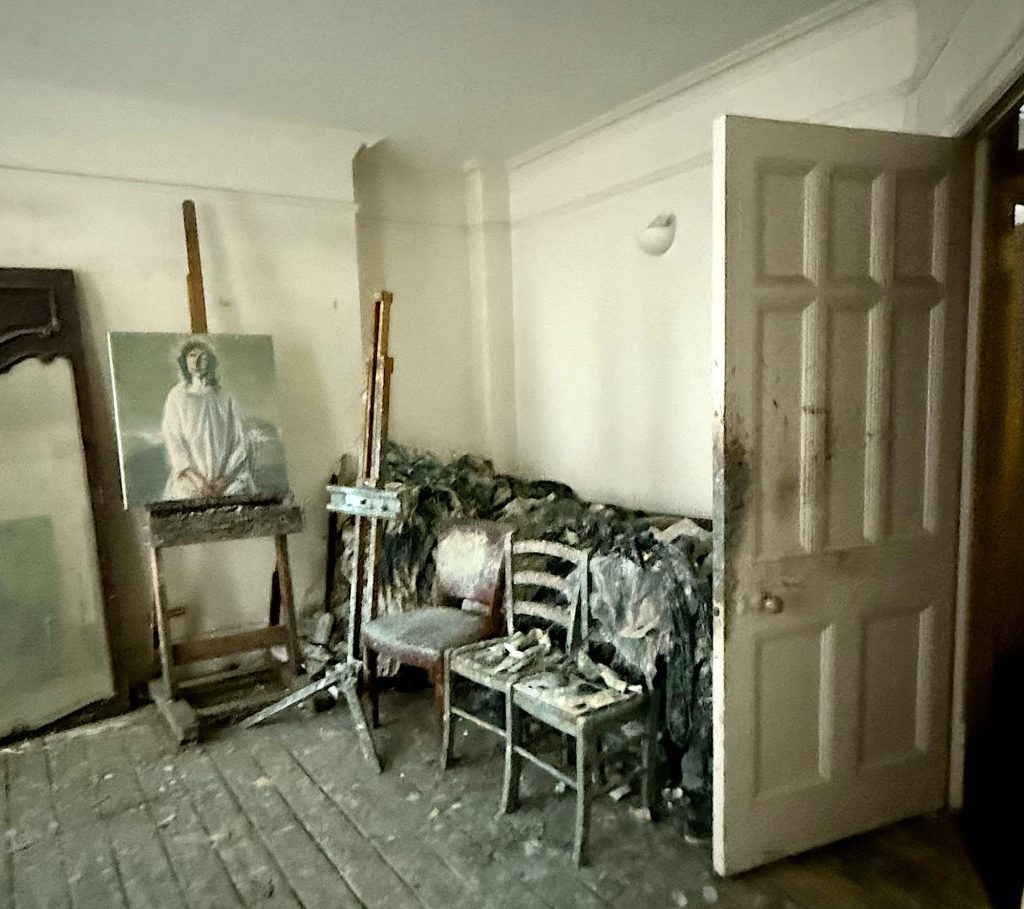
Celia Paul has occupied her Bloomsbury flat, doubling as her studio, since she was 22, a tenure spanning 44 years. In the 1980s, Bloomsbury was a quiet enclave, starkly different from today’s bustling scene. It is this space where she finds solace and inspiration, creating art that mirrors the introspective nature of her surroundings.
**Daily Routine and Workspace Dynamics**
Her day begins at dawn, often starting her painting sessions by 5am, filling her morning with creativity after an energizing cup of tea. Freed from the constraints of working with live sitters, Paul dictates her own rhythm, allowing contemplation and tranquility to sculpt her artistic process. Working on multiple pieces simultaneously, like self-portraits alongside seascapes, she thrives in the silence, devoid of external noise save for the ambient city sounds, striving for inner peace through her art.
The minimalist design of her studio, equipped with only essentials like chairs, beds, and easels, fosters her focus. It is a retreat of simplicity, the emptiness sharpening her concentration. The space’s high elevation offers a canopy view of London’s plane trees through large north-facing windows, flooding her workspace with natural light, enhancing her painting environment.
**Interaction with the Outside World**
Bloomsbury, described as a haven of acceptance, bolsters Paul’s sense of individual freedom, contrasting with her alienating past living in residential neighborhoods. Her proximity to cultural landmarks like the British Museum serves as a potential wellspring of inspiration, even if modern-day tourist crowds render casual visits challenging. Meanwhile, the National Gallery remains a favored but less accessible destination, due to the logistical barriers imposed by advanced booking systems.
**Personal Attachments and Desires for Change**
What Paul cherishes most about her studio is its sanctity; it is her domain, detached from outside intrusion and aligned with nature. She revels in its autonomy, though she wishes for practical improvements like an elevator to aid in transporting large artworks down 80 narrow stairs.
**Artistic Medium and Influence**
Celia Paul primarily employs oil on canvas, favoring its capacity for texture and luminosity, allowing her expressive freedom and depth. Occasionally dabbling in watercolor, she appreciates oil’s versatility in preserving the vibrancy of her layered techniques.
Celia Paul’s narrative offers insight into the importance of space in artistic creation, highlighting a delicate balance between solitude and community within her Bloomsbury enclave.