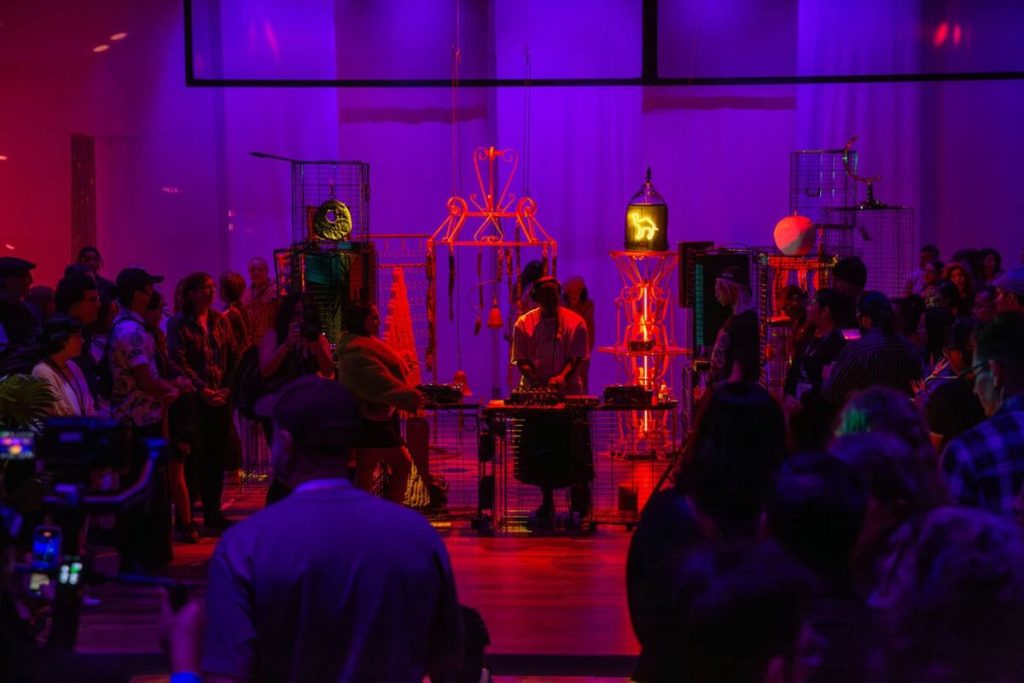
Museums of the Future: Transforming into Dance Floors
The rave culture is often misunderstood, relegated to notions of mere escapism or excessive hedonism. However, it represents much more than just a party scene. Raves offer a profound sense of belonging, creating a “temporary homeland” where individuals can feel part of a community. The transient nature of raves allows for a space where individuals can envision and construct new worlds, shedding societal labels and hierarchies, even if only for the night. This sense of liberation and collective movement offers a platform for social experimentation, challenging established social structures and offering a glimpse of alternative social orders.
In recent years, museums and art institutions have started acknowledging the cultural and transformative significance of raves. Major exhibitions have been exploring this theme through immersive and interactive experiences that go beyond conventional art displays. Steve McQueen’s exhibition at Dia Beacon, for example, used bass frequencies to alter perceptions and explore the boundaries between sound and space. Similarly, the Asian Art Museum’s “Rave into the Future” presents the dance floor as a site of resistance and resilience, curated by featuring artists from the West Asian and North African diasporas who use dance as a medium for collective empowerment.
The rave’s diasporic nature refuses isolation and marginalization, embracing joy and resilience as forms of defiance against simplification and ethnocentric narratives often perpetuated by mainstream art history. More importantly, these exhibitions incorporate live activations that engage communities, redistributing authorship and encouraging intergenerational participation. By shifting raves from night to day, or inviting families to “Baby Rave,” these activations highlight the adaptability and inclusiveness inherent in rave culture.
Through these artistic explorations, museums are being challenged to adjust their traditional roles — moving from static monuments to dynamic spaces of gathering and resonance, embracing the unpredictable and collective spirit that characterizes the rave. They serve as microcosms for testing alternative kinship systems that often elude institutional confines. The ultimate question that arises is whether these institutions can embrace the collective joy and resistance that raves embody without negating them, allowing them instead to reshape the institution’s framework and cultural narratives.