Highlights and Critiques of “Greater New York”
**A Survey of New York: Greater New York at MoMA PS1**
New York City stands as a colossal entity, perpetually in motion, shaped by its ever-evolving cultural landscape. The notion of surveying this metropolis and its artistic expanse is daunting; it’s an organism too vast, expansive, and diverse to contain within conventional parameters. However, MoMA PS1’s “Greater New York” exhibition ambitiously undertakes this Herculean task with its latest installment, showcasing over 150 artworks by more than 50 artists. This exhibition attempts to encapsulate New York’s vibrant art scene—an intimidating endeavor, yet one that embraces the city’s complexity and grandeur.
**Featured Artists and Works**
Amidst the kaleidoscope of artworks, several stood out to the curators due to their resonance, novelty, or lingering questions they prompted. The works included reflect the diversity and multifaceted nature of New York, provoking contemplations, disagreements, and dialogues among viewers and critics alike.
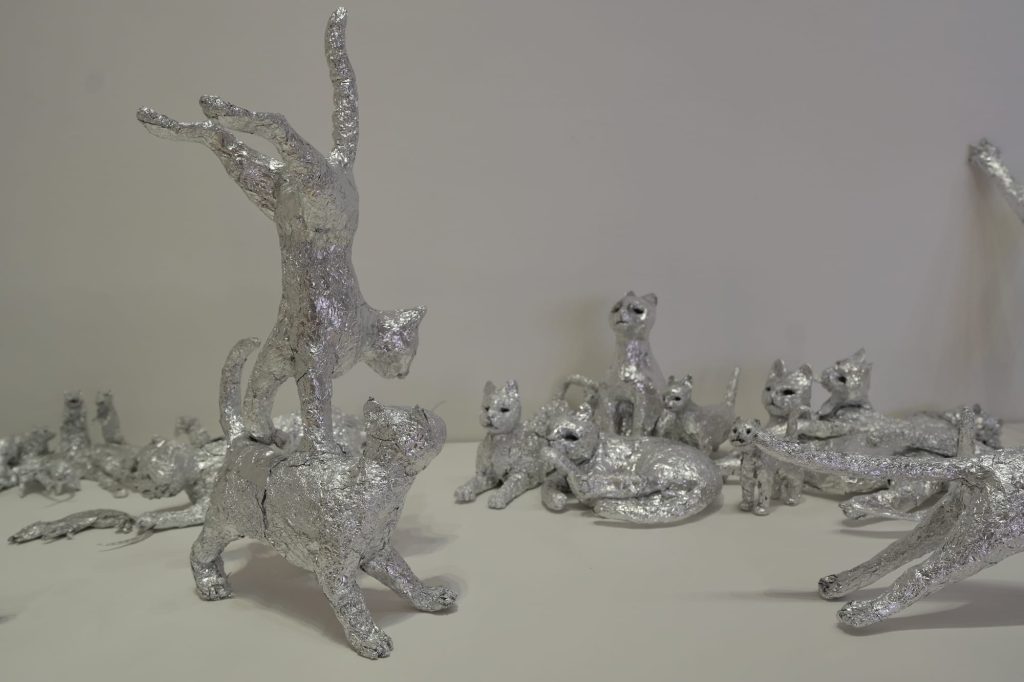
**Dean Millien: “The Cats and the Rats”**
Dean Millien captures the heart of New York’s urban ecosystem with “The Cats and the Rats,” a piece that resonates with its visual charm and emotional depth. Made from everyday materials like aluminum foil, it speaks to the universal urban experience of coexistence, where humans and the city’s ‘wildlife’ intermingle.
**Red Canary Song: “Touch the Heart”**
This multimedia installation delves into the misunderstood and often stigmatized lives of migrant workers in New York, employing art as a tool of activism and exploration. It’s an immersive experience that seeks to educate and challenge preconceived notions about this marginalized community.
**Kameron Neal: “Down the Barrel (of a Lens)”**
A two-channel video installation, Neal’s work is rooted in historical NYPD surveillance footage from 1960-1980. It is a window into a fraught period marked by protests and social upheaval, offering a profound reflection on the nature of observation and the agency of protestors.
**Win McCarthy: “The Id Rider at the Dawn of History”**
McCarthy’s work stands out with its eclectic assemblage of everyday objects, blending landline telephones with unexpected items like pistols, creating a commentary on modern communication and the anxieties tethered to it.
**Piero Penizzotto: “The Council of las Tías”**
A nostalgic tribute to personal relationships, Penizzotto’s sculptures capture fragile moments among friends and families, rendered with a unique blend of whimsy and emotional authenticity.
**Diverse Elements and Themes**
Throughout the show, the artists navigate a plethora of themes—identity, nostalgia, socio-political dialogues, and cultural memory, transcending what is typically observed in a standard art exhibition. Each work acts as a microcosm of New York’s sprawling creative universe, highlighting the tension between personal expression and collective experience.
The exhibition’s reception was varied, marked by debates and introspections triggered by the works on view. Some installations received applause for their ingenuity and poignancy, while others were met with critique or ambivalence for their execution or thematic approach.
As New York continues to stand as a beacon of culture and art, MoMA PS1’s “Greater New York” encapsulates a moment in time within the city’s perpetual evolution, inviting viewers to engage with, challenge, and celebrate the art that springs forth from its relentless dynamism. Moreover, it is a reminder of art’s ability to reflect complex social realities, amplify diverse voices, and provoke critical conversations in a city defined by its multifaceted character.