Interview: An Artist’s Shift from Years of Photography to Surreal Sculpture
Nic Nicosia: The Transition from Photography to Sculpture
For many years, Nic Nicosia has been primarily honored as a photographer renowned for his surreal and dramatic imagery. Gaining fame in the 1980s, Nicosia’s creations were acknowledged alongside the artists of the Pictures Generation, further receiving recognition through showcases like the Whitney Biennial in 1983. Yet, the early 2000s signaled a significant change as Nicosia moved away from photography, adopting a solitary studio practice and ultimately delving into sculpture.
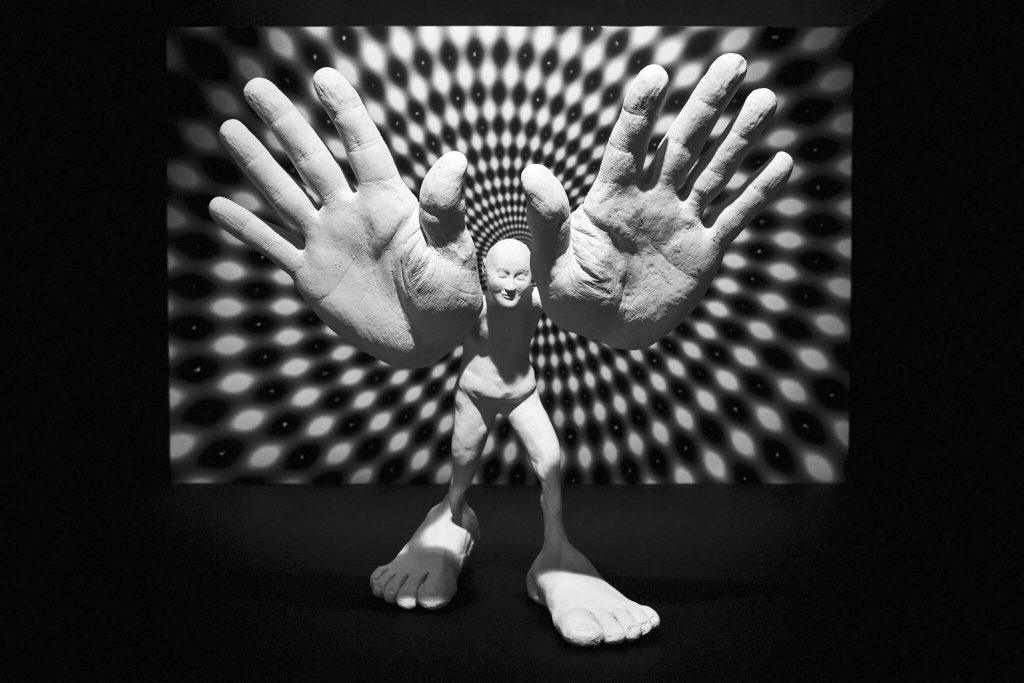
“After many years in photography, it no longer challenged me,” Nicosia states. His shift from photography to sculpture initiated with the crafting of models and installations, eventually guiding him to perceive sculpture as a seamless continuation of his artistic path. Now, with his most substantial museum display since 2000, “Everyday Surrealism” at the Nasher Sculpture Center in Dallas, Nicosia showcases his multidisciplinary trajectory through over 70 pieces, highlighting his evolution as a sculptor.
Photography originally drew Nicosia due to his television and film background. Struggling to carve a niche in the film world, he established a camera shop, which inadvertently ushered him into photography. His methodology mirrored filmmaking: constructing sets and crafting invented images. Although linked to the Pictures Generation, Nicosia mentions, “I approached still photography as if I were making a movie.”
Nicosia’s creations, enriched with surrealist visuals, originate from his personal experiences and sentiments. Citing a Picasso quote, he remarks, “I’m a dreamer.” His style isn’t purposefully surrealist, but naturally evolves from his viewpoint. While drawn to René Magritte’s theatricality, Nicosia’s surrealism isn’t intentional; it’s a manifestation of his thought process.
His shift to sculpture was spurred by curiosity and an exploration for new challenges. After a brief return to filmmaking, an enlightenment brought him back to still photography, employing small-scale sets and sculptures. Over time, his sculptures transformed into independent pieces. Nicosia shares that he learned sculpting through hands-on experience rather than formal education, utilizing Creative Paperclay for photographic series and organically developing a personal sculptural language.
The connection between Nicosia’s photographic and sculptural practices is apparent, yet each functions autonomously. His sculptures frequently mirror his emotional state, contributing to his overall creative expression.
Nicosia’s transition to sculpture underscores artistic liberty. The forthcoming “Everyday Surrealism” exhibition illustrates his conceptual advancement, portraying how his practice has broadened beyond photography. Reflecting on this transformation, Nicosia expresses appreciation for the backing from collectors, curators, and gallerists, enabling him creative experimentation. He advises, “Trust your artists. If they’re struggling, it’s transitional work. They’ll navigate their way.”
“Everyday Surrealism” offers an in-depth view of Nicosia’s artistic path, demonstrating his growth across various mediums. Taking place at the Nasher Sculpture Center from May 16 to August 16, 2026, the exhibition redefines Nicosia not merely as a photographer, but as a multifaceted artist engaging with multiple disciplines.