
This is the most extensive and intricate 3D representation of the Universe. It will assist astronomers in exploring a cosmic enigma: Dark Energy.
After five years of monitoring the heavens from Arizona, the Dark Energy Spectroscopic Instrument has amassed a wealth of data to analyze the evolution of the universe over billions of years.
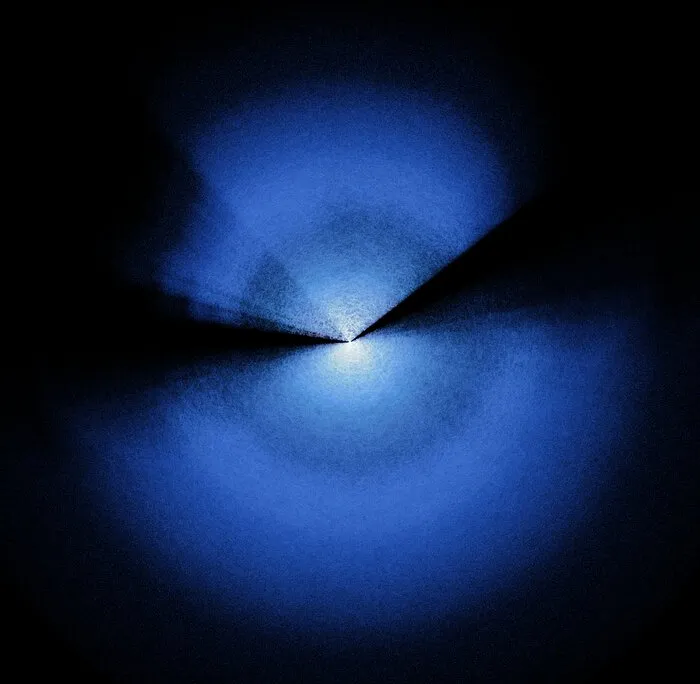
The most extensive 3D representation of the universe to date. Our planet is at the center, with each mark indicating a galaxy.
DESI Collaboration and DESI Member Institutions / DOE/KPNO / NOIRLab / NSF / AURA / R. Proctor, Image Processing: M. Zamani (NSF NOIRLab)
A significant astronomical endeavor—both literally and metaphorically—aimed at mapping the nocturnal sky in three dimensions has just wrapped up. The project not only concluded slightly ahead of its timeline but also amassed considerably more data than the extensive team of collaborators initially intended.
This undertaking has resulted in the largest high-resolution 3D universe map ever created, covering 11 billion years of cosmic chronology. Researchers are set to begin processing this immense data set, gaining further insights into one of the most profound mysteries of science: dark energy, a mysterious component believed to constitute roughly 70 percent of the universe.
Five years of DESI observations in 30 seconds
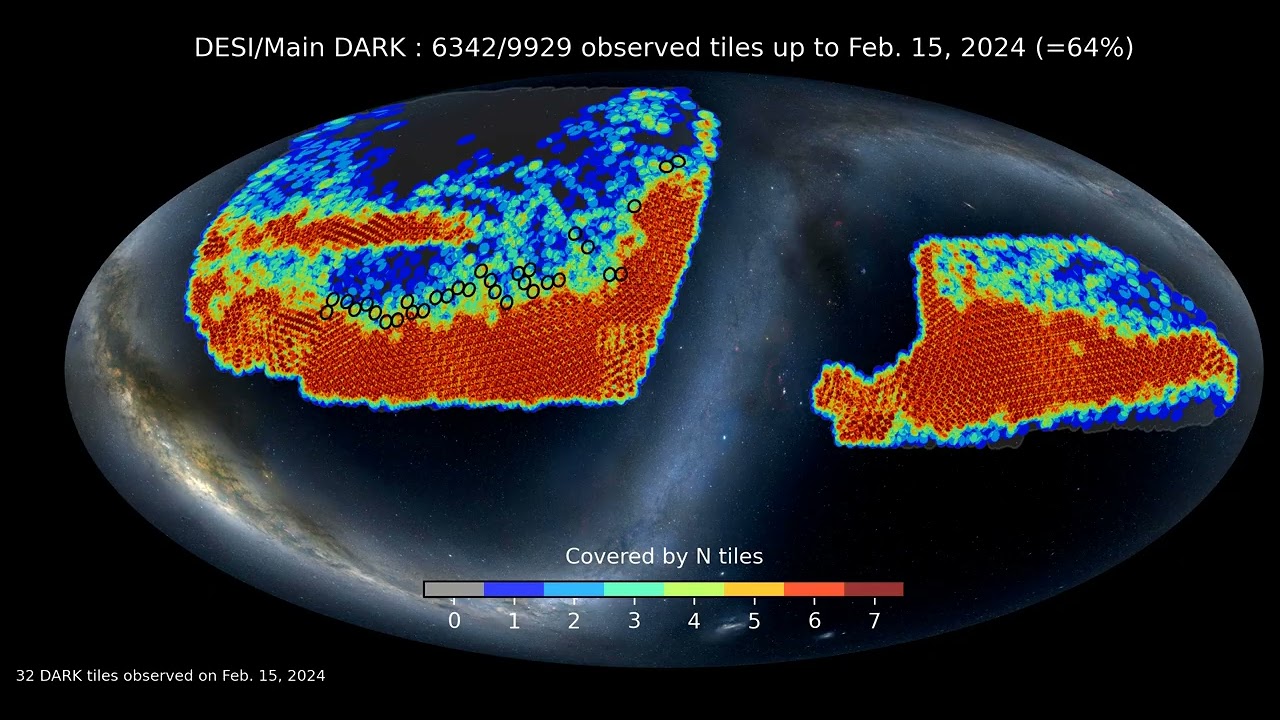
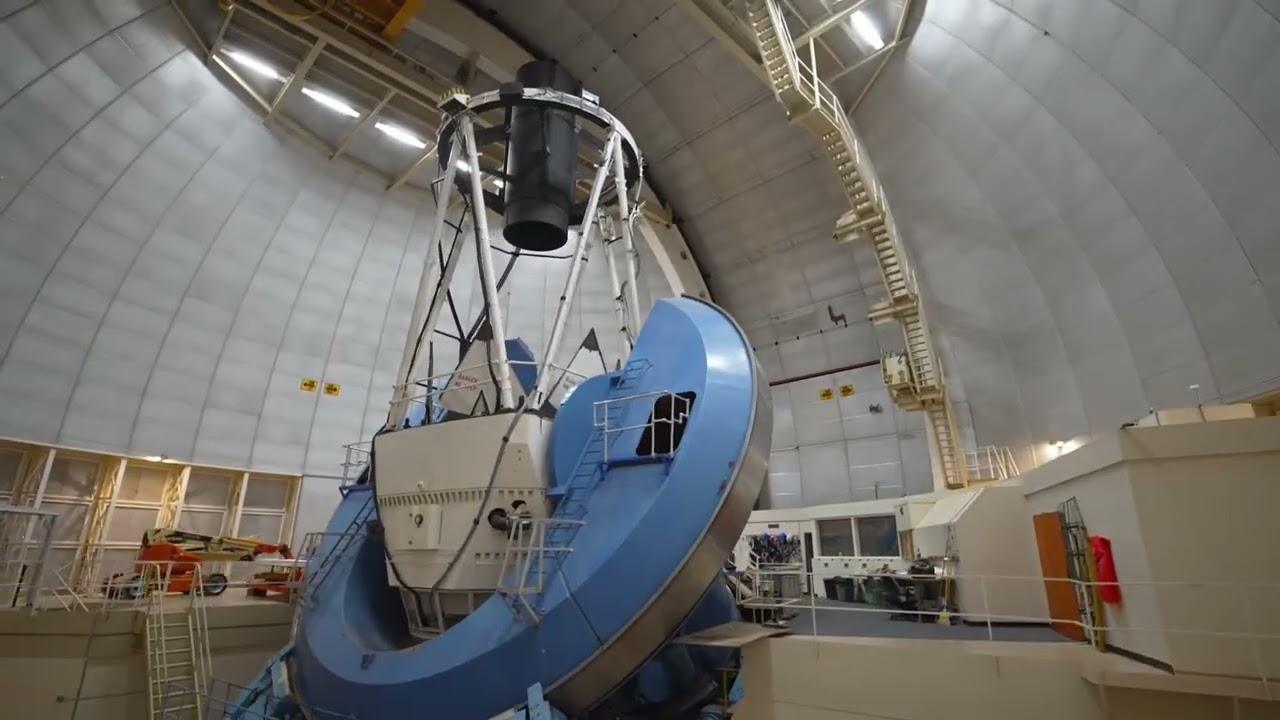
The map was created through observations by the Dark Energy Spectroscopic Instrument (DESI), attached to the National Science Foundation’s Nicholas U. Mayall 4-meter Telescope at the Kitt Peak National Observatory in Arizona. DESI concluded its celestial survey on April 15 after documenting over 47 million galaxies and quasars—extremely bright entities powered by matter falling into black holes—as well as 20 million stars.
It commenced data collection in May 2021, initially setting an objective to capture 34 million galaxies and quasars throughout the planned five-year investigation.
A zoomed-in segment of the map. Each point represents a galaxy. DESI Collaboration and DESI Member Institutions / DOE / KPNO / NOIRLab / NSF / AURA / R. Proctor, Image Processing: M. Zamani (NSF NOIRLab)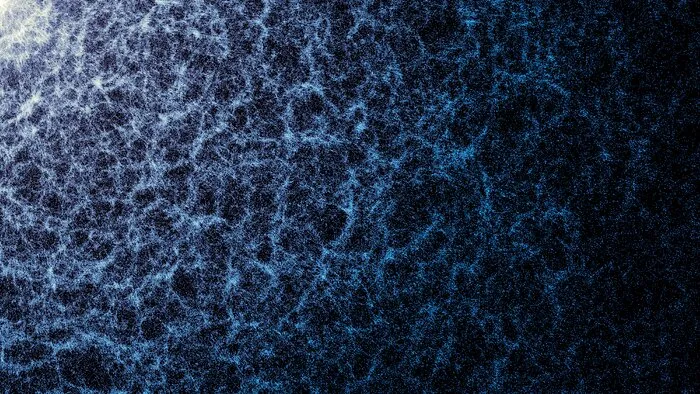
“DESI has surpassed expectations,” Klaus Honscheid, a cosmologist at Ohio State University and member of the DESI collaboration, shares with Space.com’s Robert Lea. “This is significant because the DESI team was able to finish an incredibly ambitious survey on time and within budget. Years ago, during our initial planning for DESI and when applying for funding from the Department of Energy, it was unclear if we could achieve this.”
Essential information: How does DESI function?
The instrument features 5,000 fiber-optic “eyes” that scan a portion of the night sky approximately every 20 minutes. It can detect faint light that has traveled 11 billion years to reach our planet. Each night, DESI produces about 80 gigabytes of information.
DESI has already provided groundbreaking scientific insights. Data gathered in its first three years indicates that dark energy—previously believed to be constant—is actually diminishing. If validated, this understanding would dramatically alter our perception of the universe, as this enigmatic force is thought to fuel its accelerated expansion.
Overall, data from DESI will assist scientists in contrasting how galaxies populate the sky now compared to how they appeared in the past, allowing for a traceable understanding of the universe’s development, nearly reaching back to its inception 13.8 billion years ago.
DESI telescope time-lapse
“With the final dataset now available, cosmologists will diligently analyze any subtle new characteristics of dark energy revealed through the data,” Adam Myers, an astrophysicist at the University of Wyoming involved in the DESI project, informs Gizmodo’s Gayoung Lee. “Complementary datasets are expanding, and our analytical techniques are being continuously improved, so stay tuned.”
DESI is notable for its collaborative nature. Administered by the Department of Energy’s Lawrence Berkeley National Laboratory, this global initiative comprises over 900 researchers, about one-third of whom are Ph.D. students, from over 70 different institutions.
One night of DESI observations
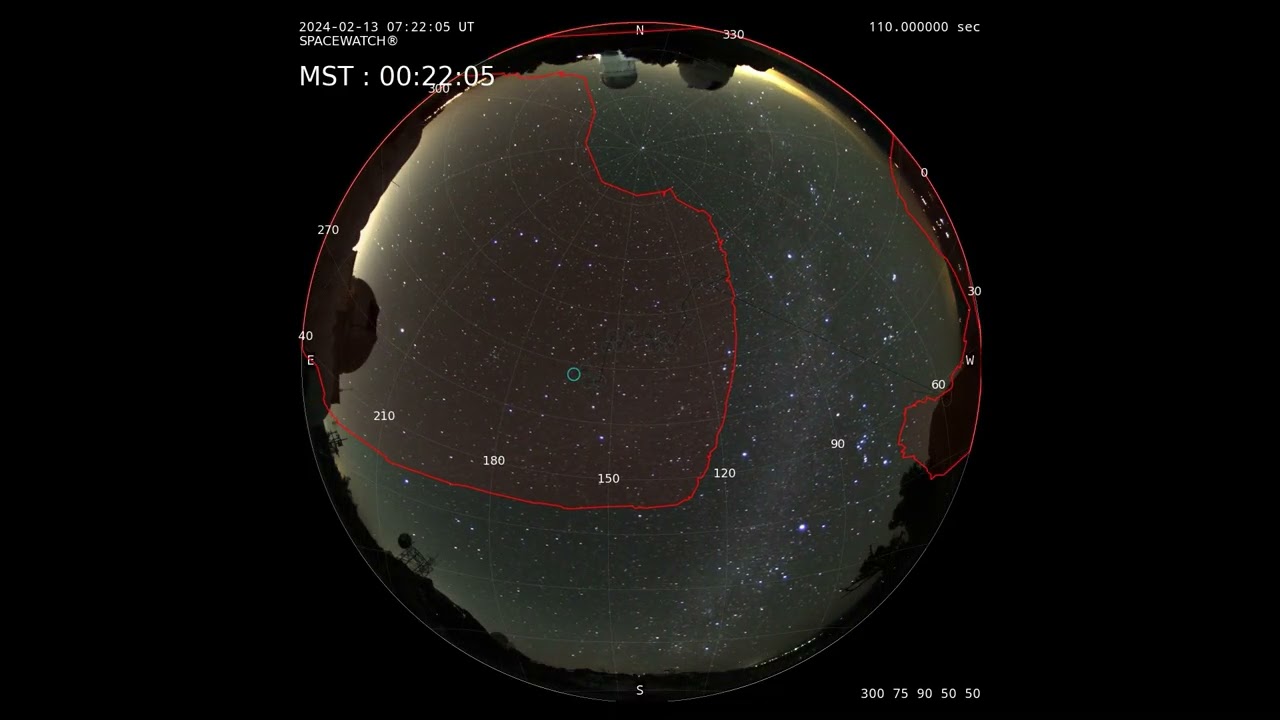
DESI’s observations of the sky are far from over. It will keep mapping regions that are notoriously challenging to examine, such as areas close to the plane of our Milky Way galaxy. Because we are situated within a relatively flat, spiral-shaped galaxy, it appears as a line when viewed towards its center. However, this “line” consists of numerous bright stars, making it difficult to distinguish other, more remote astronomical objects.
The instrument will continue to extend the map until 2028, enhancing the already vast collection of data.
“When I was a Ph.D. student in Cambridge 40 years ago, we had a sample of thousands of galaxies. The community was desperate for data,” Ofer Lahav, an astrophysicist at University College London, tells New Scientist’s Matthew Sparkes. “I believe my students today might experience the opposite situation; being inundated with data, making it very challenging to analyze.”