Everyone Remembers Paul Revere’s Midnight Ride. But His Forgotten Race to Secure a Trove of Documents Reveals How Government Records Helped Win the War
During the American Revolution, both the British and the patriots fought to keep sensitive papers out of enemy hands
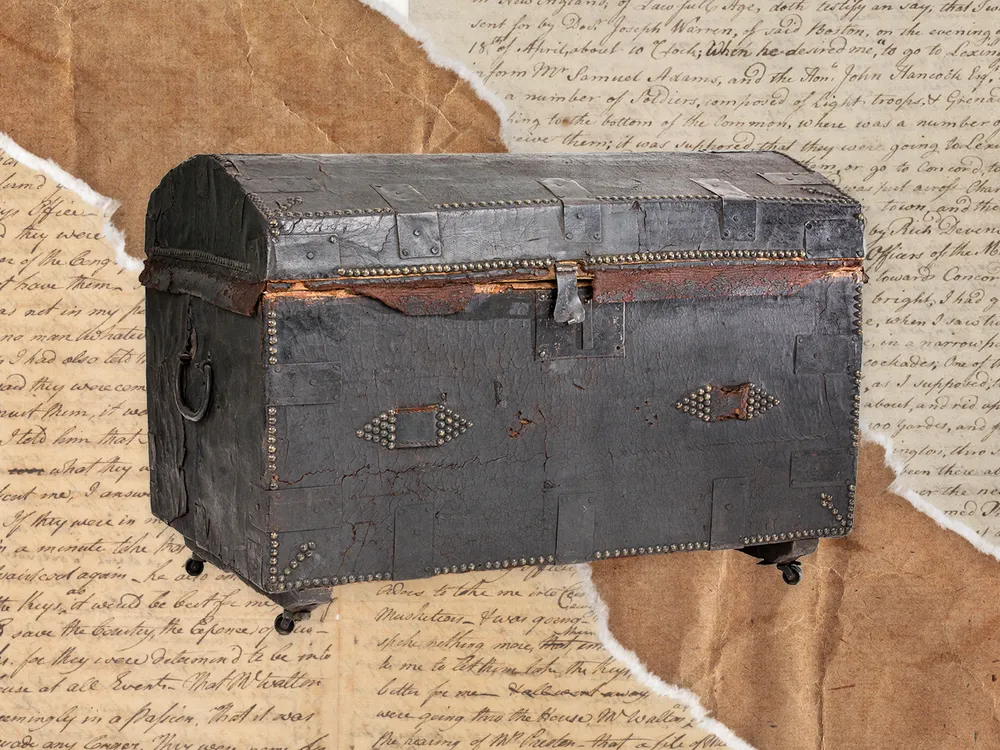
John Hancock left this trunk of documents at a Lexington tavern. Paul Revere and fellow Bostonian John Lowell recovered the trove of papers and carried it across the village green.
Illustration by Meilan Solly / Images via Georgia Historical Society, Museum of Worcester and Massachusetts Historical Society
Many Americans are familiar with the story of Bostonian Paul Revere, whose midnight ride on April 18, 1775, alerted the Massachusetts countryside to the presence of British troops in the hours before the opening battle of the American Revolution. But far fewer know that Revere also heroically rescued a vital trunk of paperwork that night.
The race to save this patriot archive underscores the fact that the Revolution wasn’t won solely on the battlefield. The safeguarding of government paperwork contributed to the Americans’ victory, too. As the United States approaches the 250th anniversary of its founding on July 4, 1776, the fierce contest over access to these records, involving nighttime raids and daring wartime rescues, is worth revisiting.
Historical sources generally agree that Revere set out from Boston around 11 p.m., arriving in the town of Lexington an hour or so later. There, he warned patriot leaders Samuel Adams and John Hancock that the British were on the move (though he never shouted the famous phrase “The British are coming!”).
Portrait of Paul Revere, John Singleton Copley, 1768 Public domain via Wikimedia Commons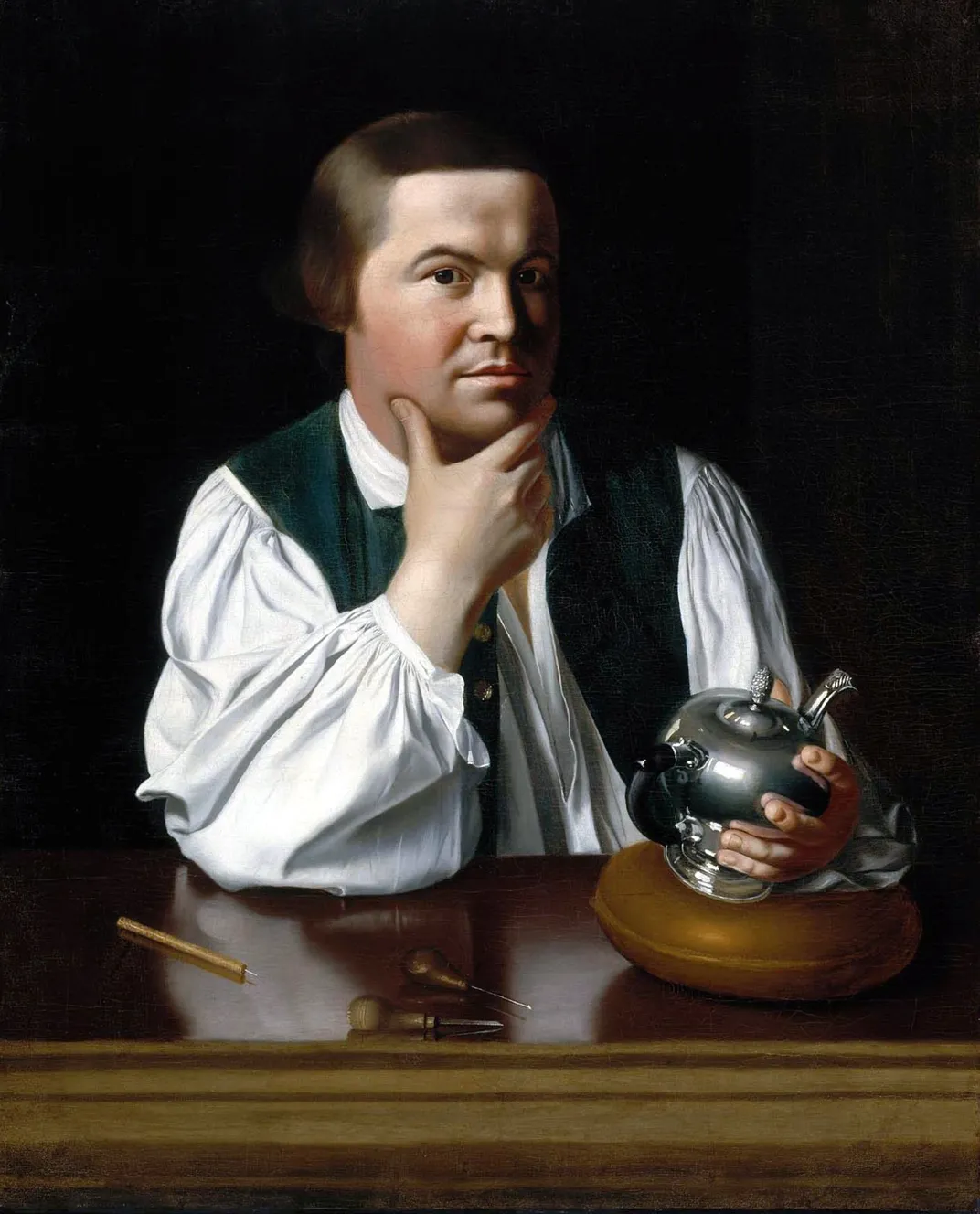
A portrait of John Hancock Public domain via Wikimedia Commons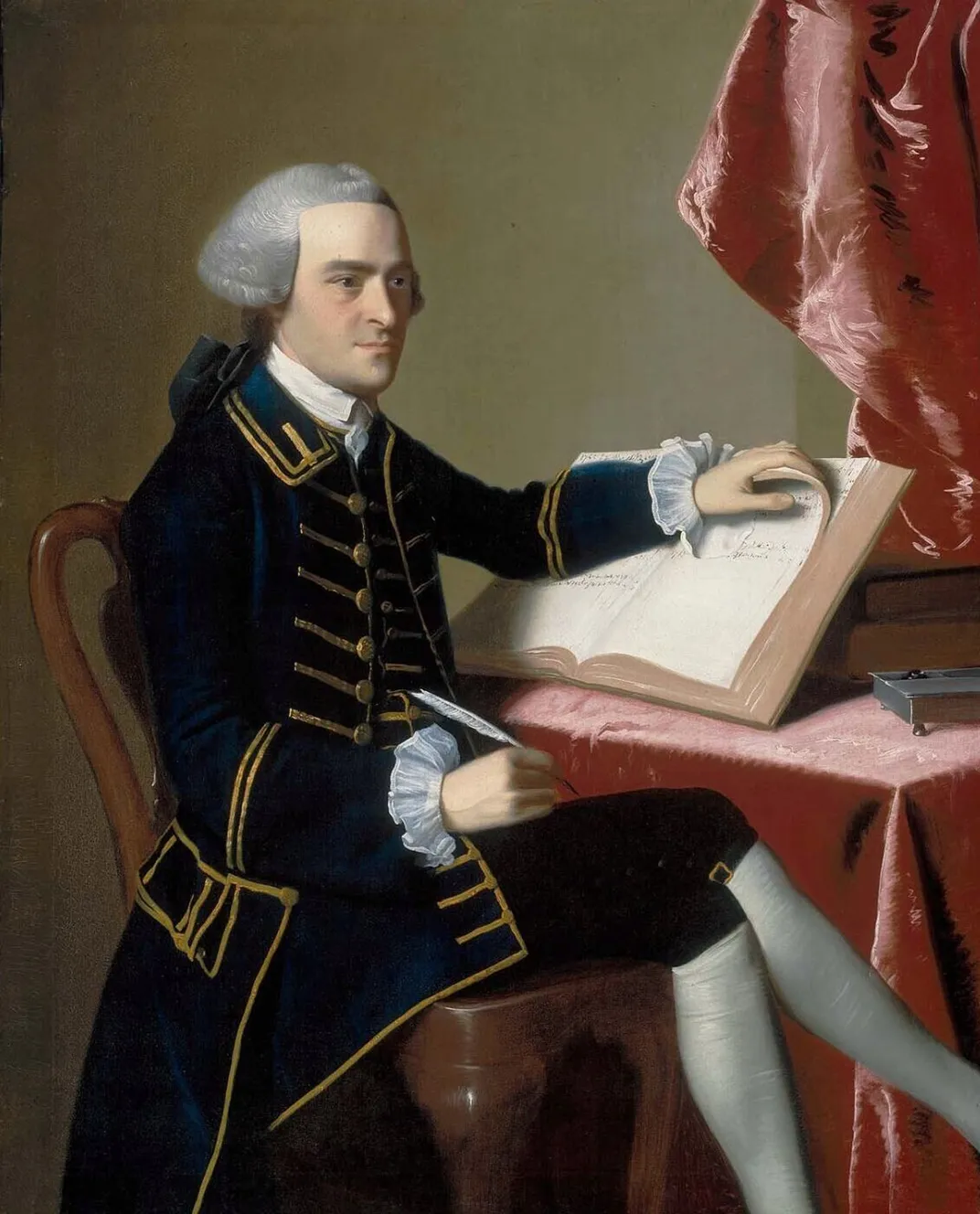
Next, Revere and another rider left to check on the rebels’ store of arms and munitions in neighboring Concord. Along the way, the pair met up with a third man. Although a British patrol stopped the trio, Revere’s companions managed to escape. The British held Revere for a few hours and kept his horse when they finally released him. Revere then walked back to Lexington.
Revere headed to the house where Adams and Hancock were staying and helped persuade them to leave as quickly as possible. Hancock’s prevaricating that night reads like something of a farce. He wanted to join the confrontation with the redcoats himself and only grudgingly left Lexington after much cajoling by “his friends, who convinced him that the enemy would indeed triumph if they could get him and Mr. Adams in their power,” according to a 19th-century chronicle of New England history. Upon arriving at a safe destination, Hancock sent his coach back to the house to retrieve his aunt and his fiancée, as well as a fresh river salmon that he’d been gifted.
Hancock, then serving as president of the rebel government’s Massachusetts Provincial Congress, had also left behind something much more important than his dinner: a trunk of documents detailing the patriots’ movements and plans. As historian David Hackett Fischer wrote in Paul Revere’s Ride, the papers contained “the innermost secrets” of the rebel cause, including “written evidence that could incriminate many leaders.” After his late night, Revere found himself rushing with yet another compatriot to a tavern where the trunk had been stashed. The two men struggled to carry the heavy, bulky object across the village green as British soldiers advanced on patriot militiamen ahead of the opening salvos of the Battles of Lexington and Concord.
Did you know? Leslie’s Retreat and the beginnings of the Revolution
- Seven weeks before the Battles of Lexington and Concord, colonists stopped British soldiers led by Lieutenant Colonel Alexander Leslie from raiding a makeshift armory in Salem, Massachusetts.
- In 1856, a local historian argued that Leslie’s Retreat marked “the first blow … struck in the war of independence, by open resistance to both the civil and military power of the mother country.”
In a scene at least as dramatic as his ride from Boston, Revere later recalled, “I could distinguish two guns, and then a continual roar of musketry, when we made off with the trunk.”
The history of government documents (or the documents of a government in the making, as was the case in Lexington) is also a history of record-keeping and all the debates that come with it. Whether at the local or national level, in courts or with presidents, Americans have come to expect that records describing a government’s ambitions and actions should provide a level of transparency. Then as now, however, access to such documents—and the question of what exactly should be preserved—is highly contested.
During the Revolution, the patriots and the British were both keen to acquire the collected records of Colonial governments, the rebel resistance and new American governments formed in the wake of independence. Both sides recognized these documents as uniquely valuable. Before the war, every colony was required to maintain records of its business dealings, legislative and court proceedings, land deeds and more. Typically, these were stored in a courthouse or similarly safe location, and a clerk or secretary was charged with preserving them.
Charles Thomson, secretary of the Continental Congress Public domain via Wikimedia Commons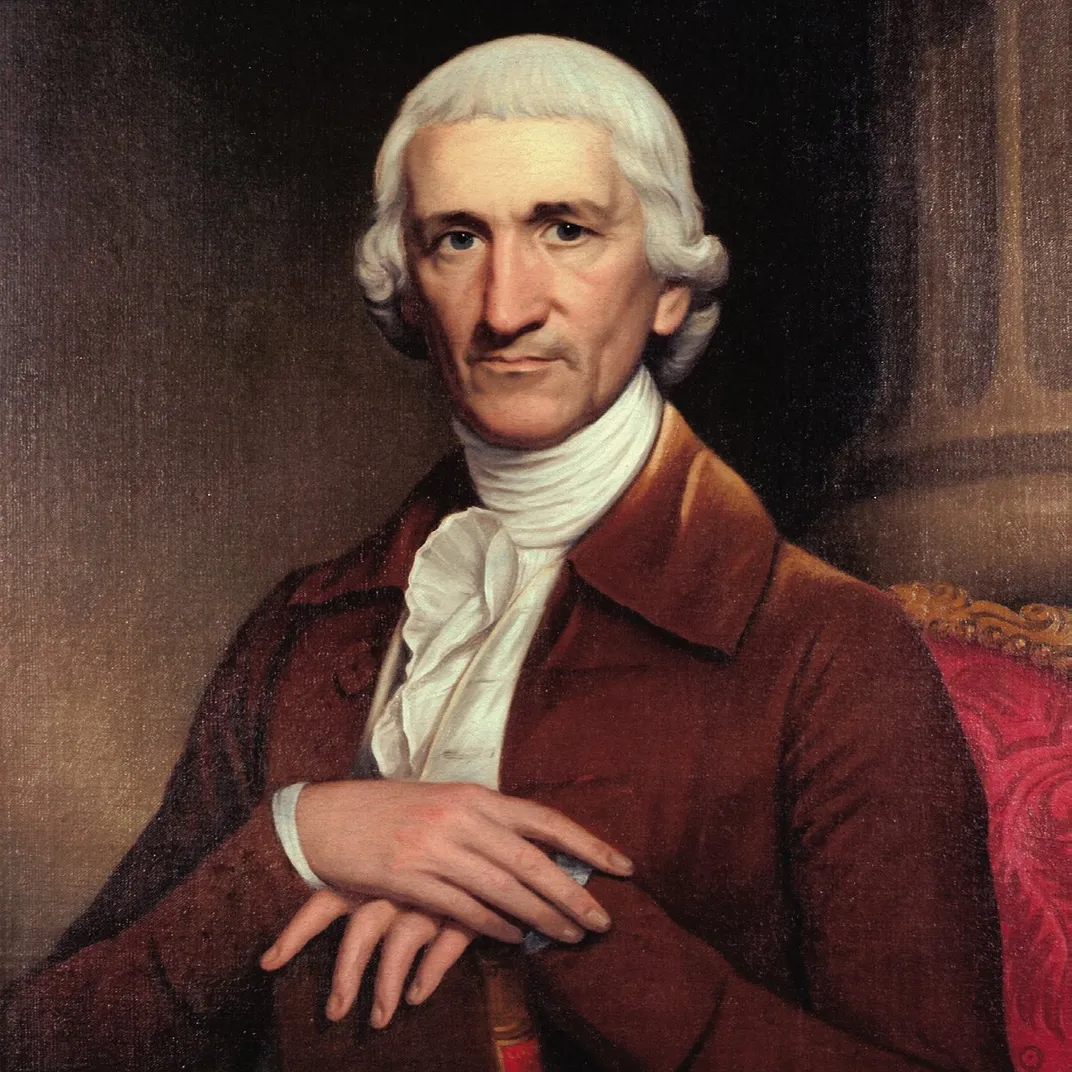
One of the Continental Congress’ first acts was the appointment of a secretary named Charles Thomson. He served from the first meeting of the Congress, in the fall of 1774, through the 1787 Constitutional Convention, managing the flow of government documents and their publication.
The Congress issued its Journals in a variety of formats, printing them throughout the 13 states and abroad to share information about the activities of the nascent American government. In the immediate aftermath of Lexington and Concord, for example, the Journals published testimony from local patriot men and women who gave firsthand accounts of the conflict and of the violence wrought by British troops against civilians, including theft and property damage.
George Washington similarly recognized how important his personal papers would be, given his role as commander in chief of the Continental Army. He ordered specialty trunks to hold his extensive correspondence and other records; early in the war, he sent word to a relative at Mount Vernon to secure the safety of both his wife, Martha, “and my papers.” Today, tens of thousands of Washington’s documents are available online.
A letter written by George Washington in April 1776 Public domain via Wikimedia Commons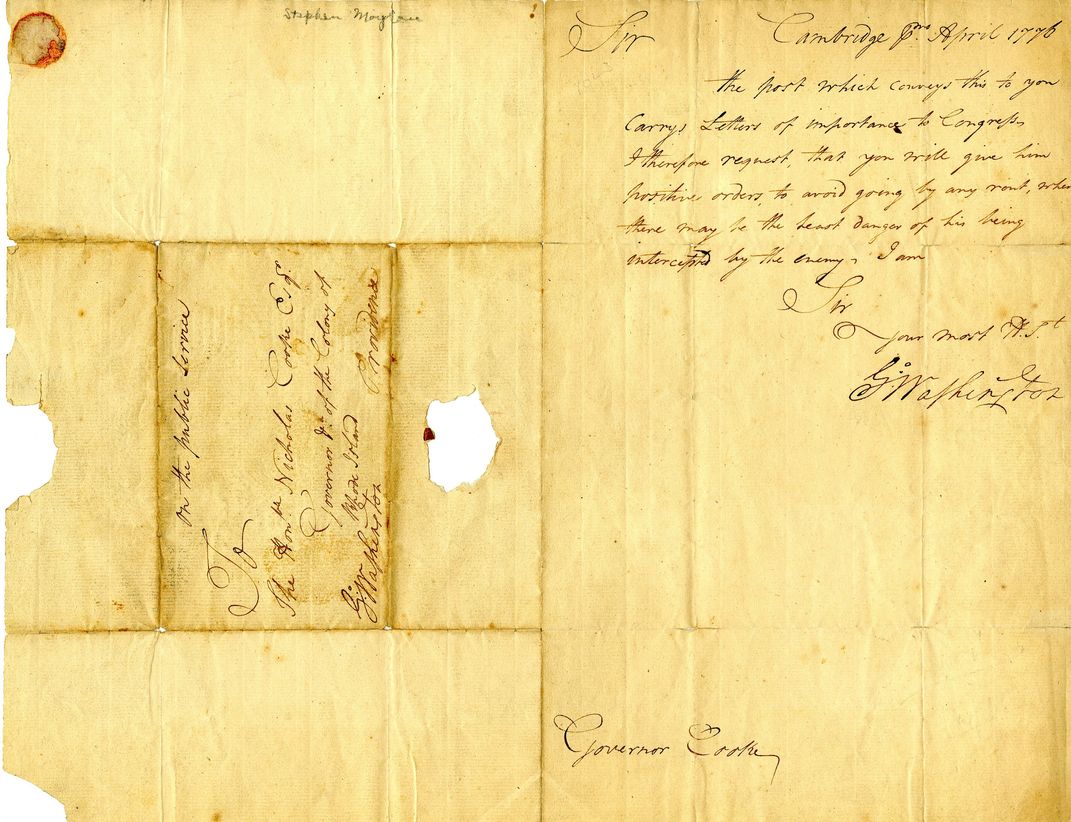
Anxiety over the state and fate of government records was heightened in areas directly in the line of fire during the Revolution, especially as the patriots occupied places that had previously been under royal governance and the British seized American cities like Philadelphia. Displaced governments worried about the prospect of moving their base of operations and debated whether they would abandon their archives if they had to leave. (Thomson, for his part, brought the Congress’ papers with him when the legislature fled from and then reconvened in Philadelphia.)
Bureaucrats also feared events that might prevent the creation of new records. New York City’s government basically ceased operating under British occupation, so no official city records were created between May 1776 and February 1784.
On the patriot side, “for a year after the outbreak of violence at Lexington and Concord, local committees, councils and congresses seized the reins of power and displaced former Colonial officials and their supporters,” historian Donald F. Johnson writes in Occupied America: British Military Rule and the Experience of Revolution. “Taking control of provincial records … proved essential to establishing the legitimacy of the new state regimes.”
In January 1776, representatives of the Georgia Provincial Congress met in Savannah’s courthouse to take possession of the city’s Colonial-era records. Henry Preston, a clerk appointed by the crown, held both the physical key to the courthouse and the metaphorical key to understanding how the documents were organized. He didn’t intend to give up either without a fight.
A page from Henry Preston’s account of the “keys of the courthouse being demanded and the records taken away” Georgia Historical Society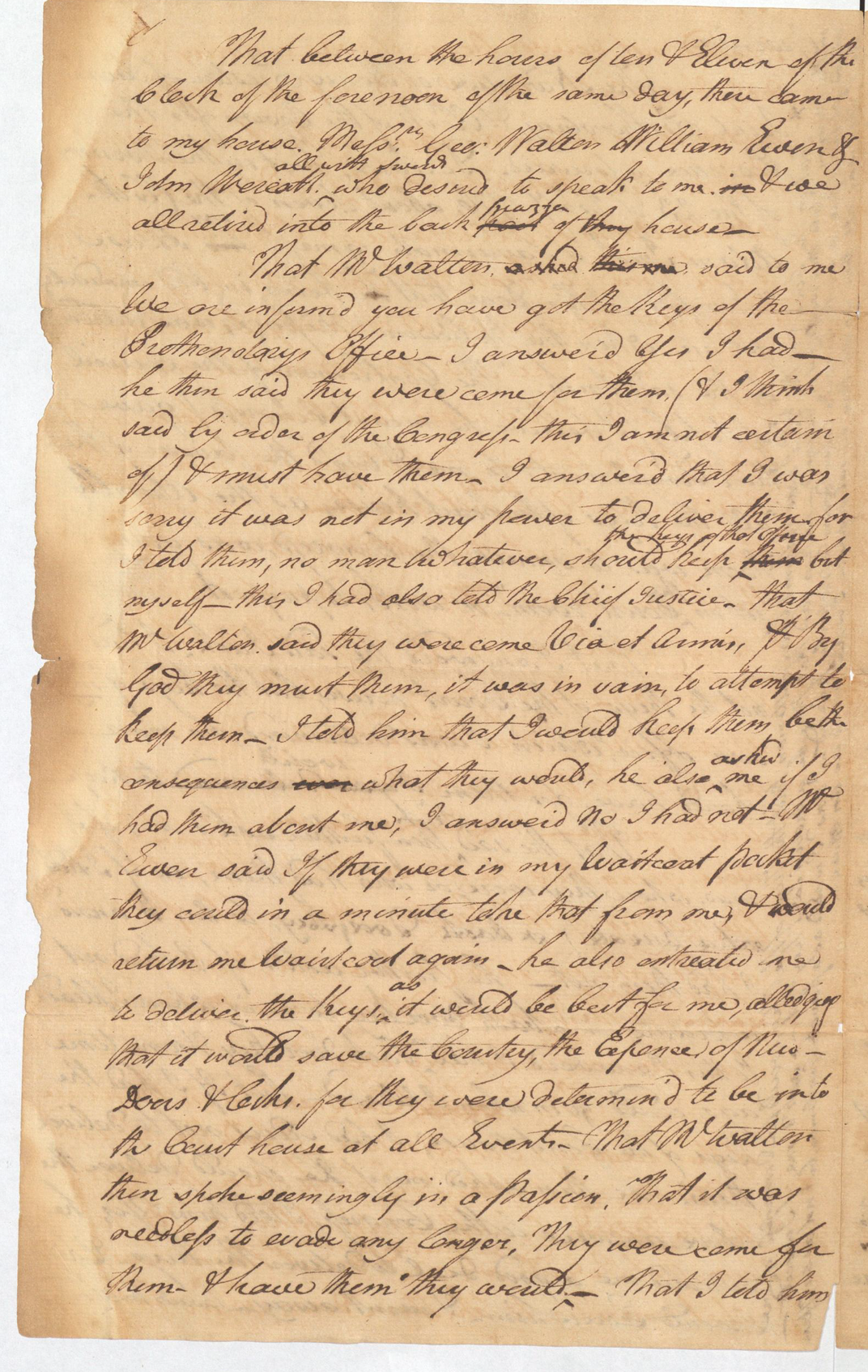
Confronted at his home on multiple occasions, Preston repeatedly cited his oath of office, that “no man whatever should have [the keys] but myself.” When the patriots—“seemingly in a passion,” according to Preston—threatened to take the keys by force, the clerk found himself at an impasse. If the men managed to gain access to the records, he could at least try to prevent them from sowing further chaos by damaging the papers. Preston agreed to show the patriots “how to take the papers down from the cases where they were in proper order.” Ultimately, the men left with two large cases and a small trunk packed with documents.
Two days later, Preston wrote a lengthy account of the incident. He might not have kept the archives of His Majesty’s government in Georgia out of the revolutionaries’ hands, but at least he had done his best to see them preserved.
In Newport, Rhode Island, the situation was both very different and very much the same. The British occupied the seaport for nearly three years, from December 1776 to October 1779. Located on Aquidneck Island, Newport was strategically valuable in large part because of its deep-water harbor. It had a conflicted population of both patriots and people who remained fiercely loyal to the crown.
Newport’s occupation was a continual contest for control. Acts of intense violence took place there during the war, including the rape of local women by British troops. Military manuevers in Newport included a nighttime patriot raid to capture the British garrison commander in retaliation for the seizure of an American general. Families were divided geographically and politically; some husbands left Newport to fight for one side or the other while their wives, whose sympathies didn’t always align, stayed behind.
Before the British seized Newport, Rhode Island was primarily in rebel hands. Much like Preston in Savannah, Newport’s royal customs official, a loyalist named Charles Dudley, viewed government documents as valuables to be saved in an emergency. In late 1775, he came to believe that he had no option but to flee from the colony.
A 1776 plan of Newport, Rhode Island Public domain via Wikimedia Commons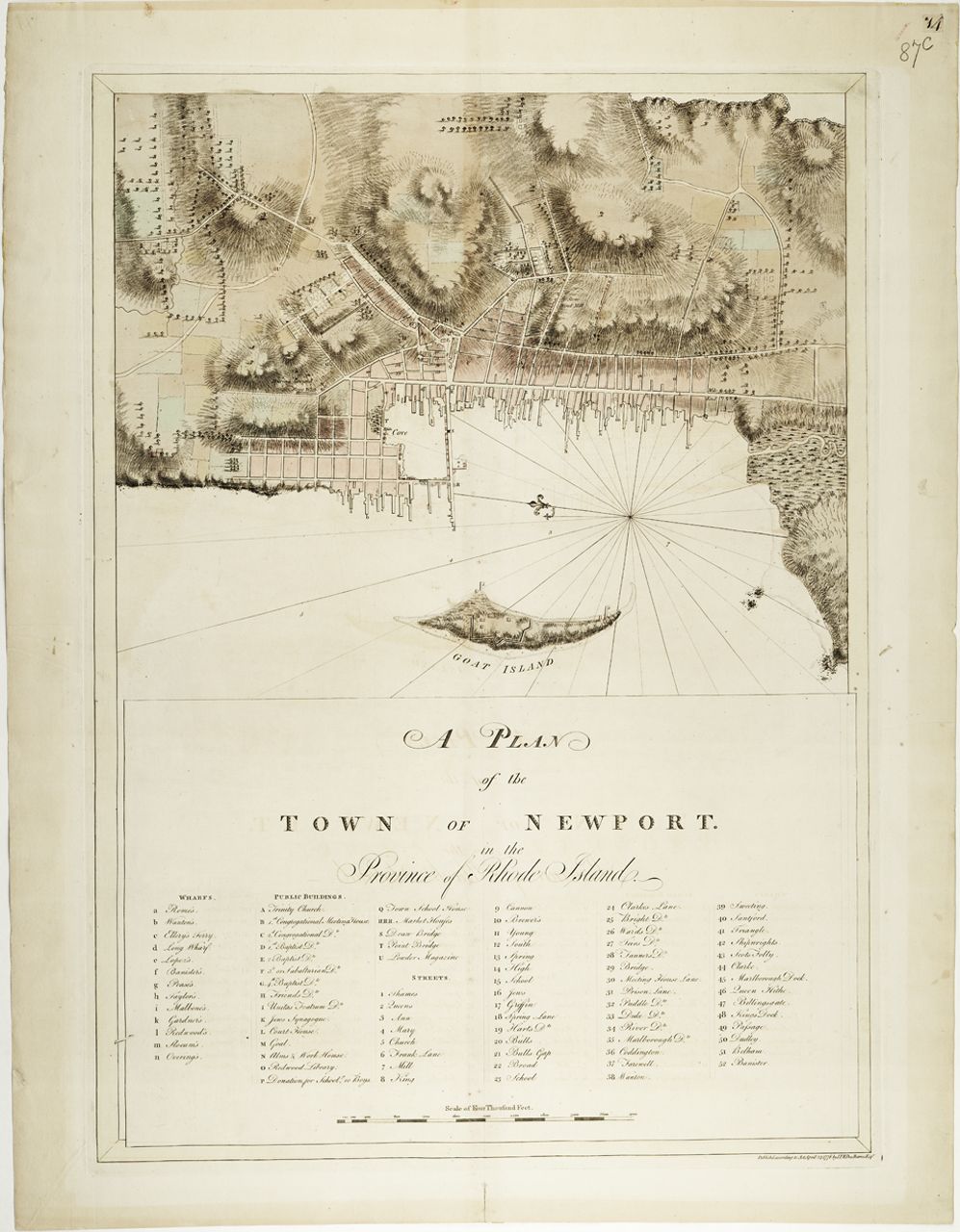
Leaving his wife and their home behind, Dudley took refuge on a British ship in the harbor, bringing the seaport’s customs logbooks with him. Dudley’s wife wrote to her husband to advise him that the rebels were confiscating their property around her. Still, she managed to send him some supplies and food. By the spring, Dudley had set sail for Canada and then England. He would only be reunited with his wife three years later.
When the British arrived and took possession of Newport, their leaders had their eye on a much more comprehensive set of documents: the full town records. Clerk William Coddington held on to the papers for more than a year. In the spring of 1778, however, the British commander in Rhode Island instructed him to surrender the trove.
“You are ordered to deliver … the records, papers and other things under your care belonging to the town of Newport,” the commander wrote. Coddington complied, and the receipt he was issued for the materials shows the extent of the records he was tasked with preserving: more than 50 volumes covering around ten different government functions, from council minutes to land transactions to tax records. After relinquishing the documents, Coddington left for Providence, where he served as a clerk to the local Revolutionary government.
In 2024, Cherry Bamberg, an expert on Rhode Island records, reconstructed the story of the papers’ loss and subsequent recovery in an article for the Newport History journal. When the British finally left Newport, in 1779, they took the trove with them to occupied New York City. The ship carrying the records sank en route, and exactly how long the documents remained underwater is unclear.
Newport residents bemoaned the loss of their history even before they learned of the catastrophe involving the sunken ship. Writing almost immediately upon retaking the seaport, patriots described the documents in possession of the enemy as “highly detrimental to the public.” In a letter to General Washington, Rhode Island’s governor wrote that locals were “distressed” for “want of their records.”
Bamberg’s research shows that a surprising group ultimately helped secure the papers’ return. As the war wound down in 1782, the commander in chief of Britain’s forces in North America enlisted several Newport loyalists who’d taken refuge in New York to track down the missing documents. “By December 7, 1782, the records were loaded onto a vessel … a receipt was given, and they were at last on their way home to Newport under a flag of truce,” Bamberg wrote.
The effort to repair the “damaged” and “almost useless” papers, in the words of the loyalist who found them in New York, was substantial. Like these other tales of quests for government documents, Newport’s missing records remind us how important such materials were—and still are today.
The American Revolution is often remembered for the soaring rhetoric of the Declaration of Independence and stunning military victories by the underdog rebel army at places like Saratoga and Yorktown. Comparatively, keeping and securing the records of the war’s daily management might not seem glamorous. But “all the great minds of the Revolution—their best and brightest ideas were on the papers” stored in Hancock’s trunk and later recovered by Revere, Holly Izard, a former Museum of Worcester curator, told the Worcester Telegram & Gazette in 2017. In Lexington, British-occupied cities and other sites across the new nation, government documents were valuable goods.