
Discoveries from Underwater Robots at France’s Deepest Shipwreck, a 16th-Century Merchant Ship Located at the Mediterranean Seafloor
Referred to as the “Camarat 4,” this vessel was laden with cannons, cauldrons, and numerous ceramics—which can still be seen on the ocean floor. Scholars are examining the location and meticulously retrieving a small array of artifacts
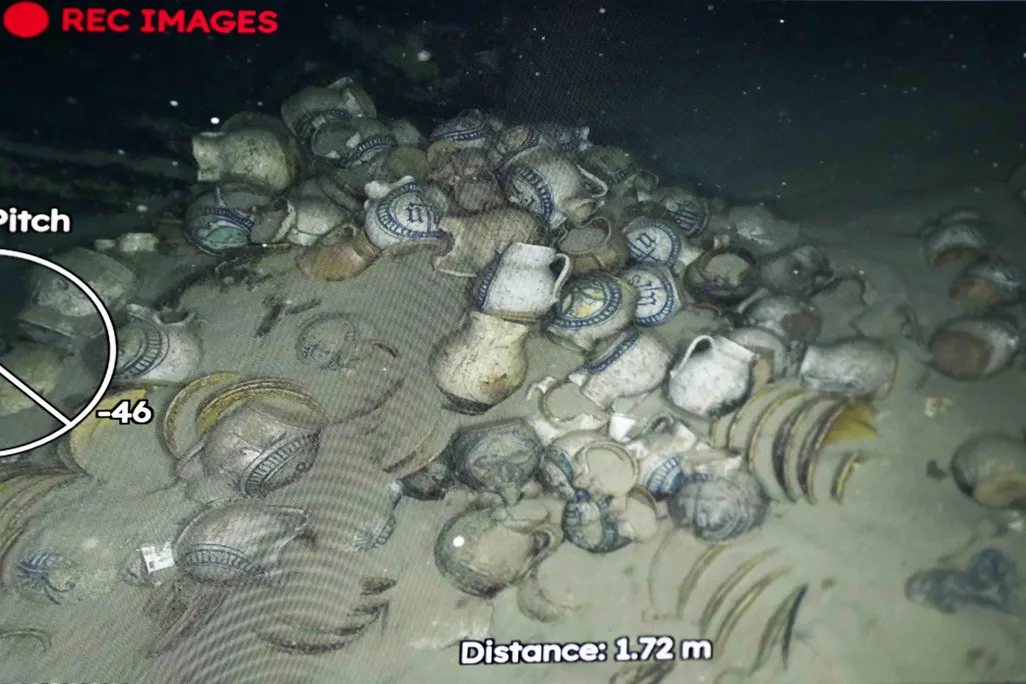
An image of the ceramics from the Camarat 4 captured by a remotely operated vehicle
Thibaud Moritz / AFP via Getty Images
Over 400 years in the past, a trade vessel navigated the Mediterranean Sea before it sank near the southeastern coast of France. Its load, hundreds of meticulously crafted ceramic plates and jugs, fell into the depth of the sea and laid on the ocean floor unseen for centuries.
Then, in the year 2025, the French Navy discovered the ship during a deep-sea exploratory mission. The wreckage is located more than 1.5 miles beneath the water’s surface—making it the deepest known shipwreck within French territorial waters.
Researchers are currently examining the remnants, referred to as the Camarat 4 after a nearby point along the French coast. Over a span of three days in April, they utilized an underwater robot to analyze the site and meticulously retrieve a select few artifacts from the Mediterranean’s bottom.
A recovered ceramic jug from the Camarat 4 Thibaud Moritz / AFP via Getty Images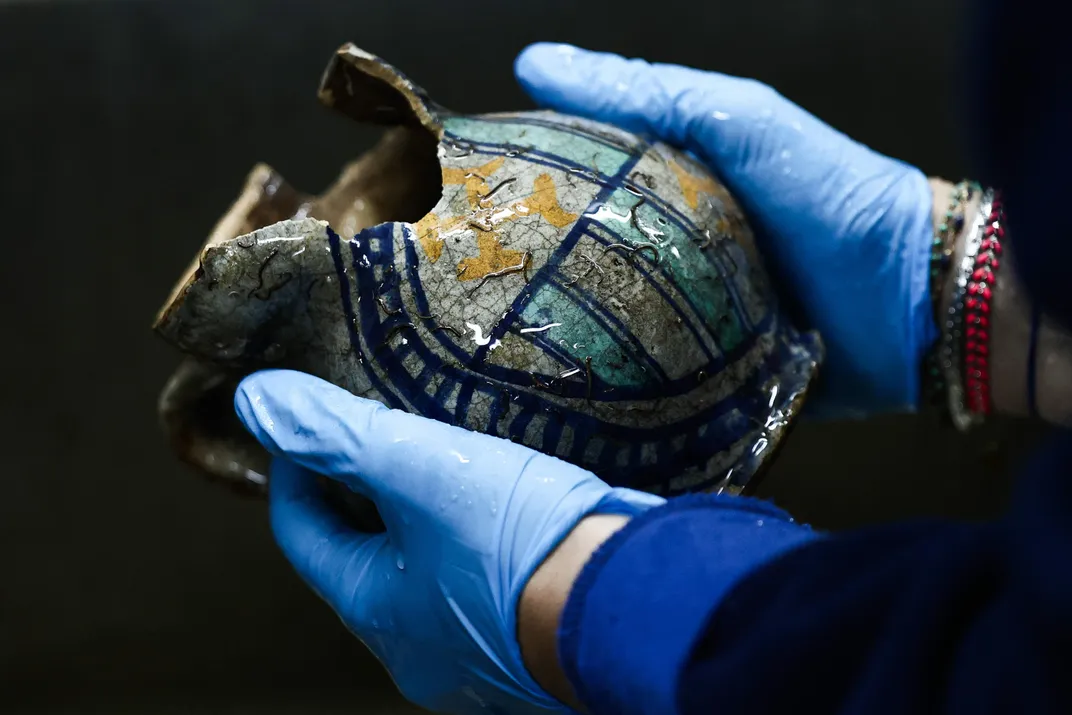
“Precision is critical to avoid damaging the site and disturbing the sediment,” states Sebastien, a navy officer who led the initial archaeological mission at the location, to Agence France-Presse (AFP).
The remote-operated robot is the only one in France capable of operating at such significant depths. The descend took an hour, and during the subsequent hours, its cameras captured images at a rate of eight per second, resulting in 66,974 images that were compiled to create a 3D representation of the wreck. The robots also placed topographic markers onsite to monitor any human-made or natural changes.
Clear visibility allowed the researchers to identify six cannons, two cauldrons, and an anchor, along with the ceramics, many featuring elaborate decorations, scattered across the ocean floor. Some displayed the letters “IHS,” which are the first three letters of the name Jesus Christ in Greek.
The remotely operated vehicle resurfacing from the water Thibaud Moritz / AFP via Getty Images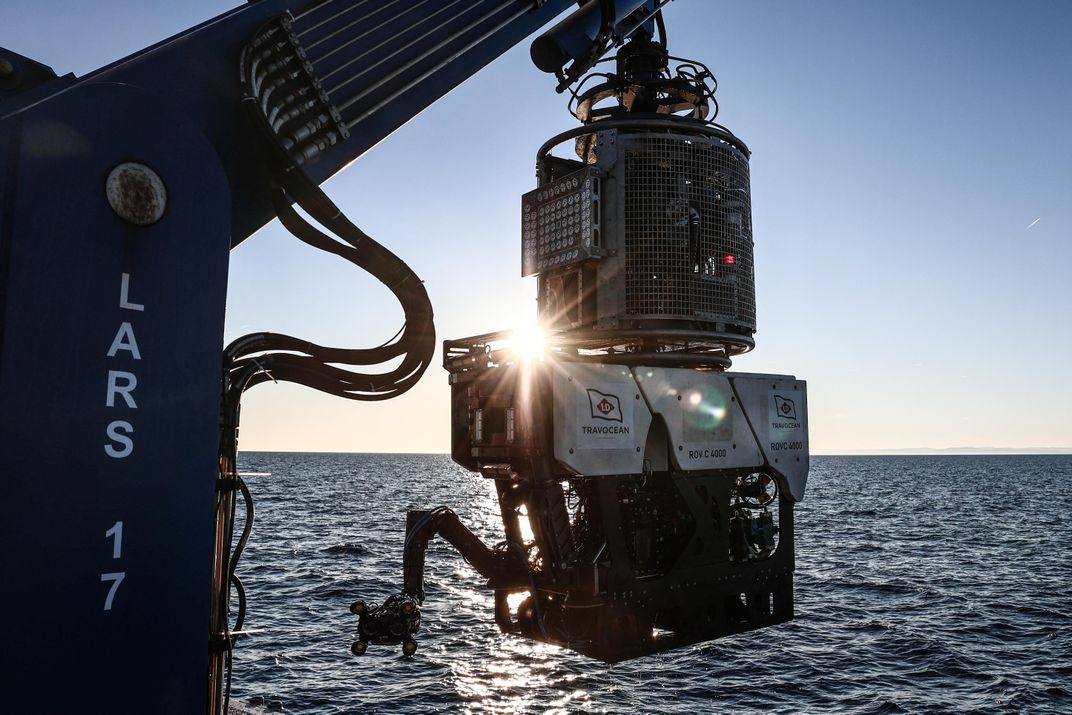
From the surface, the researchers operated the robot’s pincers to carefully retrieve artifacts and place them into containers. This task can be quite stressful. Marine Sadania, the lead archaeologist on the excavation, informed AFP that typically, ceramics retrieved from underwater digs often shatter.
During the expeditions last month, which followed a survey mapping the position and orientation of each artifact on the ocean floor, the researchers successfully collected three pitchers and a plate. One of these pitchers was a rounded container adorned with dark blue lines and vibrant yellow geometric patterns. “It stands as one of the deepest items ever recovered from a shipwreck in France,” Sadania notes.
Key Facts: The second-deepest confirmed shipwreck in France
- Prior to the discovery of Camarat 4, the record for the deepest shipwreck in French waters was attributed to La Minerve, a French submarine.
- This vessel sank in the Mediterranean in 1968, resulting in the loss of all 52 crew members.
- The wreck was located over 1.4 miles beneath the surface in 2019.
The wreck lies off the coast of Ramatuelle in southeastern France, but the specific coordinates of the site will remain confidential, even though any interested amateur explorers would likely find it impossible to reach the ship due to its extreme depth.
“At this depth, the vessel has been safeguarded from all forms of deterioration, especially from looters,” DRASSM expressed in a 2025 statement, as translated by Artnet’s Richard Whiddington. “It presents a unique chance for research.”
The cameras additionally uncovered that contemporary waste—including beer cans, plastic bottles, fishing nets, and yogurt containers—had found its way to the wreck. “After the exhilaration of the discovery comes the disappointment of encountering such remnants,” Arnaud Schaumasse, the director of DRASSM, remarked last year, as reported by Le Monde’s Sofia Fischer.
Experts monitored live footage from the remotely operated vehicle exploring the Camarat 4 over three days in April. Thibaud Moritz / AFP via Getty Images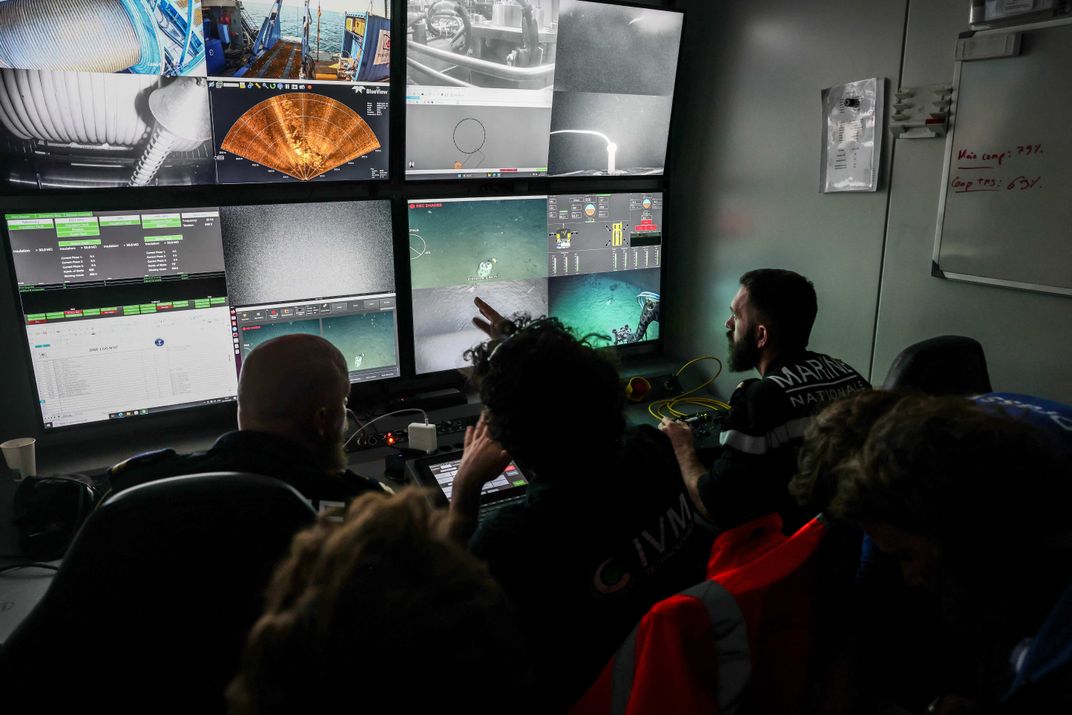
The researchers conjecture that the pottery aboard was produced in Liguria, a region in northwest Italy, whereas the cannons were likely installed for cargo protection. The intended destination of the ship remains a mystery, although the researchers believe it was probably headed west.
Sadania informs AFP that historical documentation regarding 16th-century merchant ships is scarce. Consequently, the wreck site could furnish significant insights about trading routes of that era.
“It serves as a true time capsule,” she stated during a 2025 press conference, according to Le Monde. “It feels as though time has stood still on this ship.”