Ancient Roman Burials Reveal Popularity of Pet Monkeys
### Uncovering Ancient Ties: The Archaeological Discovery Bridging India and the Roman Empire
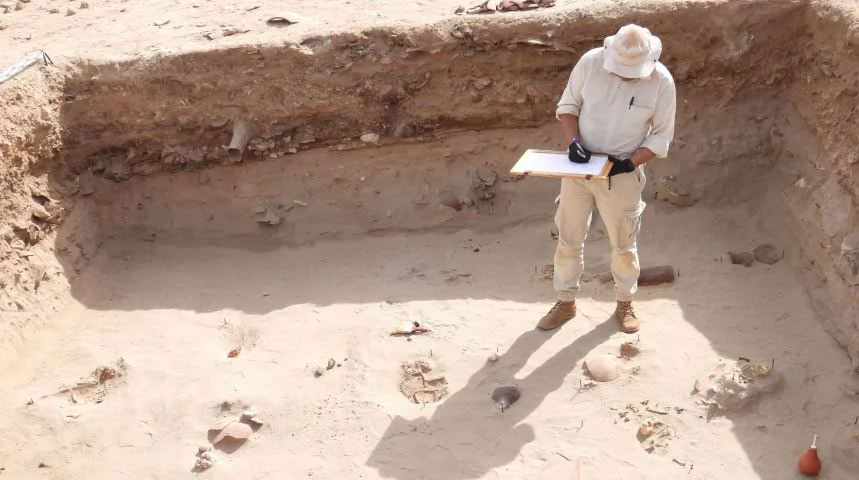
Recent discoveries at the archaeological site of Berenike in Egypt have provided profound insights into the trade relationships and cultural exchanges between Ancient India and the Roman Empire. The site revealed the burial of several pet monkeys, suggesting not only the presence of unique animal trade but also shedding light on the interconnectedness of ancient civilizations.
#### A Window into Ancient Trade Networks
The Berenike excavation unearthed the skeletal remains of Indian macaques buried alongside domesticated cats and dogs, each adorned with distinctive collars. This surprising find disrupts the long-held belief that Roman pet monkeys were mostly from Africa, instead pointing towards a more extensive Indian trade connection. The presence of these monkeys in Roman households implies a network where exotic animals were not merely luxury goods but symbols of status and cultural importance.
#### Roman Fascination with Exotic Pets
Throughout history, Romans have been identified as dog enthusiasts. However, the recent uncovering of Indian macaque skeletons suggests that monkeys too held a place within Roman domestic life. The presence of these exotic pets among Roman military elites, particularly those stationed at strategic trading points like Berenike, highlights their role as prestige objects. These primates were likely procured by Roman soldiers, who valued them as unique possessions symbolizing their travels and adventures across the empire’s vast expanse.
#### When Monkeys Became Roman Pets
Ancient records, including those by Pliny the Elder, indicate an existing trend of monkey domestication in Roman homes as early as the third century BCE. The burial findings at Berenike confirm that the phenomenon was not limited to the African variants. Monkeys from India, it appears, were integrated into Roman pet-keeping practices, suggesting a vibrant culture of exotic pet ownership that extended well into elite circles.
#### The Implications of a Growing Understanding
The Berenike findings contribute to a broader picture of a highly interconnected ancient world where cultural and commercial exchanges were more widespread than previously thought. The trade was not just limited to conventional commodities like spices or ivory but extended to lively and exotic acquisitions such as Indian monkeys, reflecting a rich tapestry of trade relations across the Indian Ocean.
Archaeologists Marta Osypińska, Piotr Osypiński, and Iwona Zych conclude that the discoveries at Berenike offer the first zooarchaeological evidence of live animal trade connecting India and the Roman world, providing insights into the social and cultural dynamics of Roman military life and the broader Indo-Mediterranean trade networks.
As research continues, new archaeological findings like those at Berenike provide invaluable evidence, gradually piecing together the intricate puzzle of ancient trade and cultural interaction across great distances. The interconnectedness of the ancient civilizations, once understated, is now vividly illustrated, offering a richer, more nuanced understanding of history.