“Resolutions for the Lunar New Year and Ramadan”
**British Museum Faces Backlash Over Canaan Labeling Instead of Palestine**
The British Museum recently found itself at the center of a controversy regarding its labeling practices, specifically using the term “Canaan” instead of “Palestine” in its exhibits. Critics argue that this decision erases contemporary and historic realities connected to Palestinian identity. This move has sparked significant backlash from pro-Palestinian activists and has been compounded by a larger public discourse surrounding how museums represent contentious historical narratives.
**Celebrating Lunar New Year in Manhattan’s Chinatown**
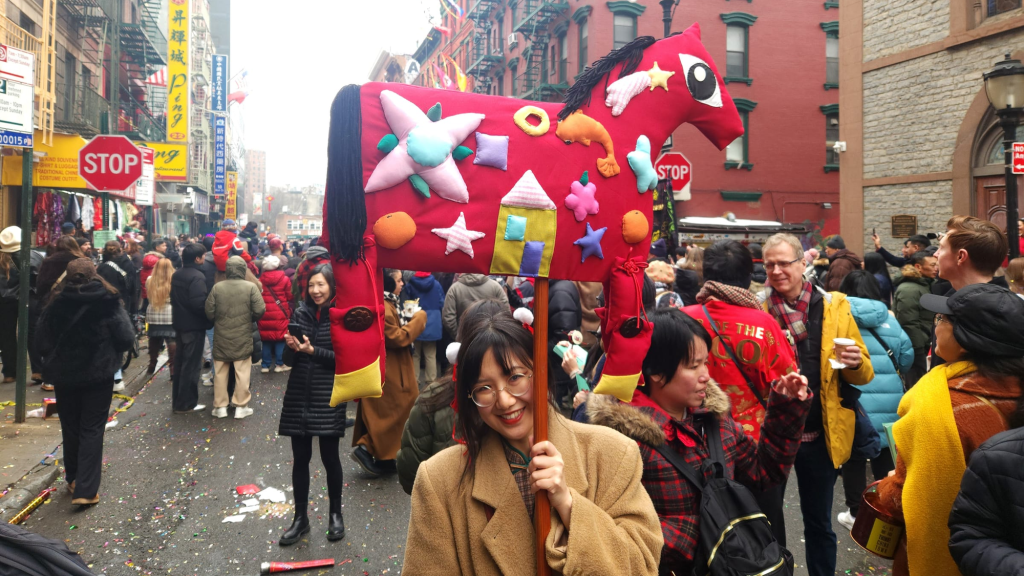
In a vibrant spectacle, Manhattan’s Chinatown celebrated the Lunar New Year with an array of dragon dancers, confetti, and other festivities. Prominent among these was artist Sarula Bao’s handcrafted puppet, paying homage to the Year of the Fire Horse. Bao’s work, part of Think!Chinatown’s Lantern Residency, integrated traditional Chinese motifs associated with luck and prosperity. This lively cultural display highlights the rich diversity of the community’s traditions.
**Editorial Note**
As the world welcomes the Lunar New Year and Ramadan, Hakim Bishara, editor-in-chief, extends wishes for peace and prosperity. Bishara envisions a year where artists thrive independently, oppressive regimes fall, and art transcends its role as merely an investment.
**Featured Art Critiques**
The Bronx Museum’s biennial exhibit was notably praised for transcending time and place, illustrating ambitions beyond mere representation. In parallel, Ocean Vuong, better known for his literary achievements, impressively showcased his photography skills in an exhibition that challenges preconceived expectations about his contributions to visual art.
**Exhibition Highlights**
Peter Waite’s “Social Memory” exhibition, running until March 15, 2026, at The Wadsworth in Hartford, Connecticut, captures the essence of absence through large-scale architectural paintings. The works exemplify the theme of memory intertwined with space and history.
**Commentary on Art Interpretation**
Blaise Tobia shares insights on Sarah E. Bond’s work, “How White Elites Drained Ancient Art of Its Color,” drawing connections between historical art interpretations and modern exhibitions like “Chroma.” These discussions emphasize the evolving understanding of art history influenced by contemporary perspectives.
**From the Archive**
Reflecting on past discussions around representation in art, Seph Rodney’s piece underscores the necessity for structural change beyond just the appreciation of representational critique. While representation is powerful, Rodney argues it must be coupled with actionable steps to achieve genuine transformation in the arts.