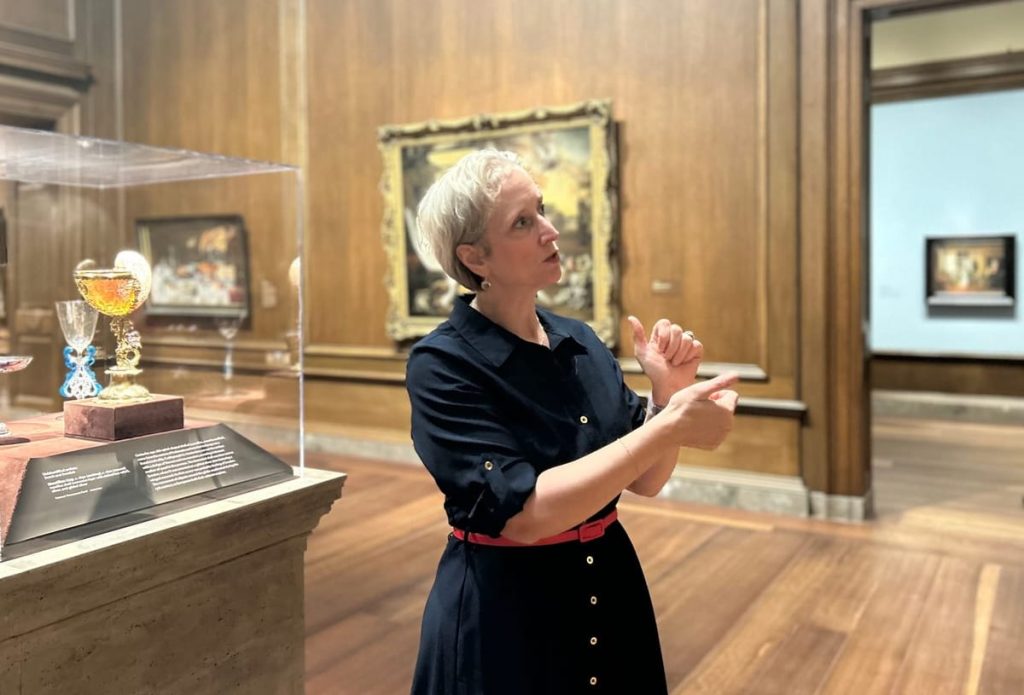
How One Woman Transformed Museum Accessibility
Lorena Bradford’s journey in making art universal
WASHINGTON, DC — Lorena Bradford began her career with ambitions in speech-language pathology, only to be captivated by the allure of art history, delving deep into 17th-century Dutch and Flemish print-making for her PhD. A pivotal moment occurred in 2010, two years into her role as an educator at Washington’s National Gallery of Art (NGA), when she attended the Leadership Exchange in Arts and Disability (LEAD) Conference. This event reshaped her understanding of engagement and accessibility.
Bradford recounted a significant realization over a January Zoom meeting, “confronting my own assumption that speaking equals engagement.” As schools’ programs ushered more autistic children into galleries, she saw the need for tailored programs for disabled students and adults. Consequently, she pioneered the Accessible Programs department at the NGA. Unlike many museums that conflate ADA compliance with general accommodations, Bradford’s focus remained on crafting programs for patrons.
Her tenure saw the launch of initiatives like American Sign Language tours led by deaf guides, the Just Us program for individuals with memory loss and caregivers (2017-2024), and training sessions for Georgetown medical students in observation, communication, and empathy.
A major project during her leadership was the Short Description Project, elevating online accessibility during the COVID-19 pandemic. This initiative developed guidelines for crafting detailed art descriptions, emphasizing online access without paywalls.
The Trump era posed challenges to her inclusive initiatives; however, Bradford’s commitment to diversity, equity, inclusion, and accessibility remained steadfast. Two years ago, her cancer diagnosis reduced her NGA hours, culminating in her departure last July.
Today, Bradford channels her expertise into audio descriptions at the Kennedy Center, writing alt texts for Scribeley, and contributing to LEAD conference content. “Art is a universal language,” she asserts, advocating for future formalized arts accessibility education. She envisions a world where art transcends barriers, uniting all irrespective of language or ability.