Tracey Emin: Exploring the Self-Centric Themes in Her Art
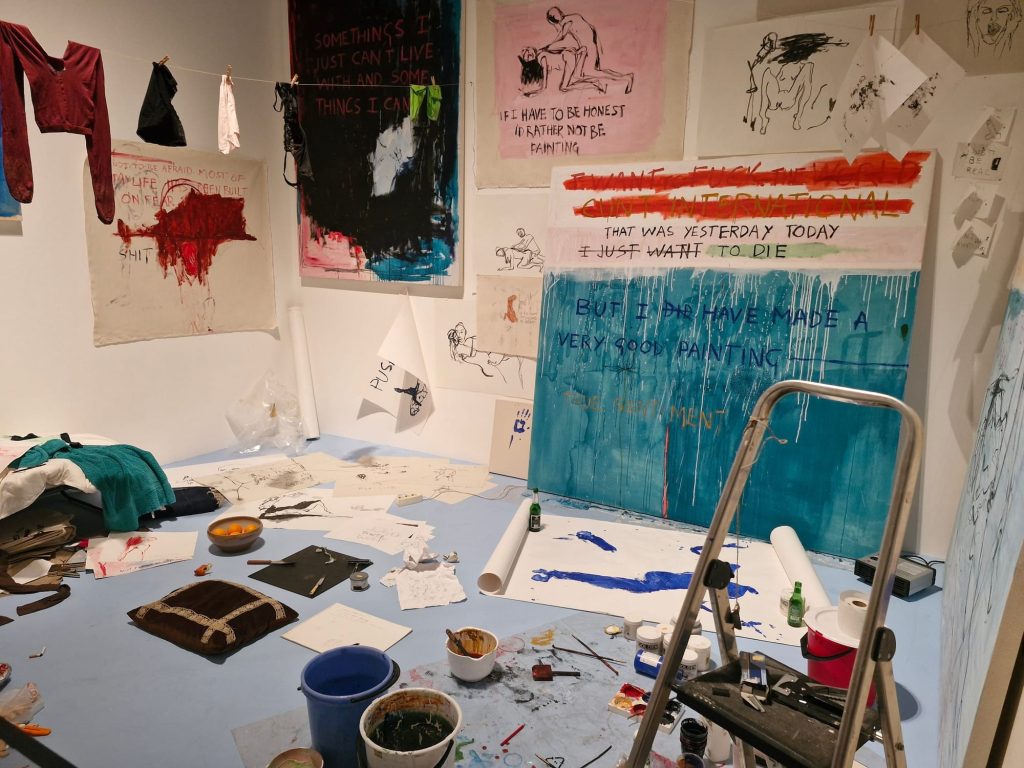
Tracey Emin’s retrospective “A Second Life” at Tate Modern invites visitors into an intensely personal exploration of the artist’s life and experiences. Known for her raw and confessional style, Emin’s art lacks traditional socio-political commentary, focusing instead on personal themes of love, desire, loss, and grief. Her works, often devoid of explanatory context, rely heavily on the written word to convey meaning, with frequently used pronouns like “I,” “You,” and “Me” emphasizing her introspective approach.
The exhibition, arranged loosely chronologically, presents Emin’s creations as a form of therapy, offering a visual exorcism of her emotional realities. Her techniques, characterized by bold and abrasive mark-making, express a visceral emotionality rather than technical precision. Artworks like “Rape” (2018) derive their emotional impact from their direct titles, offering raw insights into Emin’s traumatic experiences.
Emin’s work challenges traditional art criticism, as it prioritizes personal catharsis over conventional artistic narration or skill. Her retrospective includes polarizing pieces such as her unmade bed, famously nominated for the Turner Prize, which exemplifies her focus on personal introspection and the blurring of art and life. This approach resonates with contemporary audiences in the social media era, where self-promotion and personal narrative often take center stage.
“A Second Life” speaks to the broader trend of art as a vehicle for personal expression and public exploration of individual identity. Emin’s unfiltered depiction of personal experiences invites viewers to confront the intimate aspects of her life, prompting reflection on the role of personal narrative in art. The exhibition runs at Tate Modern through August 31, curated by Maria Balshaw, Alvin Li, and Jess Baxter.