Report Reveals UK Museums’ Collection of Over 260,000 Human Remains
Museums in the United Kingdom Hold Extensive Collections of Human Remains, Sparking Ethical Concerns
A recent investigation has uncovered that museums and institutions across the United Kingdom house over 263,000 items of human remains, including bones and complete skeletons. This revelation, resulting from a public records inquiry by the Guardian, has prompted a debate on the ethical implications of such collections, especially those originating from former British colonies.
The research found that 241 UK museums possess substantial collections of human remains, with 28,914 items confirmed to originate from outside Europe. A significant portion of these remains, approximately 11,856, comes from Africa, while nearly 10,000 are from Asia. Remains from Oceania, North America, and South America were present but less common.
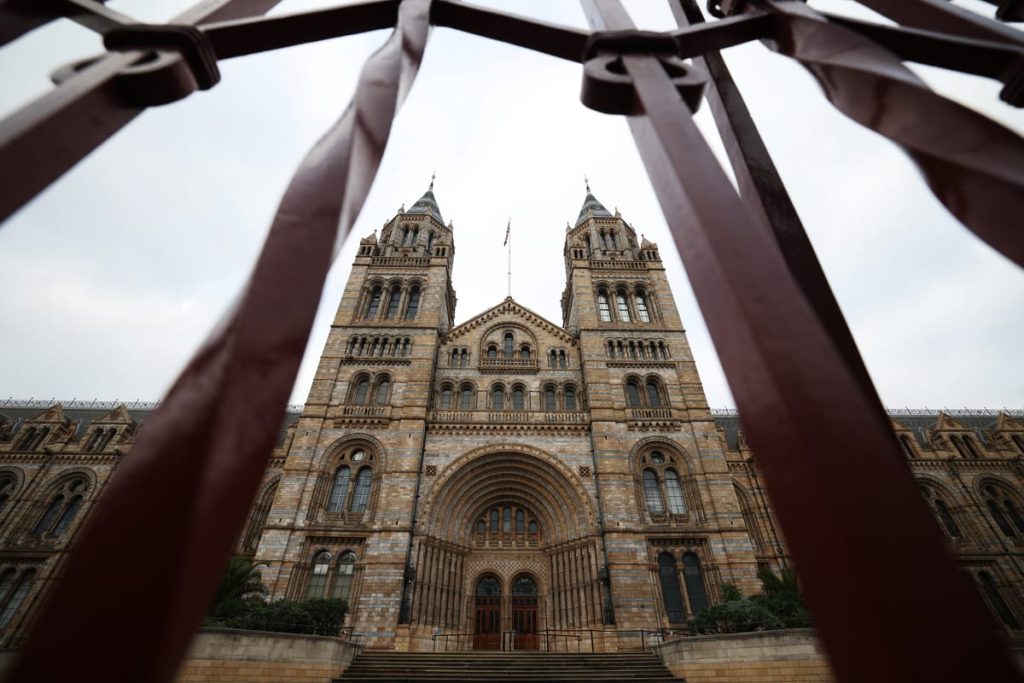
Two key institutions, the Natural History Museum (NHM) in London and the Duckworth Collections at Cambridge University, hold the majority of these non-European remains. The NHM has the most extensive collection of remains from Asia, North America, and South America. Duckworth Collections possess the largest number of African remains.
The NHM acknowledges that many of its human holdings were acquired during the height of British colonial power, often through donations or “unacceptable” practices. The museum emphasizes the importance of ethical considerations when engaging with these collections and has procedures for repatriation requests.
Experts, including Toyin Agbetu, a museologist and anthropologist at University College London, have voiced concerns about the ethical and moral dimensions of retaining such remains, particularly when acquired through coercion and violence. Agbetu stresses the importance of informed consent from descendants and labels the current situation as “ethically indefensible” on the scale revealed by the investigation.
The report highlights issues surrounding the documentation and identification of these remains, noting that some museums have unidentified items stored in nondescript boxes. Meanwhile, Dan Hicks, an archaeology professor at the University of Oxford, criticized the historical practices that led to the accumulation of these remains, often acquired through looting and theft.
A similar situation exists in the United States, where museums hold an estimated 110,000 Native American remains. Despite the Native American Graves Protection and Repatriation Act (NAGPRA) requiring the return of remains to tribes, many institutions have yet to comply.
The UK lacks a legally binding repatriation law like NAGPRA. While the Human Tissue Act 2004 provides guidelines for deaccessioning remains from those who died less than 1,000 years ago, it is seen as advisory rather than obligatory. Experts call for a shift from institutional discretion to a framework focused on rights and restitution.
Jane Anderson, a legal scholar and museologist, emphasizes the importance of transparency and public disclosure of collections. She argues that institutions should assist communities in locating and reclaiming their ancestral items.
Overall, the investigation underscores the ongoing debate about the ethical responsibilities of museums and the need for frameworks that prioritize the spiritual and political rights of descendants over retention for ethnographic purposes.