Archaeologists Discover Clay Jewelry from 15,000 Years Ago Displaying Children’s Fingerprints
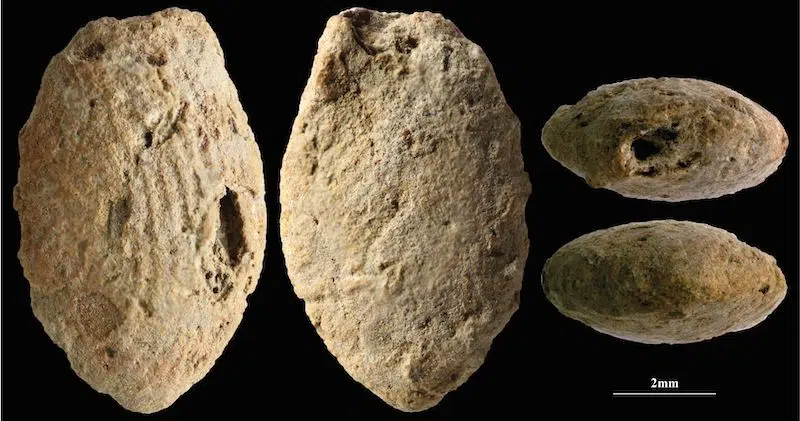
In a revolutionary archaeological revelation, scientists have discovered clay beads dating back 15,000 years in what is now Israel, profoundly altering our comprehension of early artistic endeavors. These relics, made by the Natufians, an ancient culture that flourished in the Levant from 13,000 to 9,700 BCE, exist prior to the introduction of pottery. The assortment, consisting of 142 beads and pendants, underscores the cultural importance of clay well before the pottery developments of the Neolithic era.
These items, created using detailed slip techniques and embellished with red ochre, exhibit a careful attention to precision. The discovery of preserved fingerprints within the clay offers a rare insight into the past, indicating that children and young individuals participated in their production. This finding represents the first instance where fingerprints have been used to directly link individuals to Paleolithic decorative items.
The Natufian ornaments, which showcase various shapes inspired by the natural environment, imply that artistic expression was celebrated within the community. These artifacts, frequently strung on plant fibers, represent a cultural transformation towards articulating identity and shared meanings among the earliest settled populations.
This primitive utilization of clay ornaments suggests that symbolic representation and cultural practices progressed alongside the transition to more stable living conditions. The research illuminates a crucial phase in human history, highlighting the origins of identity construction and cultural interaction in ancient societies, as shown by these lasting personal items.