Survey Reveals Severe Staffing Challenges in POC Arts Nonprofits
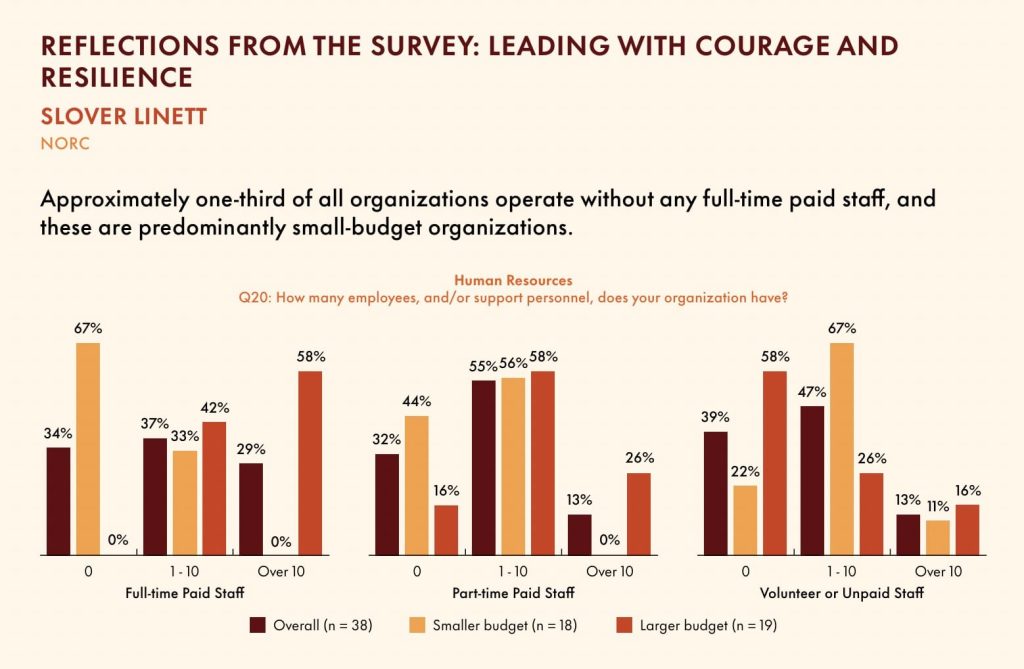
Operating a museum or cultural center without any full-time staff is a complex challenge that requires creativity, dedication, and community engagement. The Museum Hue’s “HueArts and Culture Northeast” report highlights this reality among institutions founded and led by people of color (POC), particularly in the Northeastern United States.
The report reveals that over a third of surveyed POC-oriented institutions lack a single full-time employee, with many operating on budgets of $500,000 or less. Some even function on under $100,000 annually, heavily relying on volunteers. Despite these financial constraints, these institutions play a crucial role in preserving and showcasing the arts, culture, and histories of underrepresented communities. They often dedicate their collections to marginalized groups and prioritize the sharing of under-told stories.
Maintaining operations without full-time staff involves various strategies. Institutions rely on volunteer work, which includes contributions from local communities and diasporas. For example, the Cape Verdean Museum in Pawtucket, Rhode Island, depends on donations and fundraising from the community to secure its own space, a necessity for qualifying for grants.
Financial sustainability is a significant concern, with POC-oriented institutions experiencing fluctuations in funding sources. Federal support has decreased, making foundation-based contributions more crucial. The absence of staff hinders the ability to pursue individual donor support and manage grant applications, creating a cycle of resource deprivation.
Despite these challenges, the commitment to accessibility remains strong. Many smaller-budget institutions offer free admission to events, emphasizing a community-focused approach. As the Akwesasne Cultural Center Director has stated, embracing community ownership of these spaces is essential.
The report underscores that the lack of resources isn’t a reflection of these institutions’ missions or relevance. Rather, the systemic funding and staffing limitations perpetuate their under-resourced status. Nonetheless, these organizations continue to thrive through innovation, community involvement, and a steadfast commitment to their cultural missions.
Museum Hue’s research highlights the need for increased funding and structural support to ensure these vital cultural institutions can sustain their work for future generations.