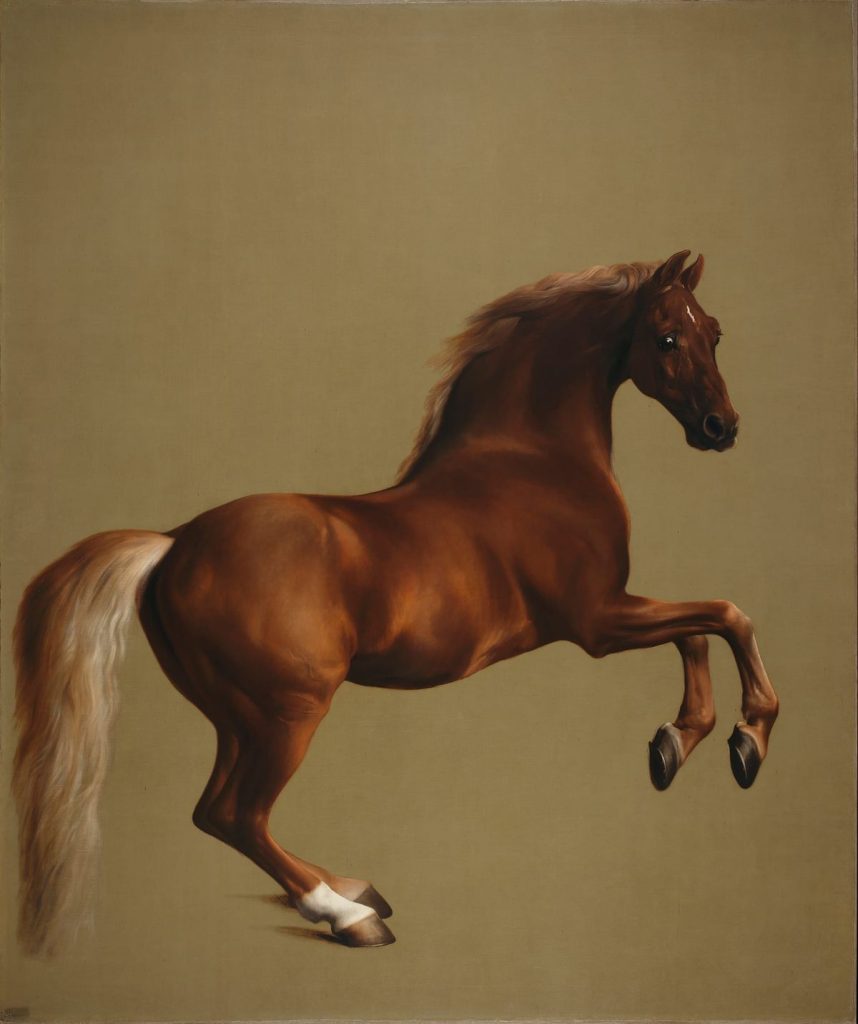
The Story of a Horse Without a Rider
**Art Review: George Stubbs and the Equine Masterpiece “Whistlejacket”**
When George Stubbs paints a horse, it comes alive. One such vibrant creation is “Whistlejacket,” a painting that epitomizes the artist’s mastery over equine portraiture. Stubbs, the son of a Liverpool currier, dedicated his life to understanding the anatomy of horses as no other artist before him. His knowledge was profound, drawn from extensive dissections and documented in “The Anatomy of the Horse,” a seminal work containing both detailed illustrations and descriptions of equine anatomy.
“Whistlejacket,” painted in 1762, is a monumental piece that captures a riderless steed against a neutral background. Unlike the many statues of men on horses found throughout London, particularly in areas rich with history like Trafalgar Square and Whitehall, “Whistlejacket” stands alone. The painting eschews the traditions of portraying horses as mere accessories to their riders. Originally destined to depict King George III, the portrait remains unique for its lack of context: the horse is free, powerful, and unbound by human dominion.
This choice to depict “Whistlejacket” without a rider imbues the painting with a profound sense of equine autonomy and dignity. Whistlejacket himself, a horse linked to the reign of a king known for his later madness, is allowed to stand in all his natural majesty. Set apart from the bondage typically imposed by human figures, Whistlejacket represents a pure expression of equine beauty and strength.
The National Gallery in London is home to this magnificent artwork, along with a comprehensive exhibition titled “Stubbs: Portrait of a Horse.” This exhibition delves deeper into Stubbs’ fascination with horses, featuring studies, working drawings, and the only other large-scale riderless horse painting by Stubbs, titled “Scrub.” Unlike Whistlejacket’s stately pose, Scrub is depicted with vibrant anxiety in an imagined landscape, underscoring the theme of horses as both majestic and inherently wild creatures.
Through “Stubbs: Portrait of a Horse,” viewers gain insight into the artist’s unparalleled ability to bring the essence of horses to canvas. The exhibition continues at London’s National Gallery through May 31, inviting all who visit to explore Stubbs’ world of equine art and the timeless power of “Whistlejacket.”