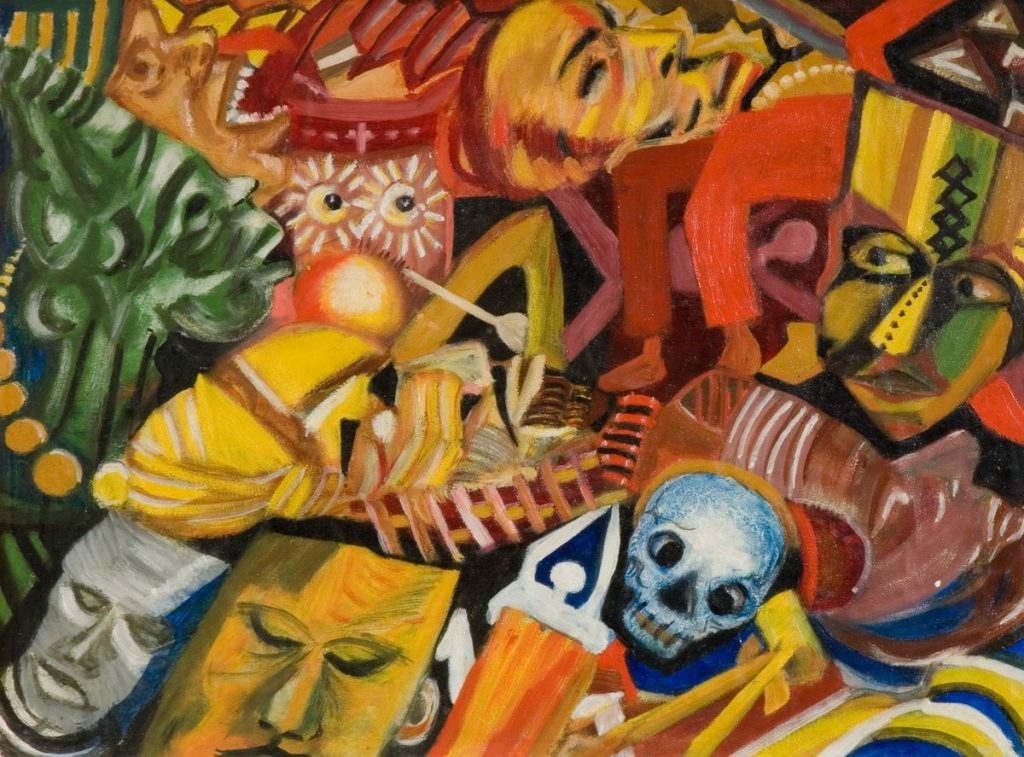
An In-Depth Exploration of Nigerian Modernist Art
**Exploring Nigerian Modernism: Art and Identity at Tate Modern**
In a groundbreaking exhibition at London’s Tate Modern, the complex tapestry of Nigerian modernism unfolds, offering a fascinating, if sometimes overwhelming, glimpse into the artistic revolution that coincided with Nigeria’s postcolonial emergence. This exhibition marks the first of its kind in the UK, ambitiously presenting the diverse responses of Nigerian artists to the evolving cultural and political landscape of the 20th century.
Nigerian modernism, as the exhibition reminds us, defies singular classification. Instead, it is a collection of varied artistic expressions that collectively crafted a postcolonial identity. The journey begins with Aina Onabolu, who, in the early 20th century, established an art curriculum in Lagos that integrated European artistic techniques with distinctly Nigerian subjects. His works set the stage for a new artistic era.
The narrative gains momentum with the awe-inspiring creations of Benedict Enwonwu. Enwonwu’s work, a blend of inherited Igbo sculptural traditions and modernist idioms, captivates viewers. His paintings, such as “Black Culture” (1986) and “The Dancer” (1962), elegantly merge traditional and contemporary themes. His poignant depiction of Nigeria’s civil war experiences, showcased in “Storm over Biafra” (1972), adds a somber depth to the exhibition.
Installation pieces, such as Enwonwu’s monumental sculptures commissioned for the British tabloid *Daily Mirror*, stand as symbols of cultural synthesis, merging traditional Igbo craftsmanship with modern contexts.
The impact of the Zaria Art Society is palpable in the exhibition. Artists like Jimo Akolo and Clara Etso Ugbodaga-Ngu weave Nigeria’s socio-economic narratives into their works. Akolo’s “Fulani Horsemen” (1962) is a vibrant fusion of bold, geometric expressions, while Ugbodaga-Ngu’s “Yoruba Palm Wine Seller” (1963) captures the essence of Southern Nigeria’s economic life.
Despite the exhibition’s ambitious scope, it leaves visitors yearning for a deeper understanding of the cultural influences behind the artists’ works. A more detailed exploration of the diverse cultural and religious influences shaping these artists could further illuminate the complexity of Nigerian modernism.
Overall, “Nigerian Modernism” is an adventurous dive into a pivotal era in Nigerian history. While it occasionally overwhelms with its scope, it remains a significant celebration of a dynamic and transformative period in art. Curated by Osei Bonsu and Bilal Akkouche, the exhibition is a must-see at Tate Modern, running through May 10.