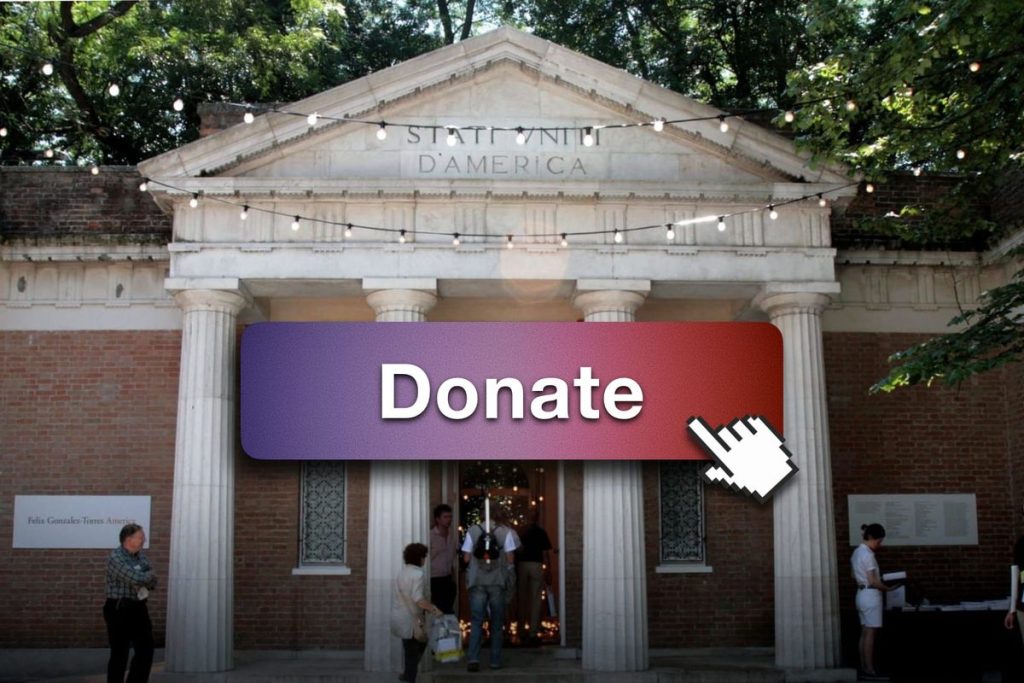
The US Pavilion Begins Accepting Online Donations
The intricate world of funding art exhibitions can often reveal underlying complexities, as shown by the current situation with the United States Pavilion at the 2026 Venice Biennale. Historically, patronage from esteemed foundations and wealthy enthusiasts has been openly celebrated, yet this year, the funding landscape appears unusually opaque. Alma Allen’s pavilion, a project overseen by the recently established American Arts Conservancy (AAC), is in stark contrast to previous efforts, notably sidestepping the major institutional support that characterized projects like Jeffrey Gibson’s 2024 installation.
The Trump administration’s influence, a shift from arts-centric policies to one that emphasizes broader themes like “American Excellence,” has altered the funding dynamics. The pavilion relies partly on a grassroots online donation mechanism rather than contributions from prominent art institutions. Notably, the $375,000 federal grant falls short of covering the total exhibition cost, prompting initiatives such as a $100 minimum online contribution.
Jenni Parido, AAC’s Executive Director, highlights the pivotal role of private citizens in this venture. Despite their support, the identities of these patrons remain confidential, although reports suggest ties to individuals in Trump’s orbit. This low-profile funding approach is part of a broader trend: as observed in past biennale editions, unique and non-traditional fundraising methods have supplemented financing requirements.
Challenges extend beyond financing into the pavilion’s selection process. The artist and curator were chosen outside the usual channels, underlining the irregularities driven by administrative changes. The State Department’s choice of Alma Allen and Jeffrey Uslip reflects a commitment to showcasing American narratives, propelled by an ambition to encapsulate the “greatness of the American Dream.”
As the Venice Biennale approaches, the intertwining of art, politics, and patronage stands out, with broader international tensions also casting a shadow. In this evolving landscape, the achievements and contributions of myriad actors—public, private, and institutional—continue to shape the contemporary art scene globally.