
See the Largest Viking Age Hoard Ever Found in Norway. At Nearly 3,000 Coins and Counting, the Cache Is a Once-in-a-Lifetime Find
Buried in the mid-11th century, the stash includes silver pieces minted under rulers such as Cnut the Great, Aethelred the Unready and Harald Hardrada
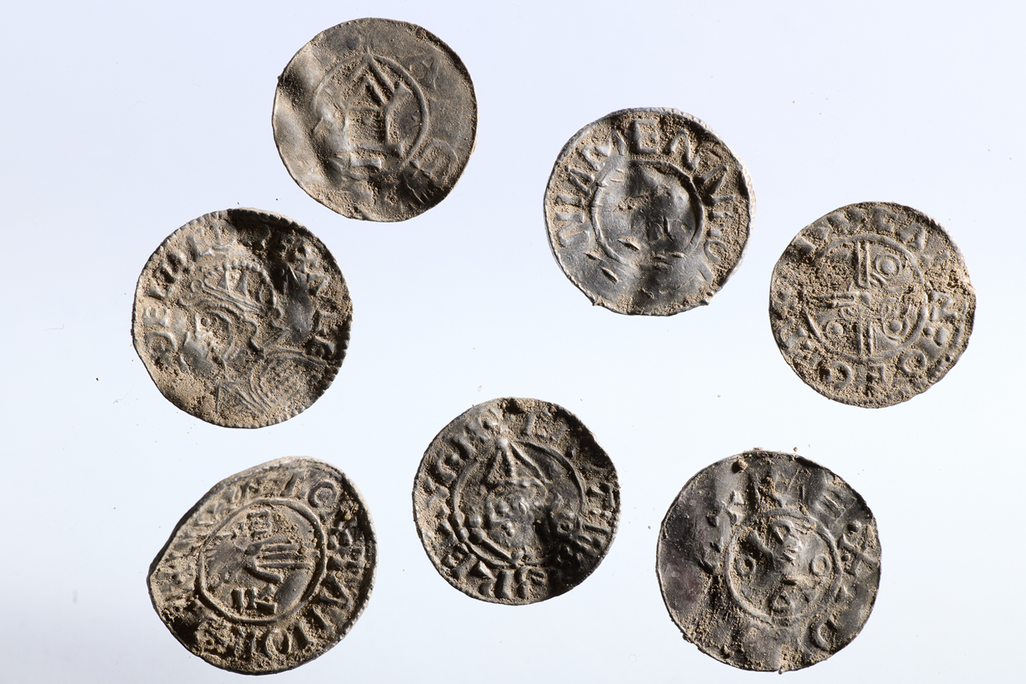
Seven of the coins from the newly discovered hoard, which is the largest of its kind ever found in Norway
Innlandet County Council
In 1836, a farmer stumbled upon some 1,850 coins stashed beneath a stone on Norway’s southwestern coast. Likely deposited at the site in the 11th century, the cache easily set the record for the largest Viking Age coin hoard ever unearthed in the country.
The so-called Arstad hoard held that title for nearly 200 years, only yielding after a new contender arrived on the scene in April. At 2,970 silver coins (and counting), the trove is “a truly unique discovery of the kind one might only experience once in an entire career,” May-Tove Smiseth, an archaeologist with Innlandet County, says in a statement.
On April 10, metal detectorists Rune Sætre and Vegard Sørlie found 19 silver coins from the hoard in a field in eastern Norway. They immediately notified local authorities. When archaeologists started digging, they found another 50 coins. Soon, that figure ballooned to triple digits, and then to the thousands. The experts expect even more coins to follow as excavations continue.
Vegard Sørlie (left) and Rune Sætre (right), the metal detectorists who discovered the hoard Anne Engesveen / Innlandet County Council
“It has been absolutely unbelievable to stand there and watch these coins be lifted out of the ground,” Smiseth tells Science Norway’s Ida Irene Bergstrøm, “and to see the quality of the coins. … They have been preserved so well that they almost look newly minted.”
The cache includes both local and foreign coins minted during the late Viking Age, between roughly 980 and 1047 C.E. These silver pieces bear the names of rulers including Cnut the Great, an 11th-century king who united England, Denmark and Norway under a single crown; Aethelred II of England, who is better known today as “Aethelred the Unready”; and Harald Hardrada of Norway, who was killed in battle in 1066.
Did you know? Harald Hardrada’s connection to the Norman Conquest
The presence of coins bearing Harald’s name suggests that the hoard was buried in the late 1040s. Early in his reign, Harald introduced Norway’s first “national monetary system,” minting silver pennies in a standard size, according to the Oslo-based Historical Museum. “Foreign coins were soon replaced by Harald’s coins, and they were valid currency everywhere in the kingdom.” As numismatist Svein Harald Gullbekk says in the statement, “The hoard was deposited right at the beginning of this development.”
This coin shows the head of Aethelred the Unready in profile. May-Tove Smiseth / Innlandet County Council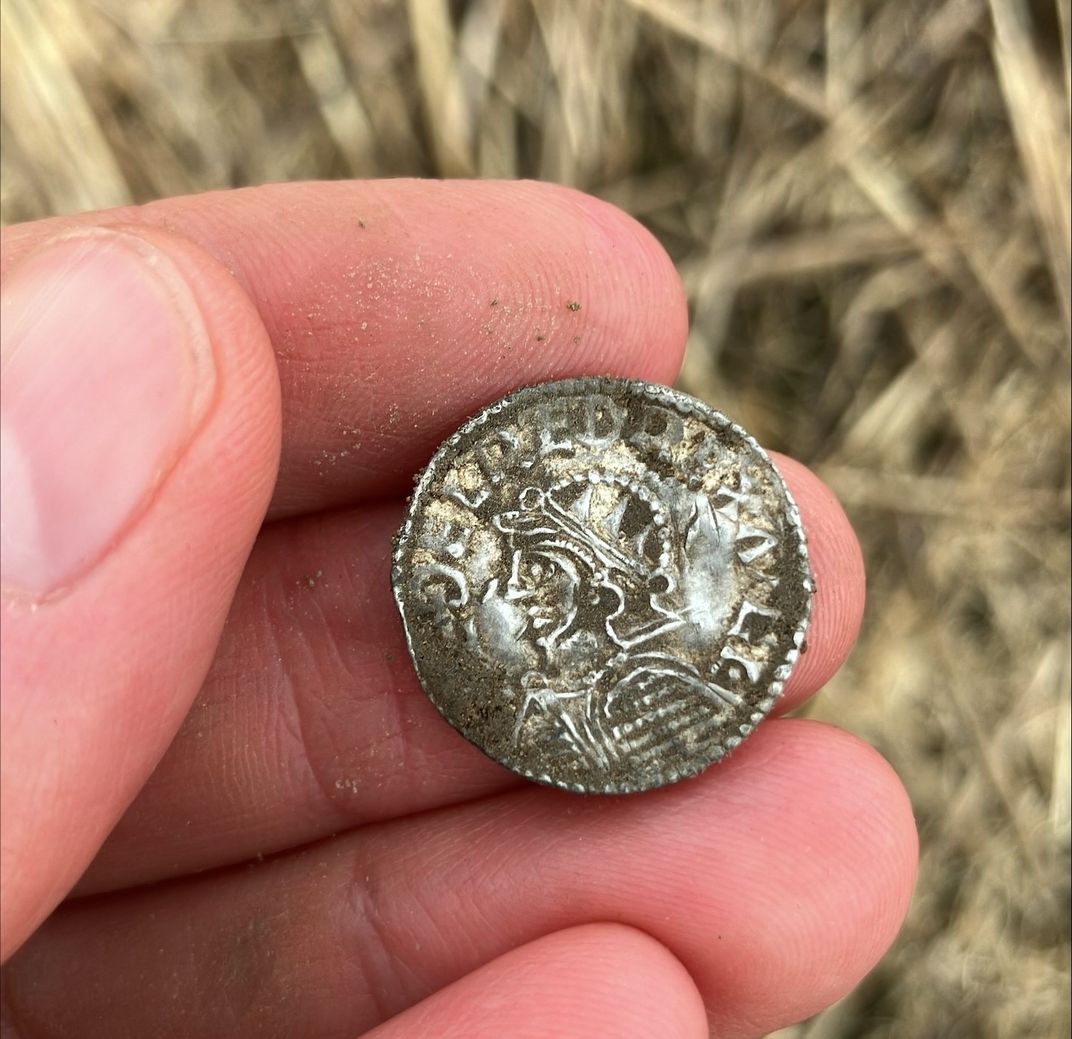
During the Viking Age (approximately 800 to 1050), seafaring Scandinavians traveled across a broad swath of the medieval world, from Constantinople in the east to North America in the west. In addition to establishing trade outposts, the Vikings raided communities across the British Isles and what is now France. Many treasure caches unearthed in Europe date to this tumultuous era; perhaps the most famous is Scotland’s Galloway Hoard, which contains more than 11 pounds of precious artifacts, including a gold pin shaped like a bird and an ornate silver cross.
Excavations in England’s West Midlands recently unearthed a cache of 63 coins that may have been buried in anticipation of a Viking invasion. As the Worcestershire Archive and Archaeology Service noted in a blog post, “Hoard deposits are often linked to periods of uncertainty or instability. Someone might hide their wealth in the ground intending to return once the danger had passed. In many cases, however, the owner never came back.”
A silver pectoral cross from the Galloway Hoard, which was found in Scotland in 2014 National Museums Scotland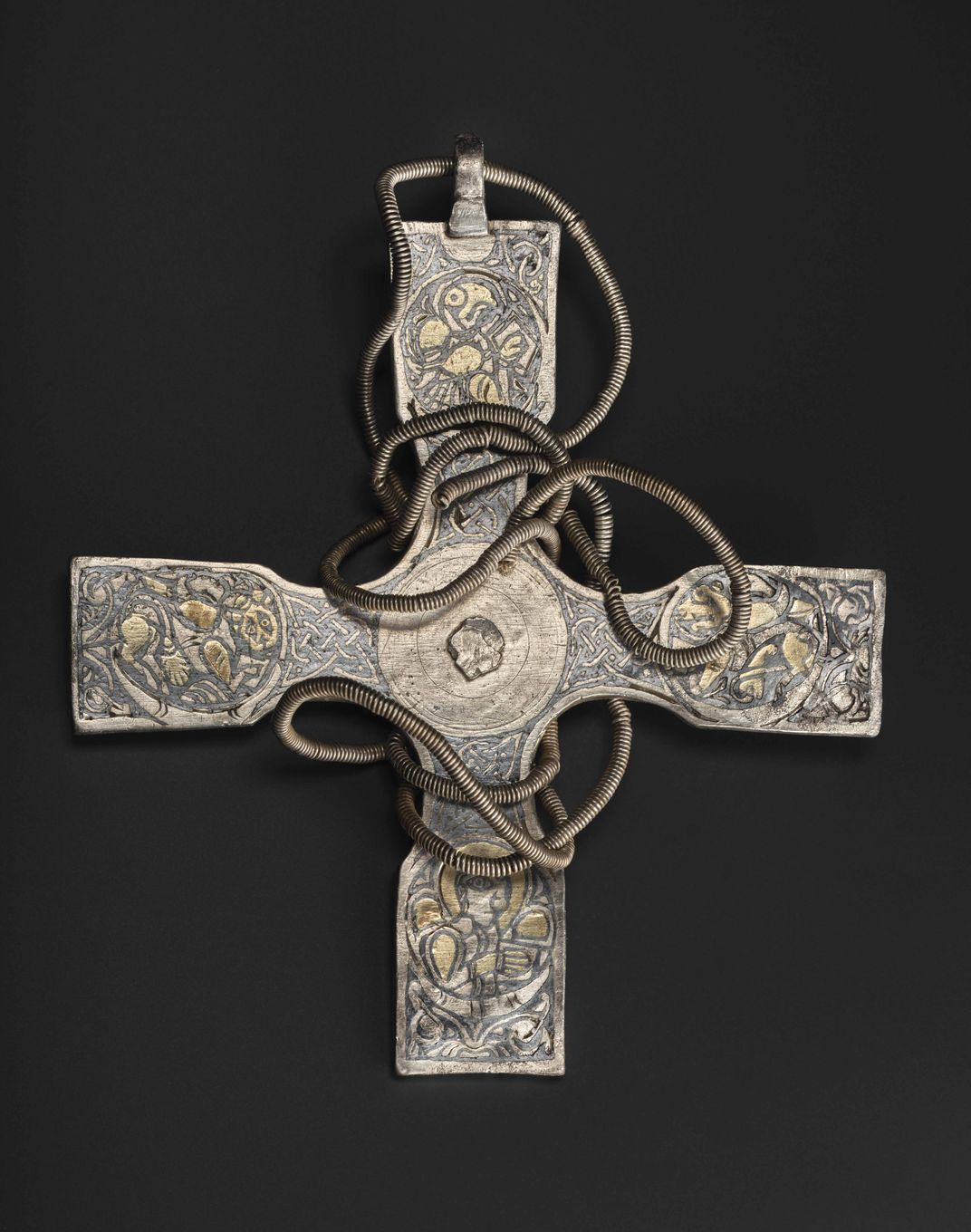
Researchers aren’t sure exactly why the silver coins found in Norway were stashed away nearly 1,000 years ago. In the statement, Jostein Bergstøl, an archaeologist at the Museum of Cultural History, points out that the area where the hoard was hidden served as a major iron production hub between the 10th and late 13th centuries. Tucked in a leather pouch or similar container for safekeeping, the cache might represent the profits generated by this lucrative business. After the pouch decayed, a plough likely scattered the coins across the field, making them harder to detect.
“They were never noticed by those who work here,” Smiseth tells Science Norway. “People don’t walk the fields anymore.”
The team still has much to learn about the so-called Morstad hoard, which is named after the site where the stash was found. After archaeologists finish collecting all of the coins buried in the field, they plan to catalog and study them at the Museum of Cultural History.