
Could Australia Be the First Country to Eliminate Cervical Cancer? It’s on Track, but HPV Vaccination and Screening Rates Are Falling
The country implemented a national vaccination program to prevent the disease in 2007. New data show that in 2021, no women under age 25 were diagnosed with cervical cancer, marking a major milestone
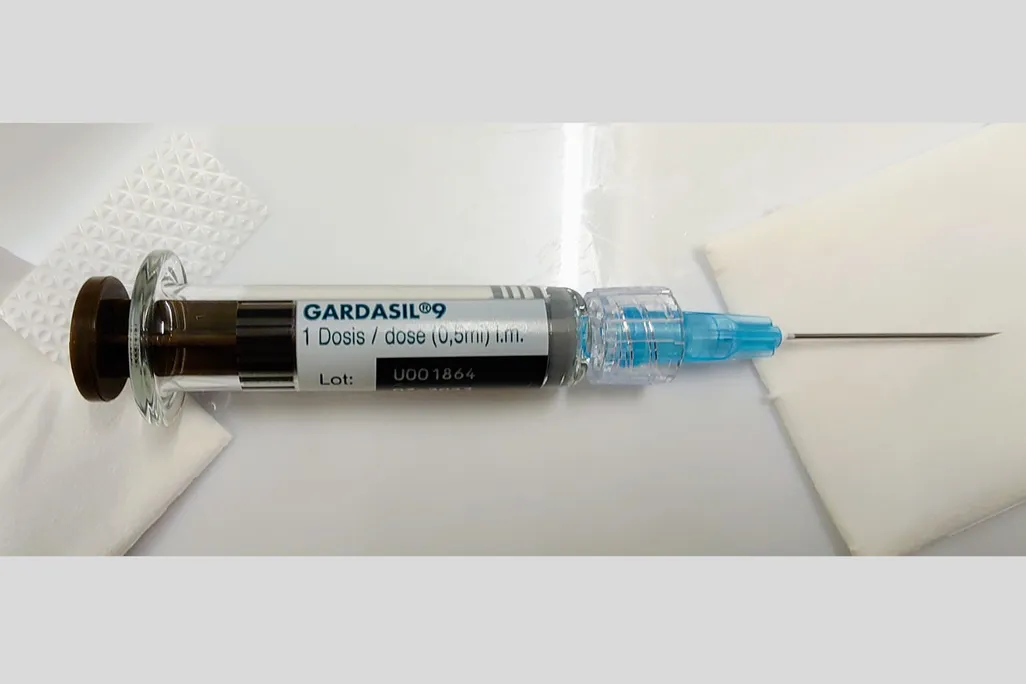
The HPV vaccine defends patients against cervical cancer.
Tintin0312 via Wikimedia Commons under CC BY-SA 4.0
Australia is on track to become the first country to eliminate cervical cancer, largely because of a national vaccination program to prevent the disease. It’s aiming to hit that goal by 2035, but a dip in immunization rates and cervical screenings is also raising red flags, according to the country’s most recent Cervical Cancer Elimination Progress Report.
Still, no new cases of cervical cancer were diagnosed in women under age 25 in 2021, the latest data available, per the report. That’s a first since experts began keeping these records in 1982.
“Australia is leading the world in cervical cancer elimination, but we must maintain momentum to make this goal a reality,” says Rebecca White, Australian assistant minister for health and aged care, Indigenous health and women, in a government statement.
Cervical cancer occurs when cells grow out of control in the cervix, the lower part of the uterus that connects to the vagina. It is the fourth most common cancer among women globally, but it can be cured if detected and treated early, according to the World Health Organization (WHO).
The disease is also preventable. Most cases are caused by certain types of the human papillomavirus (HPV), and there are vaccines that protect against high-risk strains. In the United States, the Centers for Disease Control and Prevention recommends that children ages 9 to 14 receive two doses of the vaccine, and those ages 15 to 26 receive three doses.
In 2007, Australia became the first country to implement a national HPV immunization program, which doles out the vaccine to those who are eligible for free. In 2013, the program began to include boys, who can pass the virus to others. Four years later, the nation replaced screenings using Pap smears—which look for abnormal cells—with more sensitive testing for high-risk strains of HPV.
“Public health innovations in Australia sort of gave a general exemplar for WHO to follow,” Karen Canfell, a cancer epidemiologist at the University of Sydney who co-authored the report, tells the BBC’s Tabby Wilson.
According to the 2025 Cervical Cancer Elimination Progress Report, cervical cancer rates in Australian women are decreasing. In 2021, the rate was 6.3 per 100,000 women, lower than 2020’s rate of 6.6 per 100,000.
Did you know? Expanding cervical screening access in the U.S.
U.S. guidance recently changed to allow individuals at average risk of cervical cancer to collect their own samples. They can do it at home or in a health clinic using a tampon-like device. Private insurance companies must start covering the costs of at-home screenings by 2027.
But the report also revealed some factors that might slow down the momentum. In 2024, HPV vaccine coverage by age 15 was 79.5 percent, marking a 6.2 percent drop compared to 2020. Immunization rates are also lower among Indigenous adolescents and those in remote areas. Cervical screenings declined too. In 2022, 76.5 percent of eligible people were up to date on screenings, but in 2024, that fell to 74.2 percent.
The decrease in vaccine coverage is “bad news” and “incredibly disappointing,” though probably not completely due to vaccine hesitancy, Julia Brotherton, a public health physician and epidemiologist at the University of Melbourne who co-authored the report, tells Medscape News Australia’s Bianca Nogrady. Brotherton suspects that many factors are play, citing lower school attendance, the Covid-19 pandemic interfering with vaccination programs and other tasks taking priority.
Additionally, the report revealed that compared to the elimination target rate of fewer than four cases per 100,000 women, rates were three times as high among Indigenous women and twice as high for people in remote parts of the country.
“Our national elimination strategy is centered on achieving cervical cancer elimination for all. But our report continues to show that some groups are at high risk of being left behind unless we act now,” report co-author Dorothy Machalek, an HPV vaccine and surveillance expert at the University of New South Wales in Australia, says in the university statement. “We need to focus our efforts on collecting better and more timely data so we can better develop effective solutions.”