Mary Frank Builds Her Unique Assembly of Deities
Mary Frank’s art is a testament to her unique exploration of myth and form, showcasing her extraordinary ability to convey tenderness through her sculptures and works on paper. Her artistic journey, diverging from the prevalent trends of her time, presents figures that exude a mystical aura, inviting viewers into a realm where survival and love coexist gracefully. This article reviews her work, as exhibited in the recent show at Steven Harvey Fine Art Projects.
The Mary Frank exhibition, curated by Steven Harvey, highlights Frank’s distinctive approach from 1958 to 1985, featuring eleven sculptures and five works on paper. These pieces, crafted from wood, bronze, and ceramic, demonstrate Frank’s penchant for the mythic, embodying the resilience and tenderness of her subjects. Her sculptures, ranging from palm-sized to more substantial forms, reveal her dexterity in crafting intricate narratives through delicate lines and forms.
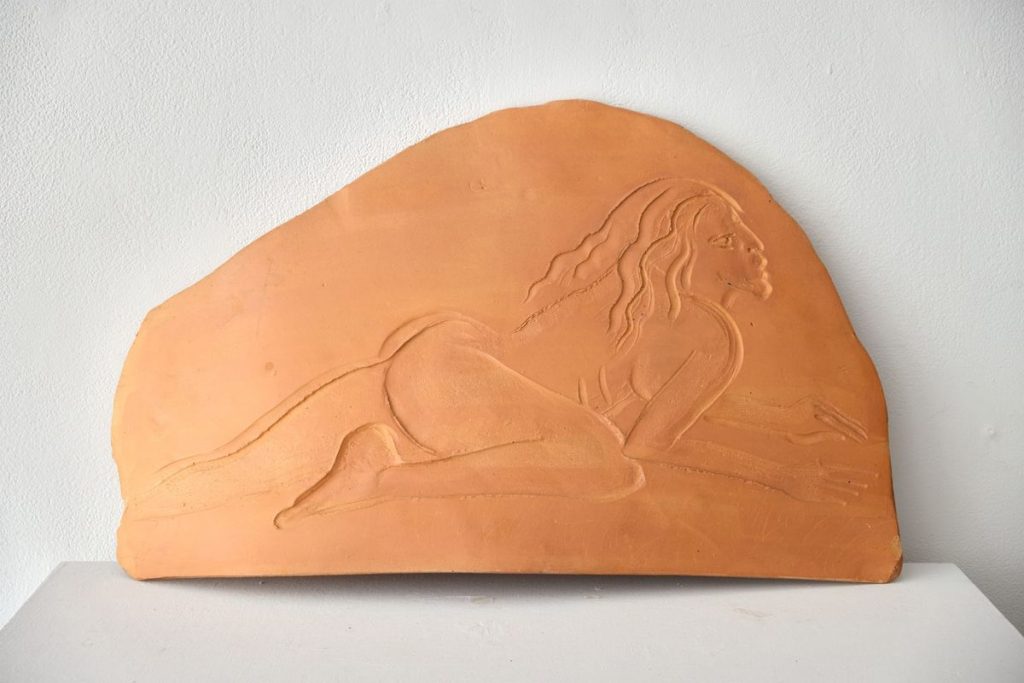
“Prone Woman Plaque” (c. 1980), a ceramic work, exemplifies Frank’s mastery. Her pieces often depict women who transcend traditional mythological archetypes, embodying self-sustenance and emotional depth. Frank’s works, such as “Winged Woman” (1958) and “Embracing Couple” (c. 1980), reveal her fascination with the human form and its symbolic resonance. Her sculptures and drawings escape temporal confines, situated between myth and modern sensibility.
Notably, Frank’s approach, which she cultivated over decades alongside studies with Martha Graham, celebrates the handmade, going against the 20th-century drift towards fabrication. Her works possess a timeless quality, encouraging reflection on the layers of identity and the channels of inner vision. The elemental world she creates is inviting and profound, each piece narrating its own story of survival and love.
The exhibition at Steven Harvey Fine Art Projects shines a light on Frank’s work, which remains underappreciated in the museum context. Her art deserves broader recognition, acknowledging her innovative contributions to the field. This exhibition, available until May 22, not only celebrates her existing legacy but also reaffirms the need for a more inclusive narrative in art history that values aesthetic independence. Through this collection, viewers can appreciate the quiet power and enduring beauty of Mary Frank’s art.