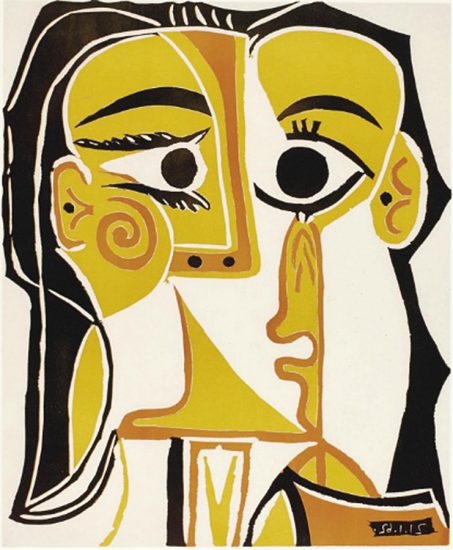
Exploring the Influential Women in Picasso’s Life Beyond Romance
Sue Roe’s latest book, “Hidden Portraits: Six Women Who Shaped Picasso’s Life,” takes on the task of illuminating the lives of the significant women who were entwined with Picasso. While the title centers on Picasso, the book ventures into the stories of Fernande Olivier, Olga Khokhlova, Marie-Thérèse Walter, Dora Maar, Françoise Gilot, and Jacqueline Roque. These women, while overshadowed by Picasso’s massive presence, had their own rich and complex lives, which Roe seeks to uncover and present.
The narrative outlines each woman from her childhood through the often-troubled later years, with Roe providing well-researched and vivid portrayals, shedding light on their agency and victories. Despite the dynamic and evocative recounting of their lives, the book seems to remain firmly within Picasso’s orbit, reflecting how these women’s lives were obscured by the artist’s towering figure. Yet, it is this exploration of their agency amidst suppression and control that makes Roe’s work a significant addition to existing literature.
Roe examines how these women influenced and were shaped by their relationships with Picasso, often reflecting on the emotional and creative complexities that entailed. Distinctly, the book emphasizes their contributions and struggles within the context of being associated with such a domineering personality.
Despite uncovering numerous details and providing a detailed look into these lives, Roe maintains a detached style, which might leave readers yearning for a deeper exploration of the emotional landscapes and struggles that these women faced alongside their renowned counterpart.
The book highlights not only the personal cost these women paid but also leads us to consider the broader implications for their work and legacy. Many were artists in their own rights, like Gilot and Maar, or key figures like Khokhlova, a dancer with Ballet Russes. Their own creative outputs and contributions remain a central, yet understated, narrative within Roe’s writing.
“Hidden Portraits” challenges readers to reassess the influence of these women on Picasso and their invaluable contribution to the art world. Roe’s exploration is a reminder of the complex interplay between muse and creator, pushing for a broader acknowledgment of these figures who played integral roles in shaping art history.