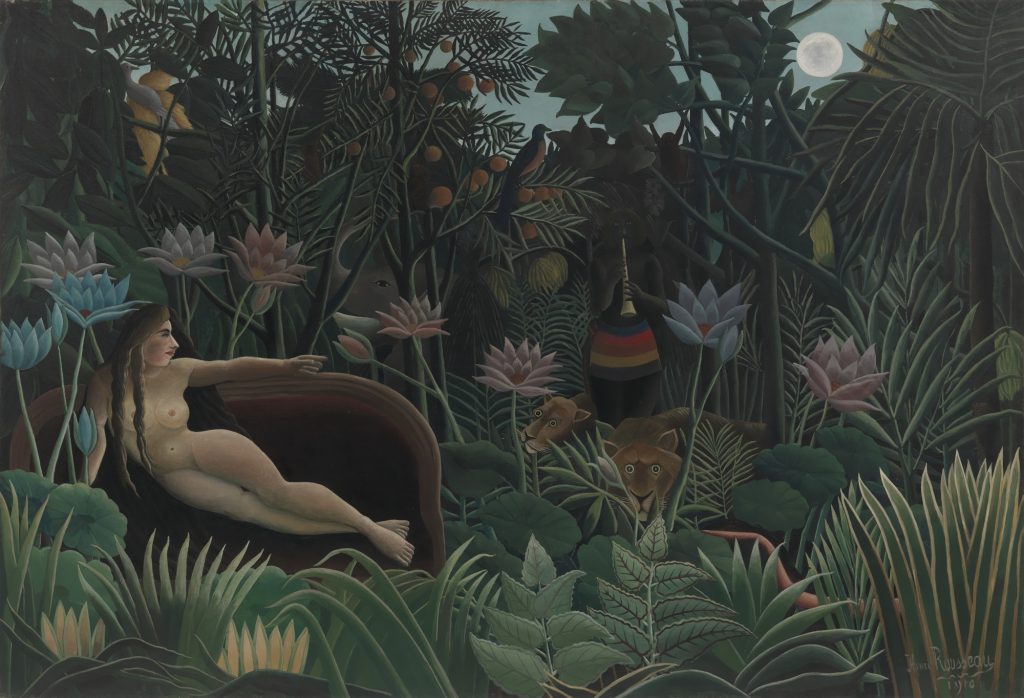
Analyzing the Hidden Elements in Henri Rousseau’s Artworks
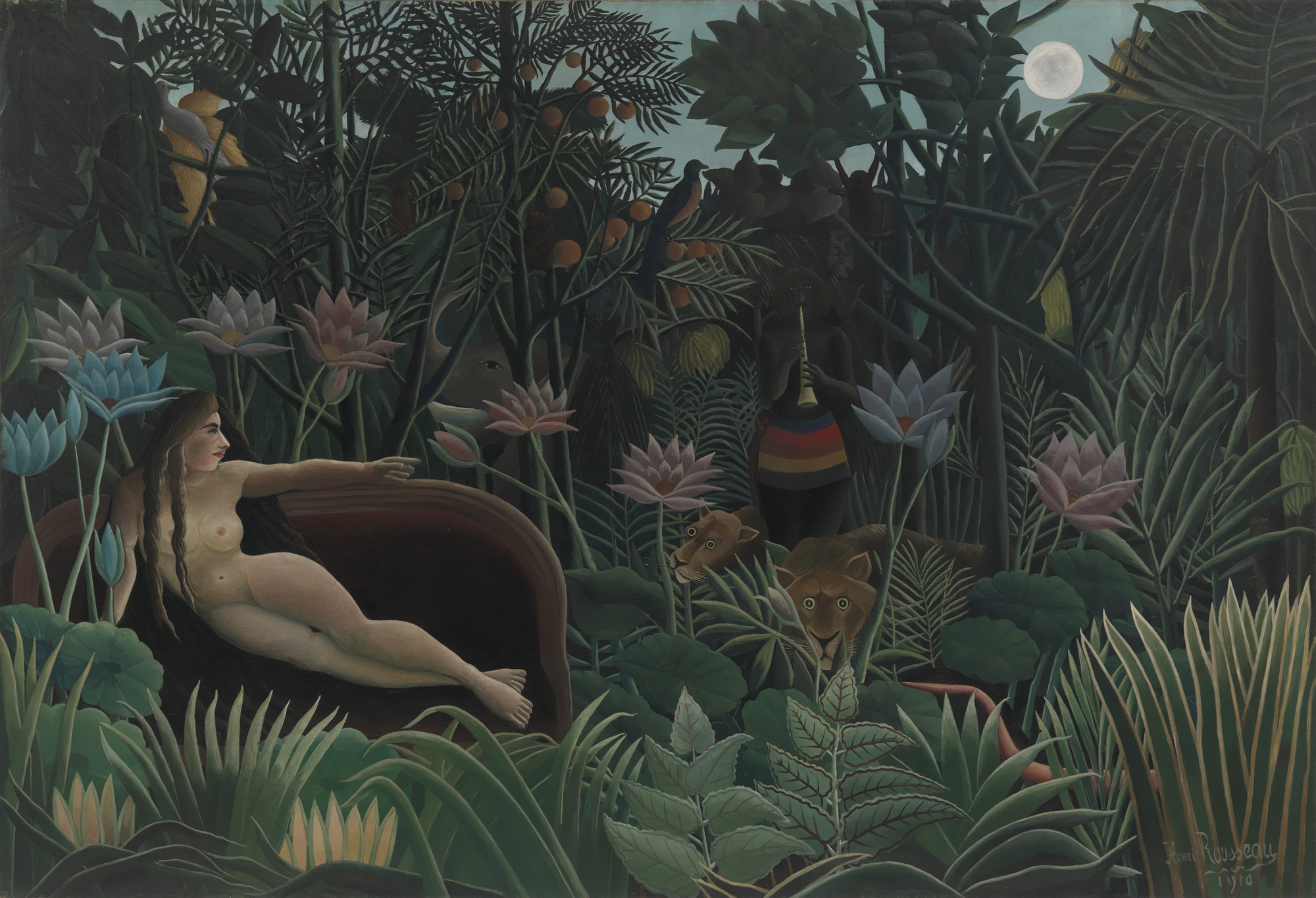
**Henri Rousseau: A Painter’s Secrets Revealed**
**Philadelphia—A Journey into the Mystique of Rousseau**
For those entranced by Henri Rousseau’s enigma-laden paintings, the exhibition **Henri Rousseau: A Painter’s Secrets** at the Barnes Foundation offers a rare portal into the mystique of this self-taught master. At the heart of this exhibition lies the illustrious “Sleeping Gypsy” (1897), a painting that invites endless wonder and speculation, now showcased among sixty other stunning works that collectively unravel the painter’s secrets.
**Self-Taught Savant & Enigmatic Artist**
Henri Rousseau was a bona fide curiosity. Despite hailing from the mundane profession of a Parisian toll collector, Rousseau ventured into the art world later in life, armed with an innate confidence and an air of mystery. The exhibition sheds light on his humble beginnings and gloriously unpredictable artistry, aptly described as “a riddle wrapped in a mystery inside an enigma.”
**Curatorial Insights & Technical Revelations**
The curators, Christopher Green and Nancy Ireson, have masterfully intertwined Rousseau’s personal narrative with his art. Through meticulous technical studies, hidden details in works such as “The Family” have emerged, showcasing not just bold aesthetic strokes but Rousseau’s keen observation of human nature.
**An Encounter of Enchantment & Mystery**
Visitors embarking on this artistic odyssey will uncover mysteries within “Sawmill, Outskirts of Paris,” where Rousseau discretely placed the Eiffel Tower, and “Carnival Evening,” where a ghostly visage lingers. Such artful surprises echo through his canvas, accentuated by vibrant, dramatic foliage reminiscent of Paris’s exotic botanical offerings.
**A Study in Unresolved Narratives**
In tandem with the Barnes Foundation’s collection, the exhibition pairs Rousseau’s “Scouts Attacked by a Tiger” with thematic counterparts: the Fondation Beyeler’s “The Hungry Lion Throws Itself Upon the Antelope” and the Cleveland Museum of Art’s “Fight Between a Tiger and a Buffalo.” These juxtapositions highlight Rousseau’s thematic fascination with nature’s ferocity and his bold depiction of conflict.
Green posits that Rousseau, who routinely gifted viewers with unresolved stories, found admirers in the Surrealists for precisely this quality. Unanswered questions in paintings like “Unpleasant Surprise” hint at Rousseau’s influence on subsequent avant-garde movements.
**Rousseau’s Legacy in the Limelight**
It’s a telling sign of Rousseau’s subtle but profound impact that luminaries like Picasso were collectors of his work. The curatorial choice to include pieces such as the “Portrait of a Woman” from Picasso’s own collection exemplifies Rousseau’s embellishment of mundane motifs onto breathtaking realms.
**An Exhibition Not to Be Missed**
For those intrigued, the exhibition’s comprehensive catalog offers deeper insights, as does Roger Shattuck’s treatise **The Banquet Years**, which situates Rousseau and his contemporaries within the broader strokes of France’s avant-garde movement.
This exhibition is an opportunity to rediscover Henri Rousseau. By engaging with the meticulously curated galleries and exploration of his art’s latent depths, viewers can anchor Rousseau within an artistic lineage featuring Picasso, Cézanne, Matisse, and Renoir.
**Visit & Beyond**
**Henri Rousseau: A Painter’s Secrets** dwells at the Barnes Foundation in Philadelphia until February 22, 2026, before traveling to the Musée de l’Orangerie, Paris. Curated by Christopher Green and Nancy Ireson, it invites both devotees and new adventurers into Rousseau’s world, delivering an unforgettable exploration of his boundless imagination and unparalleled artistic liberties.