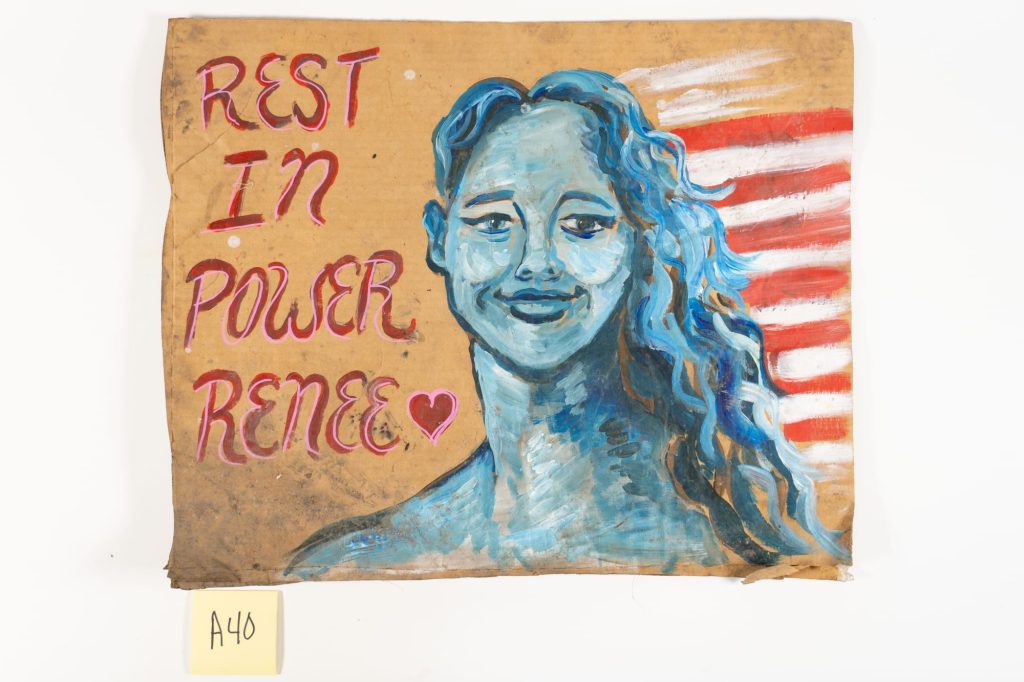
Preserving the Memorial of Renee Good: A Compassionate Effort
Ryan Vizzions: Documenting a Legacy of Grief and Resistance in Minneapolis
Photojournalist Ryan Vizzions, originally from Atlanta, found himself in Minneapolis amidst impactful events following the murder of Renee Nicole Macklin Good, a poet and mother, by federal immigration agents. Vizzions, who had embarked on a journey to capture what it means to be American, arrived in Minnesota in time for a massive vigil honoring Good.
His travels thus far had involved observing and photographing, but the gravity of Good’s murder propelled Vizzions to take on the role of archivist at her memorial site. It became a space where hundreds of items—flowers, notes, and artwork—were left by mourners to commemorate Good’s life and protest her untimely death. Understanding the historical significance, Vizzions began preserving these symbolic artifacts in a secret location while documenting them through photography.
Among the items was a touching note from a Department of Homeland Security employee, reflecting unlikely sympathy from within the agency implicated in Good’s death. Such paradoxical gestures underscore the complex tensions around immigration enforcement in the U.S.
An attempt to destroy the memorial by arson, coupled with harsh winter conditions, called Vizzions to act beyond his usual capacity as a photojournalist. Partnering with community members, he preserved the site from further damage or desecration. His actions reflect a deeper involvement, signaling a shift from mere observation to meaningful participation in a larger narrative of justice and memory.
Collaborating with Good’s family through a trusted mediator, Vizzions respects their wishes for the future of the archived collection. He envisions some items joining Smithsonian archives, but stresses that the final decision rests with the family. In the meantime, his efforts to digitize the collection ensure its accessibility for broader audiences.
In his commitment to preserving these testimonies of grief and resistance, Vizzions continually encounters poignant messages. One note, snow-covered and evocative, speaks to the activists’ ongoing struggles: “We all carry whistles now. . . We all carry each other now. . . I know you’re home.” This sentiment captures the essence of community resilience, underscoring why protecting these offerings bears such importance.
Through his work, Vizzions ensures that the memory of Renee Nicole Macklin Good, and the collective narrative of her community’s response, remains safeguarded for future generations to reflect upon.