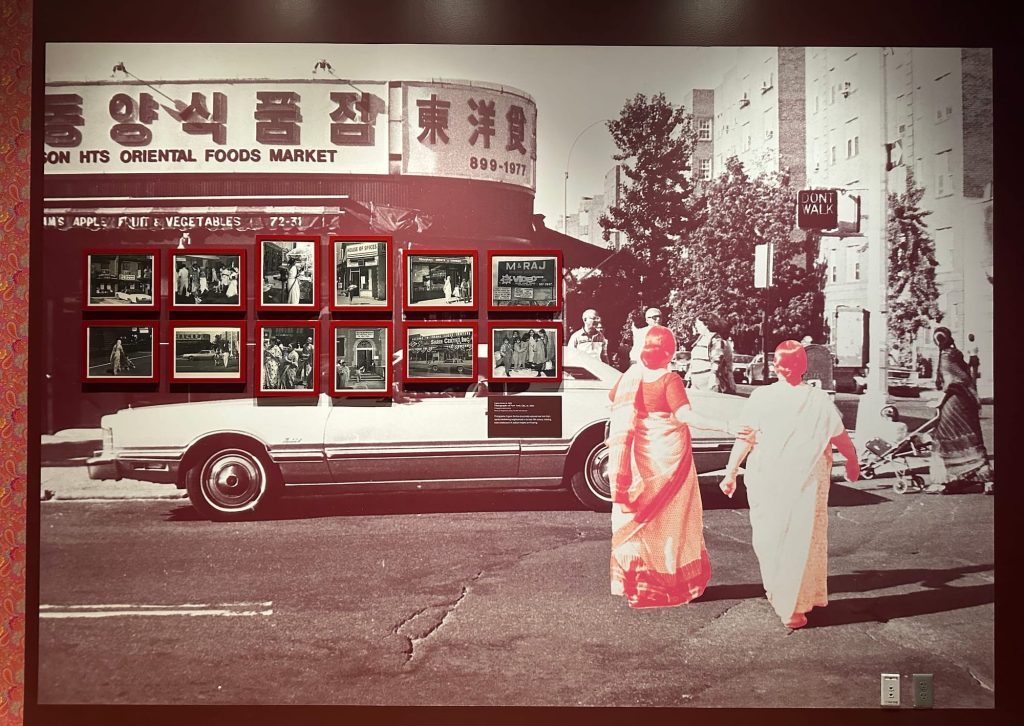
“The Political Significance of Fashion in ‘The New York Sari'”
Eugene Gordon’s Photographs of 1980s Queens: Capturing the Transformation of an Era
Eugene Gordon’s acclaimed photography provides a captivating lens into life in Queens during the 1980s, an epoch marked by cultural amalgamation and urban change. As a borough rich in diversity, Queens offered a tapestry of communities and experiences, which Gordon adeptly captured through his camera.
The 1980s in Queens were characterized by significant demographic shifts, with an influx of immigrants shaping the socio-cultural landscape. This era witnessed the rise of diversity as a defining feature of the borough, and Gordon’s photographs are a testament to this transformation. Through his work, viewers are transported to a time where neighborhoods buzzed with the vibrancy of different cultures coexisting and intertwining.
Gordon’s photography captures everyday life, offering an intimate glimpse into the lives of Queens’ residents. From candid street scenes to portraits of individuals, his work reflects the essence of a community adapting to change. His photographs often convey a narrative of resilience and adaptability, showcasing the human spirit within an urban environment undergoing rapid evolution.
One of the notable aspects of Eugene Gordon’s collection is his focus on the synergy between people and their surroundings. The photographs not only document the architectural and infrastructural elements of Queens but also highlight the interactions between individuals and these urban settings. Whether through images of children playing in the streets, vendors at bustling markets, or pedestrians going about their daily routines, Gordon’s work encapsulates the dynamism of Queens during this pivotal decade.
Another key theme in Gordon’s photography is the juxtaposition of tradition and modernity. The 1980s was a time of economic and technological progress, and this duality is reflected in his photographs. Traditional elements, such as cultural festivals and ethnic attire, often stand alongside emerging modern influences, illustrating the fusion of old and new in Queens’ communities.
Moreover, Gordon’s work serves as a historical archive that preserves the visual history of areas in Queens that have since undergone substantial changes. The photographs serve not only as an artistic expression but also as a documentary record of a bygone era, offering future generations a window into the past.
In conclusion, Eugene Gordon’s photographs of 1980s Queens are more than just artistic depictions; they are a chronicle of a transformative period in the borough’s history. His ability to capture the essence of a diverse and evolving community makes his work invaluable, offering insights into the cultural and social dynamics of that time. Through his eyes, we gain a deeper understanding of the complexities and beauties of life in Queens during the 1980s.