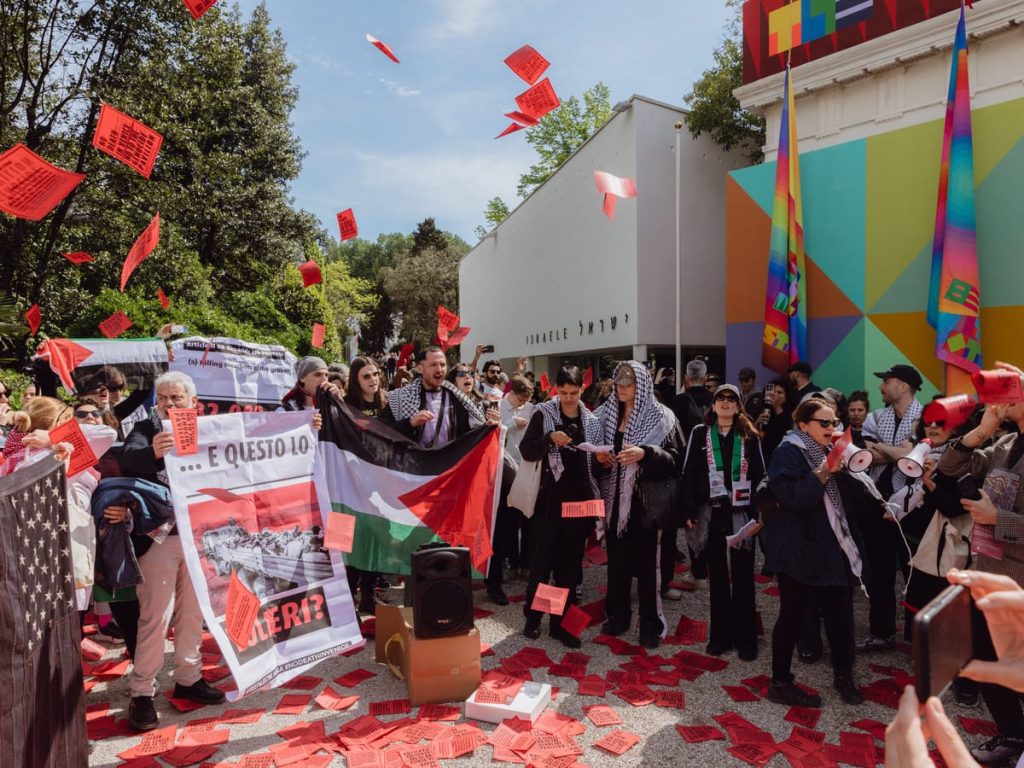
Venice Biennale Artists Call for Israel’s Exclusion
In a developing controversy surrounding the upcoming 61st Venice Biennale, nearly 200 artists, curators, and event staff have urged organizers to exclude Israel from participation. This call to action is prompted by opposition to the inclusion of Israel due to its ongoing conflict and actions towards Palestinians, which many label as apartheid and genocide. The open letter, released in mid-March 2024, highlights voices from influential artists like Yto Barrada, Isabel Nolan, and Asmaa Jama, among others. Carolina Caycedo, known for her environmentally focused art, emphasizes art’s role in resisting normalization of human rights abuses.
The Art Not Genocide Alliance (ANGA), formed in opposition to Israel’s pavilion in 2024, initiated the petition. ANGA critiques the Biennale’s stance on inclusivity, arguing that it neglects the ethical implications of participation from states with controversial histories. Despite amassing over 24,000 global signatures, including many from previous Biennale participants, the Biennale Foundation has declined to reconsider Israel’s participation, stating that countries recognized by Italy are eligible to participate.
Israeli pavilion artists have made symbolic protests in response, but ANGA argues this does not fully respond to the demands for comprehensive action. Adding further complexity, the Biennale plans to reintroduce Russia in its upcoming edition, sparking additional debate similar to past controversies following Russia’s absence due to the Ukraine conflict.
ANGA draws parallels with historical precedents where political considerations influenced the Biennale, such as during Chile’s liberation efforts and apartheid-era South Africa. The collective stresses that the Biennale, while often perceived as an apolitical cultural event, operates within a larger political context that requires moral accountability.
The Biennale Foundation has yet to respond to requests for comment on the matter, as participants and observers continue to debate the intersection of art, politics, and morality on this international stage.