Palestinian Artist Highlights Her Humanity
**Morgenkreis: A Powerful Reflection on Separation and Identity**
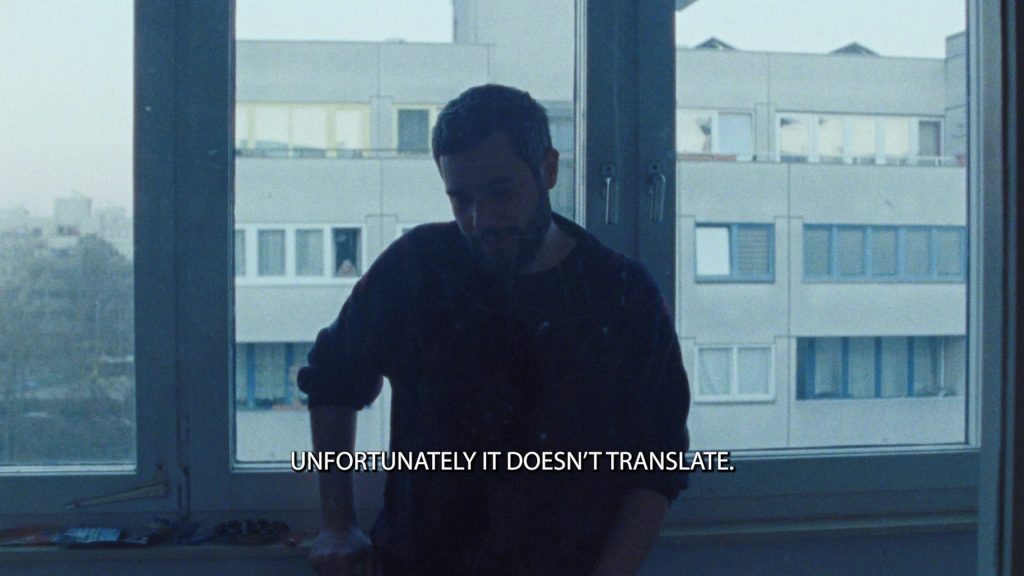
In the intricate tapestry of Basma al-Sharif’s “Morgenkreis” (2025), an apparently ordinary moment unravels into a poignant exploration of separation and identity. As a father and son stand at the threshold of a daycare center, the scene mirrors a universal experience of childhood separation, evoking deep-seated emotions of fear and attachment. Yet, beneath this everyday scenario lies a profound political resonance, as the setting becomes a backdrop for al-Sharif’s exploration of diasporic trauma and cultural displacement.
The origins of kindergarten, a 19th-century German invention, are scrutinized. Initially conceived as part of the European liberal project, it’s presented not just as a place of care, but as the state’s mechanism to shape young citizens. The momentary parting of parent and child parallels the forced estrangement felt by refugees and the colonized—an unwelcome transition from private intimacy to public order.
“Morgenkreis” challenges the assumptions of inclusivity within Western institutions, exposing the latent violence within their walls. Al-Sharif draws parallels between a child’s learning to separate and larger, more sinister separations faced by displaced populations, bridging personal emotional memories with collective historical narratives.
The public outcry following the announcement of al-Sharif’s screening in Düsseldorf highlights a society still grappling with historical injustices. Ironically, it was not the film but the artist’s social media, referencing resistance and occupation, that incited backlash, underscoring the fragile dynamics of contemporary discourse on human rights.
Despite external pressures, the resilience shown by the Kunstakademie in proceeding with al-Sharif’s event reveals a commitment to academic integrity and open dialogue. Al-Sharif eloquently conveys her diasporic experience, moving from a visceral representation of identity struggles to a critique of political narratives.
The film contrasts sharply with Wim Wenders’s “Wings of Desire.” While Wenders portrays a romanticized Berlin through monumental vistas, al-Sharif’s grounded, somber vision captures a city occupied by the coldness of modern capitalism. Her depiction of Berlin offers a stark commentary on exclusion and belonging, as seen through her portrayal of an immigrant family’s navigation through bureaucratic oppression.
Amidst this landscape, subtle acts of resistance emerge—quiet defiance in an interrogation, a father’s sardonic retorts, and a communal revolt against structured routine. The young boy’s liberation on the playground symbolizes hope and resilience, a testament to al-Sharif’s powerful narrative in fostering a visceral understanding of Palestinian identity and struggle.
“Morgenkreis” serves as both a mirror and a magnifying glass, reflecting the universal human experience of separation while magnifying the complexities of cultural identity within political systems. Through her film, al-Sharif encourages a deeper, empathetic engagement with the struggles inherent in dislocation and belonging.