Saad Khan Documents the Remnants of Censored Culture
**Encountering Khajistan on Instagram: A Journey Through Cultural Subversion and Preservation**
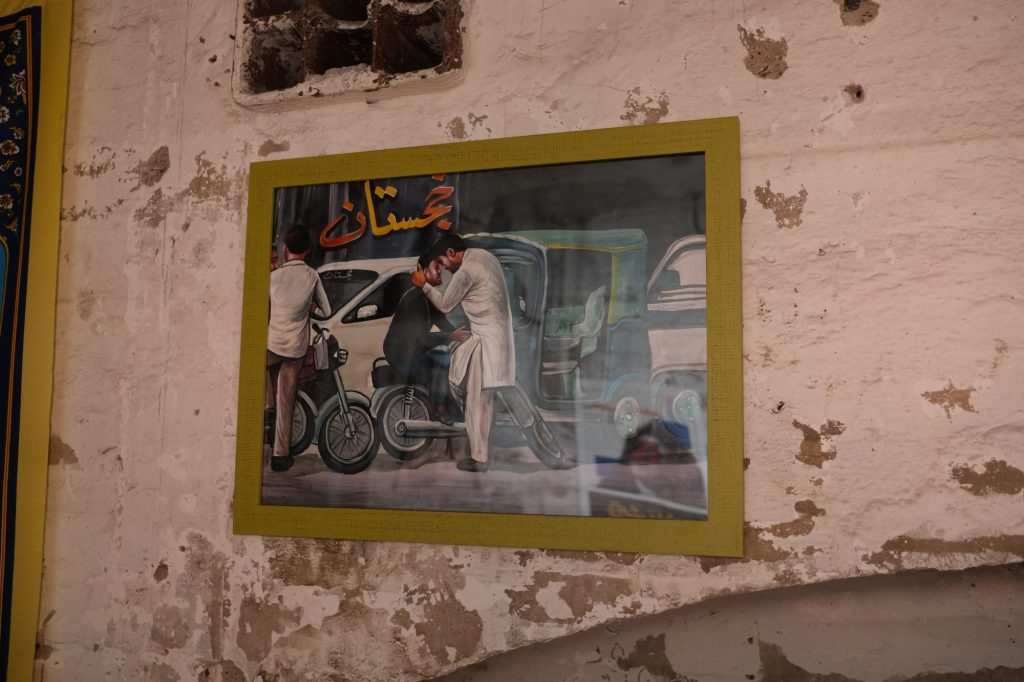
Khajistan’s Instagram presence is a labyrinth of visual provocations. Designed to both amuse and perplex, its grid presents a cacophony of meme-like visuals and found photography ranging from WhatsApp forwards to intimate snapshots of domestic interiors. Among these are images portraying feet, half-nude hairy athletes, over-sexualized showgirls, and men clad in traditional shalwar kameez sharing intimate moments. This curated chaos suggests an insider’s joke punctuated with a sly wink, a “if you know, you know” ethos that pervades the account.
At the heart of Khajistan lies an expansive archive intent on preserving the unrecorded realities of regions from South Asia to the Maghreb. Founder Saad Khan explains in the project’s manifesto their effort to archive materials as varied as “leaflets that fell from the sky” to the taboo elements hidden in your uncle’s stash. Officially launched in 2019, Khajistan emerged from Khan’s personal trove of digital ephemera collected for his film projects, evolving into both a digital-physical archive and an independent publishing press. This collection represents Khan’s personal odyssey to affirm his existence through the forgotten threads of cultural expression.
Khan’s apartment in Queens offers a physical extension of the Khajistan digital landscape, adorned with film posters, homoerotic memes, and images of buxom Pakistani actresses. It visually narrates his journey from Lahore’s working-class neighborhoods steeped in ephemeral pop culture to his 2014 American migration. This move forced Khan to recreate a world around him that mirrored where he came from — a collage of memes and media that spoke to his identity and humor.
The impact of this project resonates deeply, sparking a vibrant community of contributors. Khan recounts receiving poignant images and messages from young people across Pakistan and Iran, creating an unspoken network of shared understanding and shared gaze. The Instagram account thrives on contributions from nearly 85,000 community members and collaborations with artists, researchers, and collectors, who piece together a tapestry of popular visual and material culture — a subcultural smorgasbord that transcends censorship.
In Brooklyn, Khajistan’s physical archive, dubbed Toshakhana, defies the selective preservation of culture, challenging societal perceptions and embracing history’s shadowed corners. The archives capture Cold War propaganda, pre-revolutionary Iranian media, and outlawed artistic expressions, drawing parallels to underappreciated cultural narratives so easily lost. Here, artifacts bear testimony to lived experiences caught between looming state projects and the grip of globalization.
Khajistan publishes works like Humayun Iqbal’s “Challawa,” a narrative exploring sexuality and power dynamics in Pakistani literature, and “American War Propaganda Leaflets,” a glimpse into the psychological efforts by Western military operatives. These texts push boundaries, questioning cultural canons and blurring distinctions between subversion and mainstream.
The Spasial Program exhibition at SculptureCenter last summer opened Khajistan’s door to a wider audience, physically manifesting the project’s ethos through displays of film memorabilia, memes, and political artifacts. It translates Saad Khan’s vision into an immersive narrative that confronts censorship and the demarcation of cultural legitimacy, a narrative often shaped and sanitized for global acceptability.
Khajistan incisively interrogates the morality wielded by class structure. Its images might amuse, provoke, or offend, introducing conversations that lay bare societal hypocrisies. Yet, humor filters through, rendering visible the absurdity nestled in human narratives and memetic art.
In “bunawat,” the Urdu term for weaving the social tapestry, Khan elevates Khajistan to a viewpoint where propaganda, humor, exploitation, and power dynamics intertwine. It echoes the contradictions inherent in the daily experiences of those marginalized by standard historical narrations.
For Khan, Khajistan embodies honesty through contradiction, representing a cultural gaze nestled in the paradoxes of morality and obscenity. His personal anecdotes about his religious experiences underscore this duality, where sanctity melds with personal curiosity.
Khajistan insists on its space within cultural archives, defying state or algorithm-driven erasure, embodying resilience through humor and the audacity to exist. Khan’s manifesto proclaims this defiance: the archive testifies that life perseveres even amid obscured histories and cultural suppression. “Let’s play,” he invites, celebrating an insistence on life when others attempt to silence it.