Mexico Reroutes Train to Protect Newly Discovered Cave Art
Archaeologists have unveiled a significant discovery of 16 pre-Hispanic artworks along the route of a forthcoming high-speed passenger train in Mexico, connecting the capital to Querétaro. These artworks, comprising paintings and petroglyphs, were identified with the support of the Mexican government and the National Institute of Anthropology and History (INAH). Notably, the discovery prompted Mexican President Claudia Sheinbaum to announce a rerouting of the planned $8 billion train to protect the site.
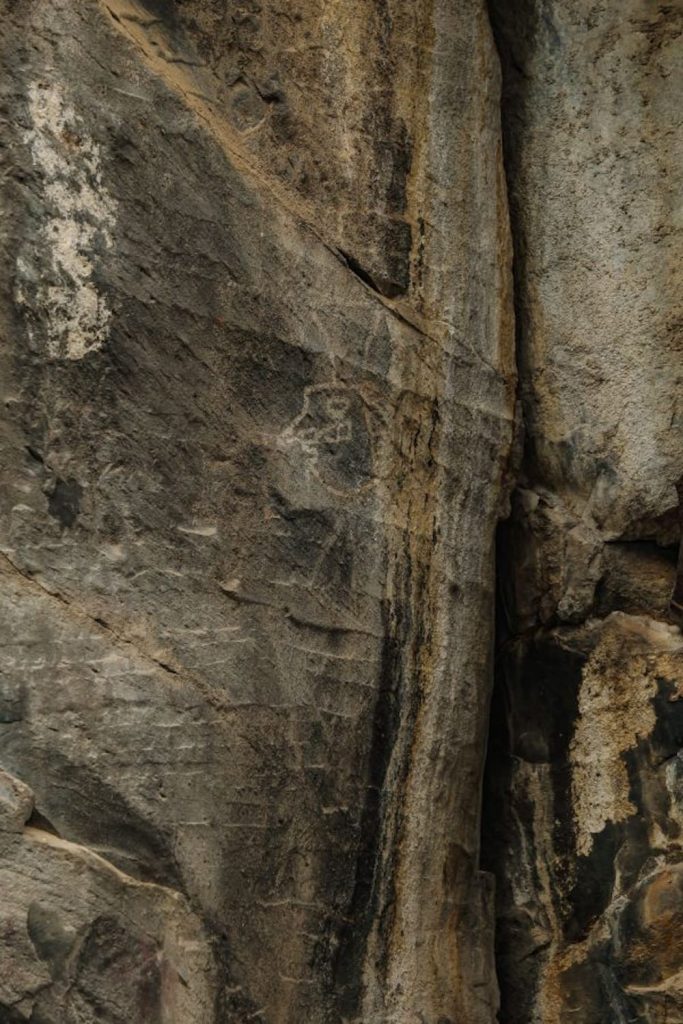
Found on two cliffs in Hidalgo, the artworks include rock paintings from the Postclassic period of Mesoamerican history, dating between 900 CE and the Spanish conquest in 1521, reflecting the Aztecs’ era. Some figures date back over 4,000 years. Among the discoveries is an anthropomorphic figure holding a chīmalli, a shield made from bird feathers by the Aztecs, and another figure resembling the Aztec rain deity, Tlaloc. A prehistoric figure painted in red resembles either a snake or lightning.
Archaeologist Abel José Romero García links the iconography to the final era of the pre-Hispanic Toltec city of Tula, with artists employing pointillism and natural pigments in their creations. The local community and archaeologists had noted such drawings since the 1970s, with previous documentation of a religiously significant deer-like figure. The preservation of these cultural sites has been secured through agreements between INAH and the Ministry of Defense, as highlighted by the project’s coordinator, Víctor Francisco Heredia Guillén.