
Why Do Cows Burp Up So Much Planet-Warming Methane? A Newly Discovered Structure in Their Gut Microbes Could Be a Culprit
The “hydrogenobody” is an organelle inside certain microorganisms that live in a special stomach chamber in cattle, sheep and goats, according to a new study
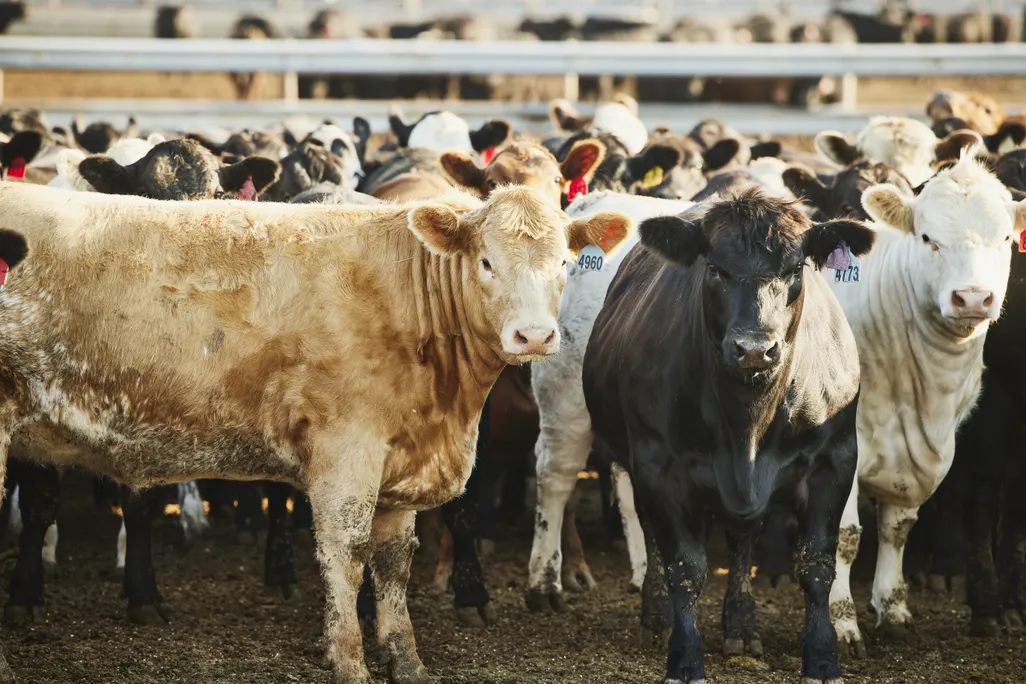
Cattle are a major driver of methane emissions.
Thomas Barwick via Getty Images
Cows are famous for belching methane, a heat-trapping gas that’s contributing to climate change. A single animal can burp 220 pounds of the gas in just one year. What’s more, methane is 28 times more potent than another well-known greenhouse gas, carbon dioxide.
Now, scientists may have figured out why cows and other livestock produce so much methane: a previously unknown cell structure hiding in the animals’ gut microbes. The findings, published in the journal Science on April 30, could inspire new strategies to reduce methane emissions.
Cows, along with some other creatures, like sheep and goats, have a special stomach compartment called the rumen. Agriculture with these ruminant animals accounts for about 30 percent of human-caused methane emissions.
Millions of microorganisms live in a cow’s rumen and help the mooing creature break down food it can’t digest on its own. Researchers have long suspected that one group of microbes, called rumen ciliates, plays an important role in producing methane. But how, exactly, they contributed to the process has been poorly understood.
That’s partly because it’s so difficult to study the tiny organisms, says study co-author Wei Miao, a hydrobiologist at the Chinese Academy of Sciences, to Miryam Naddaf at Nature. It’s tough to isolate their DNA for analysis without contamination from other organisms, he explains.
Miao and his colleagues addressed the gap by creating a catalogue of complete sets of DNA—or genomes—of 450 ciliates living in the rumen of cattle, sheep, goats and deer. Their analysis revealed 65 species, 45 of which had never had their genomes examined.
Then, the researchers looked at rumen microbes and methane emissions in 100 dairy cows and found some relationships: the more ciliates in an animal, the more methane-producing microorganisms it had and the more gaseous it was.
Need to know: Methane versus carbon dioxide
Methane often ranks number two, behind carbon dioxide, when it comes to greenhouse gases we earthlings should be concerned about. Methane is about 200 times less abundant in the atmosphere than carbon dioxide and lingers there for roughly ten years, while carbon dioxide can remain for centuries.
In sheep, a ciliate genus called Dasytricha especially stood out. Despite eating the same foods, sheep that produced high levels of methane had almost 100 times the amount of Dasytricha compared with sheep that emitted low amounts, the researchers found. When the team examined the Dasytricha cells, they discovered a structure they call the “hydrogenobody.” It makes hydrogen, which then produces methane by interacting with other organisms in the rumen.
“We were somewhat surprised by how clearly this structure links cell biology to methane emissions,” says study co-author Jie Xiong, a biologist at the Chinese Academy of Sciences, to Jackie Flynn Mogensen at Scientific American.
Different types of rumen ciliates have different amounts of the newfound structures, the team found. Dasytricha cells, for instance, contain around 28 times as many hydrogenobodies as cells belonging to the genus Entodinium, which produces less methane than the other group.
Researchers previously knew of another hydrogen-producing structure in microbes called the hydrogenosome. It’s related to energy-producing organelles, mitochondria, and both have two membranes. But hydrogenobodies have just one membrane, which could mean they have different evolutionary origins.
The findings offer a “mechanistic breakthrough” in our understanding of how cows produce methane, says Ermias Kebreab, an animal scientist at the University of California, Davis, who was not involved in the study, to Scientific American.
While the discovery hints that farmers could attempt to get rid of certain rumen ciliates in their cattle, the task is easier said than done, Todd Callaway, a microbiologist and ruminant nutritionist at the University of Georgia who was not involved in the study, tells Science News’ Tina Hesman Saey. To do so, the animals need to be isolated, given sterilized food and kept far from one another to prevent airborne spread of microbes, he notes.
Finding microorganisms to target “is step one of probably 25, but it’s a good step,” Callaway says.